Is it profitable to grow soybeans in 2017? Soybean price trend forecast
In 2016, the Ministry of Agriculture pushed forward the structural reform of the agricultural supply side, focusing on adjusting and optimizing the planting structure, requiring the Northeast region, China's main grain-producing area, to appropriately reduce the corn planting area and switch to soybeans. So how is the soybean market performing? In 2017, what kind of price trend will soybeans show, and can growing soybeans be profitable? With these questions in mind, let us look at the specific analysis.
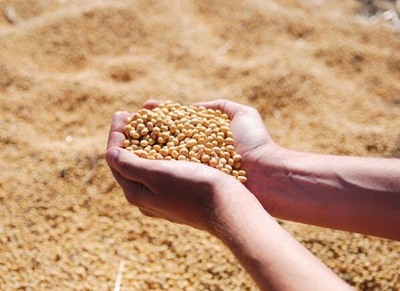
2017 soybean price trend forecast
1. Domestic soybean prices rise.
In the Northeast production areas such as Inner Mongolia, supply has run out, and Heilongjiang has little grain left; along the Huai River production areas there has been continuous rainfall and poor transportation; import inspection of soybeans remains strictly enforced, and the volume entering the food sector has clearly decreased; the auction of temporarily stored soybeans keeps being postponed, intensifying the psychology of tight market supply; the soybean market still presents a bullish atmosphere. In June, domestic soybean prices rose. The average purchase price of domestic soybeans in Heilongjiang was 1.75 yuan per jin, up 3.6% month-on-month and down 0.7% year-on-year; the factory-gate price of domestic soybeans in Shandong was 2.19 yuan per jin, up 3.5% month-on-month and down 1.6% year-on-year. The closing price of the main soybean contract (September 2016) on the Dalian Futures Exchange was 1.92 yuan per jin, up 5.6% month-on-month and down 9.9% year-on-year. The ex-factory price of medium-grade soybean meal in Shandong was 3281 yuan per ton, up 16.7% month-on-month and up 27.7% year-on-year.
2. International soybean prices rose sharply.
South American soybeans suffered floods during the harvest season, causing output to fall below expectations. The Buenos Aires Grain Exchange in Argentina predicted Argentina's soybean output at 56 million tons, down 7.9% from the previous year. The USDA supply and demand report estimated that the carryover stocks of old and new US soybeans were 260 million bushels and 370 million bushels respectively, both below the average market forecast. The market expected that in July the weather in the US Midwest soybean belt would be hot and dry, limiting soybean growth. At the end of June, the USDA released its planted area report, showing US soybean planted area reached 83.688 million acres, up 1% from the previous year, and the bearish market factors were exhausted. In addition, factors such as a weaker US dollar and continuously strengthening crude oil prices were also bullish for the soybean market. In June, international soybean prices rose sharply. The average price of the main soybean contract (November 2016) on the Chicago Board of Trade (CBOT) was 422.79 US dollars per ton, up 8.9% month-on-month and up 21.5% year-on-year.
3. The price gap between the after-tax landed price of imported soybeans and domestic soybeans narrowed compared with last month.
In June, the after-tax landed price of imported soybeans rose sharply, and domestic soybean prices in sales areas rose, so the domestic and international price gap for soybeans narrowed compared with last month. The after-tax landed price of imported soybeans in Shandong was 1.78 yuan per jin, 0.42 yuan per jin lower than the local domestic soybean price, with the price gap narrowing by 0.1 yuan from last month. The FOB price of US Gulf soybeans converted to RMB was 1.44 yuan per jin, 0.75 yuan lower than the purchase price of domestic soybeans in Shandong, with the price gap narrowing by 0.08 yuan from last month.
4. Soybean imports from January to May increased 14.5% year-on-year.
According to customs statistics, in May China imported 7.6642 million tons of soybeans, up 8.4% month-on-month and up 25.1% year-on-year, with an import value of 2.958 billion US dollars, up 10.9% month-on-month and up 11.8% year-on-year; exported 14,100 tons of soybeans, down 2.4% month-on-month and down 25.5% year-on-year, with an export value of 12.1438 million US dollars, down 18.7% month-on-month and down 33.0% year-on-year; exported 165,400 tons of soybean meal, up 30.7% month-on-month and down 10.4% year-on-year. From January to May, cumulative soybean imports were 30.9975 million tons, up 14.5% year-on-year, with an import value of 12.370 billion US dollars, down 4.5% year-on-year; soybean exports were 58,700 tons, down 14.56% year-on-year, with an export value of 52.5984 million US dollars, down 24.6% year-on-year. From January to May, the main sources of imported soybeans were the United States (accounting for 50.6% of total imports) and Brazil (accounting for 45.1%).
5. Global soybean stocks are expected to decline in 2016/17.
In June, the US Department of Agriculture forecast global soybean output in 2016/17 at 324 million tons, an increase of 10.44 million tons from the previous year. Among the main producing countries, US soybean output was forecast at 103 million tons, down 3.3% from the previous year; Brazil's soybean output at 103 million tons, up 6.2% from the previous year; Argentina's soybean output at 57 million tons, up 0.9% from the previous year. Global soybean consumption in 2016/17 was forecast at 328 million tons, up 3.1% from the previous year. Global soybean ending stocks were 66.31 million tons, with a stock-to-consumption ratio of 20.2%, down 2.5 percentage points from the previous year, the lowest point in nearly five years.
6. Local developments.
According to a June survey by the Dalian Commodity Exchange, the increase in soybean area in Heilongjiang is expected not to exceed 25%, but in traditional main production areas such as Nenjiang and Heihe the switch in planting was obvious, with the area switched to soybeans at around 45%. According to statistics from the Jilin Agricultural Commission, the province's soybean sown area was 3.23 million mu, up 28% year-on-year. According to an autumn crop planting intention survey by the Henan Provincial Local Economic and Social Survey Team, this year Henan Province's soybean planting area surged 123.4%.
Is it profitable to grow soybeans in 2017
1. Growing soybeans will be the general trend
Last year the national soybean consumption was 93 million tons, while domestic output was only more than 10 million tons; last year 81.69 million tons of soybeans and 8.8179 million tons of soybean oil were imported. Whether from the perspective of national policy or market demand, developing soybean cultivation in the future will be the general trend.
Before 2014, the soybean planting area in the Northeast accounted for more than 80% of the national soybean area. After the soybean planting area declined for six consecutive years, the role of pure price factors or planting benefit factors began to weaken, while the role of technical factors gradually strengthened, such as crop rotation, planting habits, labor and drying constraints of the competing crop corn, and the operational risk of over-planting corn, all of which are conducive to maintaining and further expanding the soybean area.
2. Planting positioning focuses on the high end
At present, most domestic soybeans are food-grade soybeans, while the quantity of oil-grade beans is relatively small, so if the price of food-grade soybeans can be raised, it would be tantamount to helping domestic soybeans find a good way to increase both output and income. For example, the sprouting beans grown in the Hailun area of Heilongjiang Province not only have a purchase price 0.4 yuan per kg higher than ordinary soybeans, but also have smoother sales channels; some farms and agricultural cooperatives have also carved out an extremely bright path by developing markets for organic, green and other small-packaged soybeans.