Prices of traditional Chinese medicinal herbs have risen sharply; experts predict the industry will enter a new upward phase in the next three years
According to a report by China National Radio's "Sannong China," as the Chinese public's demand for pharmaceutical products and services continues to rise, traditional Chinese medicine is increasingly favored by all parties. Especially after Chinese scientist Tu Youyou won the Nobel Prize, the Rio Olympics and the G20 Hangzhou Summit successively sparked a surge of interest in traditional Chinese medicine.
However, along with the growing attention on traditional Chinese medicine, the market prices of medicinal herbs have also been steadily climbing. Since the beginning of this year, prices of traditional Chinese medicinal herbs across China have seen widespread increases, with some even doubling.
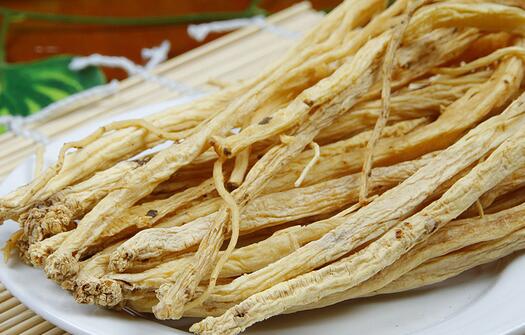
Farmer Gong Wenping from Gansu has been growing codonopsis (Codonopsis pilosula) for more than ten years and has witnessed many price fluctuations, but he says this year's surge is something he has never seen before:
Gong Wenping: The price of codonopsis has definitely gone up this year, it has risen by 100 percent. Last year the smallest ones were more than 20 yuan per jin, this year it is more than 50 yuan per jin. This year the harvest itself was reduced, the reduction was severe, output dropped by about 30 to 40 percent.
Codonopsis is not the only medicinal herb that has gone up in price. Yang Wunu has been growing isatis root (Isatis indigotica) in Shenmu County, Shaanxi for 6 years. This year she planted more than 2,000 mu of isatis root and is currently loading goods. Yang Wunu's isatis root is mainly sold to Anhui, Hebei and other places. Because both the output value and yield of isatis root are high, combined with this year's good market, Yang Wunu's confidence in growing it has multiplied:
Yang Wunu: At this time last year, the market price was at most 8.5 yuan/jin, and the lowest was around 7 yuan/jin. Today the best market price is around 11 yuan/jin, medium-sized ones are 9 yuan/jin, and ordinary ones are 10 yuan/jin. This year's market is much better than last year, with an average increase of more than 2 to 3 yuan per jin. This year's output value and yield are both higher than last year. Next year will certainly be even better, because the technology is becoming increasingly reliable.
Zhang Bin, an analyst at Sublime China Information (SCI), said that since 2013, prices of traditional Chinese medicinal herbs have been in a slump. In 2016, affected by multiple factors, prices of traditional Chinese medicinal herbs rose overall. According to his statistics, over the past month, varieties including platycodon (Platycodon grandiflorus), chuanxiong (Ligusticum chuanxiong), and baizhu (Atractylodes macrocephala) have seen relatively large price increases.
Zhang Bin: 2016 can be described as a year of overall recovery for the traditional Chinese medicinal herb industry, especially starting from the second half of the year when most varieties showed a pattern of steady increases. Among them, codonopsis, chuanxiong, coptis (Coptis chinensis), baizhu, and platycodon all showed notable price increases. Among the 57 varieties monitored by SCI, 34 saw year-on-year price increases, accounting for 59.6%. 18 remained stable, accounting for 31.5%, and only 5 saw price declines, accounting for 8.8%. Taking platycodon as an example, the price of two-year-old peeled whole roots increased by 10-15 yuan/kg year-on-year, a rise of 58.9%, while baizhu also rose by about 10 yuan/kg, with a year-on-year increase as high as 70%.
Zhang Bin said this year's price increases for traditional Chinese medicinal herbs were mainly affected by three factors:
Zhang Bin: The reasons are, on the one hand, weather impacts caused some varieties to suffer reduced yields due to drought and flood disasters, such as codonopsis and angelica dahurica (Angelica dahurica), with yield reductions reaching 40-50%. On the other hand, starting from 2013, the traditional Chinese medicinal herb industry entered a slump, with most varieties seeing lower prices, weak demand, and serious oversupply. Farmers and merchants suffered severe losses, and enthusiasm for planting and doing business declined. Local varieties such as platycodon, scutellaria (Scutellaria baicalensis), anemarrhena (Anemarrhena asphodeloides), and baizhu saw obvious reductions in planting. Things are precious when they are scarce, so prices naturally rose. Third, this year the overall environment of the medicinal herb market has improved. Merchants with financial strength are optimistic about the future market, actively investing and operating, and have a relatively strong willingness to hold prices up.
Wang Guoqiang, deputy director of the National Health and Family Planning Commission and director of the State Administration of Traditional Chinese Medicine, said that regarding the rise in prices of traditional Chinese medicinal herbs, it is an objective fact, but how we should correctly and objectively view this matter, I think should be looked at from two aspects:
Wang Guoqiang: First, the prices of traditional Chinese medicinal herbs have always been on the low side in the past. Although traditional Chinese medicinal herbs are agricultural products, among agricultural products, everyone has seen that the prices of other agricultural products have been rising, while the prices of traditional Chinese medicinal herbs have never been adjusted. This situation directly affects farmers' enthusiasm for growing medicinal herbs. Second, the absence of a reasonable price formation mechanism will also affect the quality of traditional Chinese medicinal herb cultivation. Therefore, appropriately adjusting the prices of traditional Chinese medicinal herbs is necessary and is also an important aspect of developing the sustainable development of traditional Chinese medicinal herbs.
Zhang Bin, an analyst at Sublime China Information (SCI), predicts that within the next 2-3 years the traditional Chinese medicinal herb industry may usher in a new upward phase:
Zhang Bin: In summary, whether for local varieties or wild scarce resources, under the background of high national policy standards and strict requirements, quality first, and the overall changes in supply and demand, in the short term, after the market opens next year, pharmaceutical factories and merchants will enter the spring stocking period, and medicinal herb prices may still rise. In the long term, after experiencing a 3-year trough, within the next 2-3 years the traditional Chinese medicinal herb industry may usher in a new upward phase.
In this regard, Wang Guoqiang, deputy director of the National Health and Family Planning Commission and director of the State Administration of Traditional Chinese Medicine, also said that, on the one hand, it is necessary to vigorously promote the standardized cultivation and development of traditional Chinese medicinal herbs, so that traditional Chinese medicine can form scale on the basis of improved quality and ensure supply. On the other hand, a reasonable price adjustment mechanism must be established.
For the vast number of traditional Chinese medicinal herb growers, Zhang Bin, an analyst at Sublime China Information (SCI), also gave his own suggestions:
Zhang Bin: For farmers, improve planting technology and increase the yield and quality of traditional Chinese medicinal herbs per unit area. Do not blindly expand planting, to avoid causing oversupply. Pay close attention to market dynamics, make rational judgments, operate cautiously, and avoid the speculation and investment risks brought by following trends. Broaden sales channels by using the new "Internet Plus" model, combined with the traditional practice of pricing based on inspection of goods.