2017 Wheat Price Trend Forecast: Prices May Rise Sharply Next Year
At present, China's wheat processing industry, against the backdrop of the economy entering the “new normal” and loose supply and demand, is also being hit by international wheat prices, making policy support for prices even less likely. The domestic wheat market is showing a sluggish state. Grain is indeed becoming hard to grow. How should the wheat harvested this year be sold? In 2017, what aboutwheat price trends?
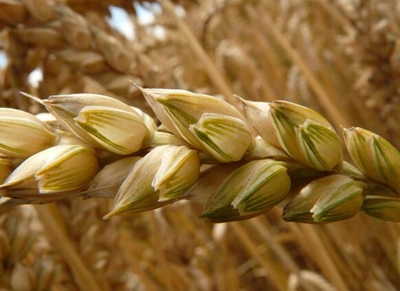
2017 Future Wheat Price Trend Expert Forecast: Wheat Prices Will Rise Sharply Next Year
This year's wheat market showed weakness right from the start of trading, and this continued until late June, which is the first time the author has seen this in many years in the industry, and it was not until July that the activity level of wheat market purchasing and sales began to increase. Many industry practitioners say that wheat, as a grain crop, is very clearly affected by state regulation, so the strength of state reserve purchasing directly affects market purchasing and sales. This year, most of the main wheat-producing areas south of the Yangtze River were affected by weather disasters, and wheat quality was poor. Even though the state reserve moderately relaxed the warehousing standards, wheat quality in some local areas still seriously exceeded the standards and was difficult to store, so it could only become feed wheat, with prices remaining low throughout. Although the main wheat-producing areas north of the Yangtze River were also affected to a certain extent by adverse weather, and wheat quality was worse than in previous years, this was only in isolated areas. Wheat quality in Shandong and northern Hebei was still very good, and grain depots and flour milling enterprises in various places saw small-scale grain-grabbing. This is also the main reason why wheat prices in Anhui, Jiangsu and Henan have remained low recently, while wheat prices in Shandong, Hebei and other places have risen noticeably. Now that everyone understands the recent wheat market situation, whether wheat should be kept at all has become the main concern of market stockpilers. The author believes that the short-term wheat purchasing and sales strategy should still focus on warehousing, moderately storing good grain, while poor grain should not be kept at all.
First, the state reserve has recently stepped up wheat purchasing, and actively delivering grain to warehouses is the best choice. Since July, the implementation of the state minimum purchase price policy has clearly intensified.
It is understood that the minimum purchase price storage points already activated in the 6 main wheat-producing provinces have reached 3,100, with 36.27 million tons of available empty warehouse capacity. Although the current wheat purchasing progress is generally slower than in previous years, the purchasing progress since late June has clearly accelerated. As of July 10, Sinograin had purchased a cumulative 9.02 million tons of minimum purchase price wheat in 6 provinces. During the five days from July 6 to 10, 2.07 million tons of wheat were purchased, an increase of 610,000 tons over the previous five-day purchase volume. It can be seen that the state reserve's purchasing strength has begun to increase, and this is actually a good time to recover funds. As the old saying goes, “Money in hand is truly your own.” If you blindly hoard grain waiting for prices to rise, loan pressure, storage pressure and some force majeure factors will all reduce the profits of grain hoarders, so when the state reserve recently stepped up wheat purchasing, actively delivering grain to warehouses is the best choice.
Second, the future market lacks purchasing entities, and a sharp rise in wheat prices may have to wait until next year. Judging from the overall survival environment of flour milling enterprises in the past two years, this year's flour milling industry is still in a period of industry adjustment, and the market is still shrinking. If the state reserve's purchasing strength weakens in the future, or purchasing ends, then the domestic wheat market will lack strong demand entities, and prices will find it very difficult to rise sharply.
In addition, China's wheat market supply and demand situation is generally loose. Although wheat quality in some local areas was affected to a certain extent this year, the probability of large market fluctuations is still very small. On the one hand, the state temporary reserve wheat inventory is abundant, and market supply is not a concern; on the other hand, demand is not strong, and market consumption is unlikely to increase noticeably. It is estimated that under the leadership of national policy, the wheat market trend with “stability” as the mainstream will not change. Therefore, the author believes that the recent market situation is a good time to sell. If you want to hoard good grain, then do not expect short-term profits, consider your profit target, and make preparations to reduce various losses.
Finally, good grain prices will certainly rise in the future, and it is also a fact that poor grain has no bulk demand. From information reported from various places this year, we can see that the market supply of high-quality good wheat this year is clearly insufficient, so good grain prices will certainly have room to rise in the future. However, the author believes that the state reserve's 2015 wheat has never participated in auctions or rotation, and will inevitably supply the market in large quantities later. Its quality is all very good, so although good grain prices among the new-season wheat will rise, the margin will not be particularly large. It is expected that between 1.25-1.27 yuan/jin they will be blocked by the state reserve auction price and find it difficult to continue rising sharply.
Therefore, even if you are bullish on good grain prices, you need to treat them rationally. As for poor grain, although prices are not high recently, the author still does not recommend continuing to keep it. You can use various methods to select part of it for warehousing, and sell the rest at a low price. This is because poor grain itself contains many impurities and is difficult to store long term. In addition, the prices of feed raw materials as a whole are relatively likely to weaken later, which will also reduce the use of feed wheat. In the future, poor wheat prices will find it difficult to rise, and may even be lowered, so the author does not recommend that traders continue hoarding the lower-quality wheat in their hands. Overall, polarization in this year's domestic wheat market is an inevitable phenomenon, and “high quality, high price; low quality, low price” will be the mainstream trend of the wheat market in the future. As new wheat enters the after-ripening period, it is inevitable that new wheat prices will later converge with old wheat prices. Since old wheat prices find it difficult to fall, driven by the convergence of new and old wheat prices, new wheat prices will maintain a market pattern of steady upward movement, but only for high-quality wheat, not low-quality wheat. Therefore, traders with poorer-quality wheat in their hands should still dispose of it as soon as possible, and later can pay attention to corn, soybeans and other varieties entering their peak output season.
How Should Wheat Be Planted in 2017
China's wheat production has had 12 consecutive years of bumper harvests, and in the past 5 years, output has increased by more than 2.5 million tons each year. However, even with such bumper harvests, we still have to import 3.3 million tons of wheat every year. Imported wheat is partly due to our long-standing problem of inverted grain prices: for some enterprises, imported wheat is even cheaper than buying wheat locally. On the other hand, it is because our high-quality specialty wheat is still in a state of shortage.