Corn planting area decreases, will corn prices rise in 2017?
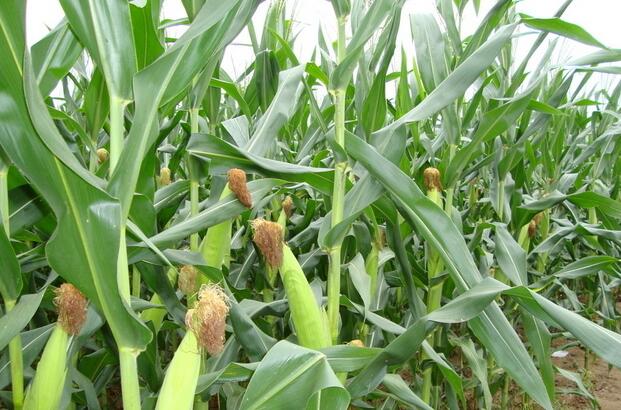
In 2016, the corn market price was over 0.70 yuan per jin. If the planting area shrinks further in 2017, can the price rise? With domestic and international grain prices inverted, how can this contradiction be resolved?
On November 25, the first Shandong Agricultural Science and Technology Think Tank High-Level Forum was held in Jinan. Experts and scholars from Renmin University of China, the Chinese Academy of Agricultural Sciences, the Shandong Provincial Party Committee Leading Group for Comprehensively Deepening Reform, the Shandong Provincial Association for Science and Technology, and the Shandong Academy of Agricultural Sciences held discussions on the supply-side structural reform of agriculture. More than 200 representatives from the front lines of agricultural scientific research across the province attended the meeting.
This forum was jointly hosted by the Office of the Leading Group for Comprehensively Deepening Reform of the CPC Shandong Provincial Committee, the Shandong Provincial Association for Science and Technology, and the Shandong Academy of Agricultural Sciences, and undertaken by the Shandong Institute of Agricultural Sustainable Development.
The fall in corn prices is the inevitable result of not being market-oriented
Since last summer, corn prices began to slide, and this year they historically fell below 0.70 yuan per jin. Not to mention large-scale corn growers, even individual farming households were almost losing money. This situation has left farmers deeply hurt and also very confused. Can corn still be planted next year? If not corn, then if soybeans, mung beans and other miscellaneous grains are planted, what will prices be like?
"“This year, because the state implemented a policy of market pricing and separating price from subsidy for corn, the national corn area decreased by about 30 million mu; next year the corn planting area will certainly continue to decline, but whether the market price will rise or fall is really still hard to say.”" He Xiurong, director of the library of China Agricultural University and a counsellor of the State Council, believes that for a long time, corn, like wheat and rice, was planted by farmers not because the market needed it, but because the government supported procurement at the bottom. Two or three years ago, because the state worried that "“corn would become a second soybean,”" it continued to support it at the policy level, leading to the problem in the past two years of corn's "“three quantities all increasing”" (referring to output, imports and inventory).
To support his view, He Xiurong used figures to give a detailed explanation: according to statistics from the China Grain Network, in 2015 China's total corn output was 219.70 million tons, demand was 193.85 million tons, and imports of corn and its substitutes were 42.35 million tons. That year, overall supply exceeded demand by 68.20 million tons. This difference between supply and consumption was all converted into the state's newly added corn inventory.
Therefore, He Xiurong believes that the fall in domestic corn prices is not a problem of planting structure, but a problem of international price competitiveness. Since 2012, the prices of grains such as wheat, soybeans, rice and corn have successively become inverted with international market prices, with production prices about one-third higher than the landed import prices of international grain. In a globalized environment, economic laws cannot be violated for a long time. For this reason, the government's change in price policy is something it has no choice but to do, and must do; as for solving the problems of farmers' enthusiasm and farmers' incomes, other methods can be used at the policy level.
Stable income is what farmers truly depend on for survival
"“The inversion of domestic and international grain prices is indeed a problem.”" Tang Zhong, dean of the School of Agricultural Economics and Rural Development at Renmin University of China, expressed agreement with He Xiurong's view. He said that the original intention of the state in setting protective purchase and storage prices for grain was to protect farmers' interests, because we have long held the traditional notion that "“land is a farmer's lifeblood”;" but judging from the reality in recent years of farmers going out to work, this view needs to change: "“Land is not a farmer's lifeblood; stable income is a farmer's lifeblood.”"
On the causes of corn's "“three quantities all increasing,”" Tang Zhong's view is consistent with He Xiurong's. He also believes that the price competitiveness of domestic corn will not be easy to change in the short term; and the international market competitiveness of the crops planted on the reduced corn area is also unknown. For this reason, he proposed that China needs to take the initiative to fight a trade war. First, it can preserve our country's international market share of grain and win the right to speak in the grain market; second, the result of trade retaliation can achieve using industry to subsidize agriculture, ultimately playing a role in protecting farmers and protecting agricultural interests.
Implement specialized planting to reduce the outflow of purchasing power
"“Whether it is corn or miscellaneous grains, the key to whether what is grown can be sold is whether it has distinctive features.”" Wang Dongyang, director of the Institute of Agricultural Economics and Development of the Chinese Academy of Agricultural Sciences, believes that in the internet era, whether it is corn or other crops, what is planted is not the most important thing; "“whether it can be grown well and sold well is the most important thing.”"
Wang Dongyang analyzed that China has little arable land per capita, and copying international methods of large-scale and intensive agriculture does not suit national conditions; among the agricultural products now imported from the international market, large-scale and intensive products are the mainstream. If we follow the concept that each place's water and soil nurture its own people, and promote specialized planting, such as regionally distinctive miscellaneous grains and beans, uniquely flavored minor oil crops, and products with geographical indications, thereby creating distinctive brands to reduce the outflow of purchasing power, this can be regarded as a feasible path.
Wang Dongyang said that the selenium industry development in Enshi, Hubei, can serve as a typical case of supply-side structural reform. In September 2011, after Enshi, Hubei, was awarded the title "“World Selenium Capital,”" the prefecture highly integrated the "“selenium brand”" into the construction of major distinctive industrial chains, creating 4 major categories and 10 major industries including selenium-rich agricultural products, selenium-rich livestock products, selenium-rich tea and selenium-rich natural drinking mineral water. In 2015, sales of selenium products accounted for more than 60% of the prefecture's agricultural product sales.
Developing distinctive products can effectively prevent or reduce the outflow of purchasing power. Wan Shubo, president of the Shandong Academy of Agricultural Sciences, also expressed a similar view. In response to conditions within Shandong Province, he suggested relying on local distinctive products such as Yantai apples, Laiyang pears, Zhangqiu scallions, Jinxiang garlic and Qudi cucumbers to create high-end agricultural brands and advance the regionalized, large-scale and branded development of famous, special, excellent and new products, so as to improve quality and efficiency and enhance competitiveness.