New wheat supply drops significantly, pushing flour prices to run high
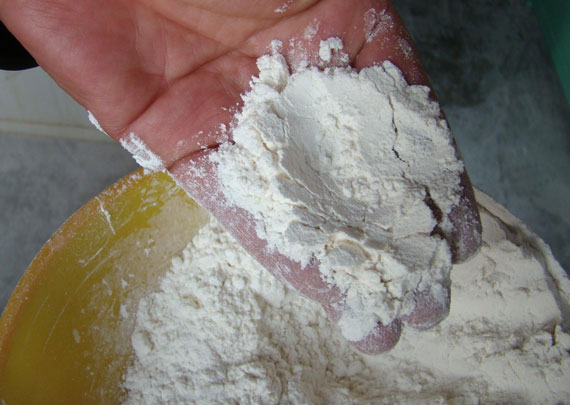
According to a report by China Rural Voice's "Agriculture, Rural Areas and Farmers in China," the flour market has been particularly eye-catching recently. Since October, flour prices have shown a fairly obvious increase; for premium refined flour, the increase reached 4.32% in just one month.
Flour is a staple grain and oil product and a rigid necessity, so an increase of nearly 5% is a very large margin. At present, as temperatures drop, production and consumption further increase, and flour prices still face an upward trend.
So what is the reason for this round of flour price increases? Apart from the boost from the peak season itself, what other factors are driving flour prices up?
Tuofeng Market in Shenmu County, Shaanxi Province, is a well-known local flour wholesale market, supplying the flour demand of the county's 420,000 people. Dealer Qiao Sheyu has been in the flour business for many years, and he told reporters that flour prices have risen fairly noticeably recently.
Reporter: How much is a bag of flour now?
Qiao Sheyu: A 50-jin bag comes in two kinds, 85 yuan and 90 yuan, because wheat has gone up in price.
Reporter: How many yuan has the flour price risen?
Qiao Sheyu: It has risen by 5 yuan; what used to be 85 has gone up to 90, and what was 80 has gone up to 85.
Old Qiao told reporters that the flour market has experienced two obvious waves of increases this year. The first was in late April this year; with the later listing of the new-season wheat, plus rising temperatures, flour gradually entered the off-season for consumption and prices fell back. But after the Mid-Autumn Festival, amid tight wheat supply and continuously rising prices, flour prices rebounded continuously. Wang Tuohou, owner of the Wang Tuohou Grain and Oil Wholesale Store in Shenmu County, Shaanxi, said bluntly that this October rise in flour prices was mainly affected by the sharp increase in the price of the raw material wheat.
Reporter: What is the main reason for the flour price increase?
Wang Tuohou: Mainly because wheat has gone up. When wheat prices are high, raw materials rise, and the flour from the flour mills rises along with them.
Wheat is the raw material for flour. Because the state's wheat purchase volume this year was higher than the same period last year, while the supply of high-quality new wheat was less than last year, this became especially obvious after the autumn grain came onto the market at the end of September. Enterprises found it hard to buy at low prices and could only raise their purchase prices. Wang Wenfeng, a market analyst at Zhuochuang Information, told reporters that under high cost pressure, enterprises can only raise flour prices to ease the pressure.
Wang Wenfeng: Because the market wheat supply has dropped significantly, enterprises find it difficult to buy at low prices and can only raise prices to compete for purchases. In October alone, wheat purchase prices in the Hebei-Shandong region rose by 0.05-0.06 yuan/jin, and wheat prices still rose in November. Under high cost pressure, enterprises raise flour prices to ease the pressure. On the other hand, with tight raw material wheat supply and high processing costs, enterprises face greater processing pressure, so flour mills generally operate at low capacity and flour output is not large, which is conducive to mills raising prices.
Data show that since October, flour prices have risen fairly noticeably. Premium refined flour rose from 1.62 yuan/jin to 1.68-1.69 yuan/jin, an increase of about 0.06 yuan/jin in just one month, with an increase rate of 4.32%. In the same period last year, the price of premium refined flour was 1.57 yuan/jin, 0.10 yuan/jin higher than last year's level.
After the obvious rise in flour prices, terminal dealers purchased according to need. Starting in November, flour prices basically maintained high-level operation. But as the weather turns cooler, which is good for flour storage, flour market demand has risen somewhat recently. Analyst Wang Wenfeng expects that in the short term the increase in flour prices will be controllable, and some low-price areas may still follow the rise.
Wang Wenfeng: After the earlier price increases, prices in some areas are also close to this year's high point. Although the end of the year is approaching and the terminal market may have some restocking and stockpiling demand, under high flour prices dealers mostly choose rational orders. In addition, with the earlier stockpiling by downstream terminals and the rapid price rise, terminal dealers' sales profits have been squeezed. At the same time, because competition in the flour industry is fierce, the price gap among flour enterprises in various regions this year has also been fairly obvious. Zhuochuang expects that at present the range of further flour price increases will be small, and prices in some low-price areas may rise.
Flour sales prices have risen, and ordinary people often choose to wait and see, making it hard for downstream sellers to move goods. On the other side, the cost of raw materials for flour processing is also rising, so many flour processing enterprises are watching their profits. Wang Wenfeng advises dealers: under the current high cost pressure, flour should still be sold by firmly holding prices; operating capacity should be adjusted according to one's own orders and inventory situation.
Wang Wenfeng: With the New Year arriving and fierce market competition, strengthen product quality monitoring, actively expand promotion, strengthen communication with market dealers, and understand changes at the consumer terminal. As for dealers, we suggest that dealers with funds and warehouse capacity can place orders in advance. Because flour prices are unlikely to fall at present, plus factors such as year-end logistics and terminal demand, dealers can purchase in advance based on past years' sales volume, but they still need to keep it within a reasonable inventory. In addition, adapt to changes in market demand, actively participate in the market sales of various types of flour, and meet the needs of different customer groups.