2017 Rex Rabbit Fur Price Forecast: Will It Rise?
Will there still be prospects in the 2017 Rex rabbit fur market? This is a topic that leaves vast numbers of Rex rabbit breeders, traders and professional workers deeply conflicted and confused. Ever since the Rex rabbit fur market fell into a trough in the second half of 2013, both the length of the downturn and the low prices have set historical records. The so-called "prospects" here means: can market prices return to normal levels? When can they climb out of this maddening abyss?
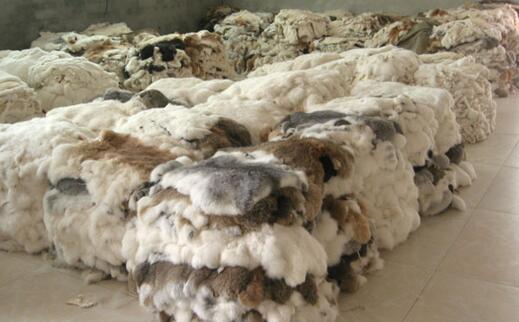
The Rex Rabbit Fur Market Once Put On Quite a Show
You should know that in the 16 years from the beginning of this century to the present, the Rex rabbit fur market once put on quite a show:
As early as 2000, Rex rabbit fur prices reached 50 yuan per piece, triggering a nationwide craze for raising Rex rabbits.
In 2004, data in the author's possession showed that the annual average price for grade-A fur at the Zhejiang survey point reached 49.71 yuan; adding rabbit meat, the value of a commercial rabbit was around 70 yuan, while the cost of raising one at the time was only about 30 yuan.
In October 2010, at the "China Rabbit Industry Scale and Efficiency Innovation Forum" held in Linyi, Mr. Gao Bailü of Xinchang, Zhejiang, spoke impromptu at the conference, citing examples of high-quality fur from Xinchang selling for the sky-high price of 110-120 yuan. More recently, a veteran Rex rabbit breeder from Xinchang, Zhejiang, chatted with the author on WeChat, and she pegged the rational price of the several thousand pieces of fur from last winter and this spring currently stored in her cold storage at 60 yuan, though she did not forget to poke fun at herself: talking about that price right now seems a bit like a fairy tale.
Until the first half of 2013, the average price at the Zhejiang survey point still reached 53.70 yuan. In September of that year, during the Third Rabbit Industry Development Conference held in Yangling, Shaanxi, a Rex rabbit boss from Ningbo said that he had several thousand pieces of seasonal fur and had not sold even when fur traders offered 70 yuan, showing that people were still quite confident at the time. But three years have passed, and facing the current ultra-low market price of 10-15 yuan, the industry feels as if a lifetime has gone by.
Exactly How Much Rabbit Fur Stock Is There?
Now let us do some preliminary sorting out and discussion of the topic we all care about.
First, exactly how much Rex rabbit fur is produced domestically? How large is the social inventory?
In special reports and various articles over the past decade or more, opinions vary widely: some say several hundred million pieces, others say several million pieces. The disparity in the figures is jaw-dropping.
Not long ago, the China Leather Industry Association published the annual output of mink, fox and raccoon dog for 2015, among which mink fur was 45.5 million pieces, a decrease of 25.83% compared with 2014, and mink fur inventory was around 120 million pieces. What about Rex rabbit fur output? It was not mentioned. Rex rabbits are small livestock with a wide distribution, and sales are divided into two modes: live rabbits and separated fur and meat. The fur is highly mobile, so accurate statistics are indeed difficult. But in earlier years, the author's statement that domestic annual Rex rabbit fur output was 30 million pieces was also clearly too conservative. Looking at it now, in peak years output is estimated at over 100 million pieces, and for well-known reasons the volume of fur coming to market exceeds the slaughter volume of commercial rabbits. On the premise that domestic Rex rabbit raising numbers have already shrunk substantially, according to a report by the "Fur Information Network," the daily slaughter numbers of commercial Rex rabbits at the two major markets of Linyi and Wujiawan in Jining, Shandong, still stand at over 10,000 and 3,000-5,000 respectively. This shows that Rex rabbit raising numbers in the Hebei, Shandong and Henan area remain considerable, thanks to rabbit meat prices consistently staying above 20 yuan per kilogram, and the purchase weight of live commercial rabbits also dropping to 3.5-4 jin (the period when raising costs are most cost-effective).
At present, the social inventory of Rex rabbit fur is mainly concentrated among distributors, large and medium-sized rabbit farms and some fur garment enterprises, and exists in three forms: semi-finished products (that is, plates), dressed fur and fresh fur stored in cold storage. Given commercial reasons, most fur traders are unwilling to disclose their actual stock, but based on analysis of conditions at fur markets such as Shangcun and Liushi Daying in Hebei and Tongxiang and Haining in Zhejiang, the inventory is estimated at possibly over 50 million pieces. Based on processing consumption in the past two years, the pressure remains considerable.
Why Rex Rabbit Fur Is No Longer in Favor
As everyone knows, the largest use of Rex rabbit fur is for the garment route, and this type of fur requires good quality and commands a high price. But in the past two years, garment-route consumption has dropped sharply. The reasons: first, the economy of Russia, a major fur-consuming country, is in recession, and sales of fur garments exported to Russia have fallen by two-thirds. Second, the low price of mink fur has severely undercut the use of Rex rabbit fur, and abandoning Rex rabbit fur for mink has become an option for many fur garment manufacturers. Third, last winter's fashion trend of sheep shearling garments further squeezed the use of Rex rabbit fur. Fourth, the defects of Rex rabbit fur garments - easy shedding, poor wear resistance and sensitivity to moisture - have gradually become apparent, affecting consumers' enthusiasm to buy.
Undoubtedly, in recent years the fur market has undergone great changes, and Rex rabbit fur garments are no longer very popular, forming a sharp contrast with the popularity a dozen or so years ago.
So then,What new directions are there in Rex rabbit fur product development?
Facing enormous inventory pressure, fur garment manufacturers are also racking their brains to develop new products, and this year's trend is mainly in accessories. Manufacturers in Daying, Hebei, have developed accessory pendants such as "cute rabbits," absorbing part of the low- and medium-grade fur. It is reported that buyers from Daying purchase 3,000-5,000 pieces per day at the Shangcun market. But the price of dressed fur used to make cute rabbits generally does not exceed 20 yuan. Now small fur collars, scarves, hats, pendants and other accessories all require longer fur, known in the trade as "big fur," which is also a new challenge to the short, flat and dense quality indicators that Rex rabbit fur has formed over many years. Moreover, the prices of accessories are not high: at the Chongfu market in Zhejiang, the price of dressed fur for making small fur collars for domestic sale is only 30-35 yuan. Therefore, hoping for a big rebound in price through accessory development is unrealistic.
Will the Historical High Prices Ever Reappear?
Summer is the season when Rex rabbit fur quality is at its worst. This summer, the price of slaughtered commercial rabbits weighing over 5 jin on the market is only about 10 yuan, and low-grade ones just 3-5 yuan, almost the same as common rabbit fur. Such prices were utterly unimaginable 5 years ago. It should be said that prices have reached rock bottom; going any lower, the fur could only be disposed of as garbage. Winter prices will of course be higher than now, but analysis of the past few years shows they have also been declining year by year: seasonal fur in 2013 was 40-45 yuan; in 2014, 30-35 yuan; in 2015, 20-25 yuan. This year's seasonal fur price is expected to be somewhat higher than last year's, but the key still depends on this winter's garment sales.