Analysis of corn planting profitability: if you don't plant corn, what else can you plant?
Original title: If you don't plant corn, what should you plant? Where exactly is the new way out for corn planting?
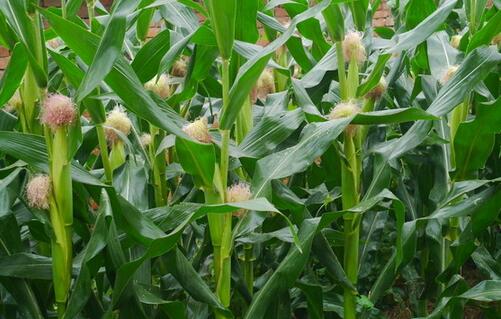
Due to large inventories, as soon as the new corn hit the market, prices kept falling, and the returns from planting corn grew lower and lower, leaving some farmers feeling lost time and again. Looking at the just-harvested corn piled up like a mountain, farmers cannot help but wonder: with costs high and returns low, can corn still be planted?
Recently, Xiao Age, through interviews with some farmers and distributors in Lushan County, Pingdingshan City, Henan Province, jointly explored the corn planting issues that farmers care about most.
Current situation: ordinary corn yields low returns, and selling it basically makes no money
Old Wang is a villager of Maizhuang Village, Malou Township, Lushan County. This year, the 8 mu of Liyu 16 he planted was harvested. Although this year was severely affected by climate and pests and diseases, Liyu 16 achieved high yield thanks to its high disease resistance.
When asked whether a bumper harvest could bring good returns given this year's lower corn prices, Old Wang told us he felt very fortunate: the Liyu 16 variety he planted was good and high-yielding, and Beijing Shihui Agricultural Development Co., Ltd. provided full service throughout, from how to plant the corn variety, how to manage it, and when to harvest, so the yield produced was 300 to 400 jin higher than ordinary plots.
"Although the corn price is still on the low side, the per-unit yield is higher, so the returns are still somewhat higher." Old Wang felt a bit comforted inside.
However, within Henan Province, farmers like Old Wang are still only a minority. For most farmers, after deducting the costs of plowing, pesticides and fertilizers, seeds, mechanical harvesting and so on, this year's corn simply cannot earn much money. Without expert guidance and scientific farming, farmers who do not farm well may even lose money.
By visiting farmers, we learned what is in farmers' hearts.
Focus: regarding corn planting, what do farmers care about most?
With corn planting, some are happy and some are worried, but the issues farmers care about most are none other than the following situations.
1. Variety quality
"The state takes agriculture as its foundation, and agriculture takes seed as its priority." An excellent variety is the foundation of a bumper harvest. Variety selection is the first step in corn planting, and also a key step. Choosing the right variety lays a solid foundation for increasing yield and income in autumn.
Standards for a good variety
1. High yield
2. Large ears with deep kernels
3. Good disease resistance
4. Good lodging resistance
5. Good kernel setting, tolerant of high temperatures
6. Good drought resistance
"Farming is about seeing a bit more grain. When a corn variety performs well and yields high, naturally more people plant it," an old farmer said.
During the visits, the feedback we received was that Liyu 16 includes all of the above characteristics, and also has many features that other varieties do not have. This is exactly why Liyu 16 is so popular: farmers approve of it, and distributors feel at ease with it. Liyu 16 won the Lushan market with its super-strong quality.
2. Seed price
Corn is an important grain crop in China. Provinces such as Shandong, Heilongjiang and Henan are important corn-producing areas in China, and many farmers make a living by planting corn, so the annual price of corn seed always affects their hearts.
"Liyu 16 seed is too expensive. Where I am, you can't buy it for that price," a farmer who planted another variety told us the hidden situation when asked whether he had planted Liyu 16.
Liyu 16 -- made by a big brand and a good factory, yet farmers always feel the price is expensive. We can analyze the input-to-output ratio and tell farmers which variety is actually the most expensive.
Liyu 16 follows the unified pricing of the Ministry of Agriculture, at 55 yuan per bag, while farmers' misunderstanding is that some corn varieties cost twenty or thirty yuan per bag, so the question arises: is Liyu 16 more expensive than other seeds?
In fact, cheap corn seed may reach only about a thousand jin per mu, while Liyu 16 can reach more than 1,600 jin. For example, if Liyu 16 increases yield by 200 jin per mu compared with ordinary varieties, farmers can sell 200 jin more grain and increase income by more than 100 yuan. Which variety is the most expensive is clear at a glance.
3. Promotional offers
In recent years, the agricultural materials industry has become increasingly competitive, and promotional activities have become more and more frequent. Forms such as "buy and get free gifts" and "gifts for entering the store" have emerged endlessly and in dazzling variety, but the results of the activities are not so ideal.
Through visiting Lushan County, we were deeply attracted by the Big Ear King activity here, and the activity format was also quite popular with farmers.
"The Big Ear King activity is held every year, I take part every year, and there are gifts every year. The things are practical, and I feel really happy," an old farmer holding an activity prize said cheerfully.
In the activities, farmers care more about the following:
1. The size of the discount: if the discount is too small, some people who travel more than ten li to the activity site and see that it is not what they expected often become even more disappointed.
2. Whether the gifts are practical: if the discount content includes gifts that farmers cannot use, that is also futile. At present, coupons for buying corn seed, free pesticides, and practical daily necessities are quite popular with farmers.
3. Whether there is an activity just for participating: if there is an activity just for participating, customers with lower purchasing power will also actively take part in the activity.
For a successful marketing activity, whether the content of the activity is attractive is very important, but it must also be matched with all-around promotional methods. To a certain extent, form matters more than content.
4. National policy
"How exactly should corn be planted now, and can the price go up? This is the issue we care about most right now; otherwise farmers' enthusiasm for planting corn will be completely discouraged." Regarding corn sales, one farmer hoped the state would give more policy support.
According to statistics from the State Grain Administration, in 2013, after excluding warehouse transfers, the temporary storage inventory of corn still had 49.67 million tons left; in 2014, after excluding warehouse transfers, the temporary storage inventory of corn still had 80.29 million tons left. The two years of purchase and storage brought the 2015 corn inventory to 120 million tons. This year, the temporary storage purchase volume has exceeded 93.66 million tons, and total inventory has reached 250 million tons, putting enormous pressure on destocking in the future.