Garlic made you rich overnight - what price secrets are hidden behind it?
“There is a saying in the garlic industry called 'garlic is hard to calculate.' I have grown garlic for more than 30 years, and I still have not figured out the temper of garlic prices.” said Mao Guangsong, a garlic farmer in Maoguai Village, Dameng Town, Zhongmu County, Henan Province. He began growing garlic in 1979, has witnessed garlic's sharp rises and falls, and has tasted all the sweetness and bitterness of being a garlic farmer.
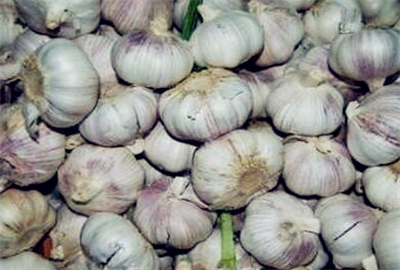
“This year is the most profitable year for growing garlic in all my years, with 10,000 yuan per mu.” Mao Guangsong said. He planted 17 mu of garlic last year, and when it was harvested in May this year, dry garlic sold for more than 5 yuan per jin, more than double last year's price.
Since July this year, garlic prices have kept rising, with the price coming out of cold storage reaching as high as 7 yuan per jin, and in some supermarkets even exceeding 10 yuan. Ordinary people exclaimed that "garlic made you rich" is back again.
In Mao Guangsong's memory, garlic prices' sharp rises and falls are only a matter of the past 10 years. He clearly remembers the big garlic price drop in 2008.
“At that time, the price of wet garlic was more than 2 mao per jin, and no one harvested the garlic in the fields because the money from selling it was not enough to pay the workers. Later, large patches of garlic were plowed into the ground. The garlic stored in cold storage could not find its owner, and everyone abandoned it because the money from selling it was not enough to pay the cold storage fees.” Mao Guangsong said.
That year, Mao Guangsong planted 10 mu of garlic and lost nearly 20,000 yuan. Those who lost the most were not the garlic growers, but the garlic hoarders. Garlic stored at more than 1 yuan per jin in 2007 sold for more than 2 mao per jin in 2008. Liu Shaochen, president of the Zhongmu County Cold Storage and Preservation Association, lost more than 8 million yuan and had still not fully earned it back by this year.
The sluggish garlic prices continued until March 2009, but after new garlic came onto the market in May, garlic prices began to rise. The out-of-storage price once reached 3.5 yuan per jin, while in supermarkets it was as high as 8 or 9 yuan. The term "garlic made you rich" originated from that wave of sharp garlic price increases.
“That group of people who had stored garlic truly got rich overnight, making a net profit of more than 6,500 yuan per ton.” Liu Shaochen said. “But I had already lost everything the year before and had not stored garlic, so I did not make money. That is why garlic prices are hard to calculate.”
But in that wave of price increases, Mao Guangsong did not make much money either. When he sold, it was more than 2 yuan per jin. “For garlic farmers, we have to sell whether the price is high or low. By September, if it is not stored in cold storage, it will sprout.”
Mao Guangsong said that it was also from 2009 that "garlic speculators" suddenly emerged, and the trend of "speculating in garlic" became heavier and heavier. “In 2009, I remember one truckload of garlic passed through 12 people's hands and was speculated up from 800 yuan per ton to more than 3,000 yuan. I also joined in. After buying, I stored it for a while and sold it at 4,000 yuan per ton.”
But the sharp garlic price drop in 2013 made Mao Guangsong lose more than 2 million yuan. Since then, he has never hoarded garlic again. “Speculating in garlic is 'big money eating small money.' Some big players take several hundred million and store 30,000 to 40,000 tons at a time. After driving the price up, they sell quickly. Small players follow the big players and often fall into the ditch, and when the garlic price falls, they still have not sold.” Mao Guangsong said.
Liu Shaochen said that big players often conduct surveys. When garlic is being planted, they survey the planting area; when garlic scapes come out, they judge the output; and at harvest, they survey the output again. So the information they grasp is much more than what small players grasp. But even so, big players also lose sometimes. No one can completely control prices.
“Speculating in garlic also has conditions. Only when supply is small can it be driven up. Like this year, because of weather reasons, garlic output fell, so some capital came in, hoarded garlic, intensified market shortages, and helped push garlic prices up. On the other hand, the opacity of market information also leaves room for garlic speculation.” Liu Shaochen said.
Now, in addition to growing garlic every year, Mao Guangsong also trades agricultural products such as garlic scapes, radishes, and onions. Their prices also rise and fall, and he has already become accustomed to it.
This year Mao Guangsong rented more than 10 mu of land again and planted 30 mu of garlic. He knows that farmers in surrounding counties and cities have also increased their garlic planting area, and next year's price may fall. So why does he still plant?
“Judging from my more than 30 years of experience growing garlic, years with sharp rises and falls in garlic prices are still few. Most years are ordinary. As long as the price of dry garlic is not lower than 1.5 yuan per jin, you can still make a little money, and overall it earns more than growing wheat.” Mao Guangsong said.
Mao Guangsong said he knows that for a minor commodity like garlic, the government cannot manage everything the way it does grain, and it still depends on the market. But he hopes the government can set up more agricultural subsidies or insurance, so that farmers can farm with more peace of mind, because he has learned from experts that agriculture subsidies in European and American countries are very large.