Analysis and Forecast of Egg Price Trends in the Year of the Rooster, 2017
According to a report by China National Radio's "San Nong Zhongguo," the latest data released by the Ministry of Commerce shows that during the 2017 Spring Festival, grain prices rose slightly, edible oil and meat prices fluctuated within a small range with increases predominating, and the average price of 30 kinds of vegetables rose 3.9% compared with before the holiday, while only poultry egg prices remained basically stable.
According to reports, during the Spring Festival, South Korea fell into an "egg shortage" due to an avian influenza outbreak, with egg prices soaring 70%. But in our country, egg prices did not rise but instead fell, with the mainstream nationwide farm-gate egg price dropping from 2.5 to 2.6 yuan per jin before the Spring Festival to the current 2.1 to 2.2 yuan.
The "rocket eggs" of years past once enjoyed glory days of five or six yuan per jin, so how has it come to this sorry state now? How will the egg market develop in the Year of the Rooster?
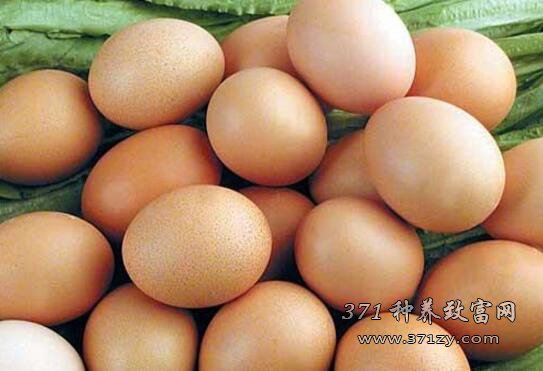
Just after the Spring Festival, the vegetable and fruit market gradually shifted from the busy pre-holiday stockpiling to the post-holiday quiet. Among these, egg prices across the country fell noticeably. Liu Jianjun, a farmer in Jiadi Village, Xinxi Town, Puyang City, Henan Province, told reporters that in recent days he has felt egg prices dropping significantly.
Liu Jianjun: Just after the Spring Festival these past couple of days, sales volume hasn't been that large either, the weather hasn't been very good these two days, egg production is average, and now the price keeps falling. Before the New Year it was still around three yuan, now it's more than two yuan per jin, there's not much profit, I can barely hold on. Let's see how it is after a while.
From before the Spring Festival until now this year, egg prices can be said to have been heading downward all the way. Liu Jianjun admits that if this continues, he will be losing money.
Liu Jianjun: Around this time last year the price was about the same, but this year compared with last year the difference is quite big. Around this time last year it was more than three yuan. If it continues like this, this year I'll be losing money. Costs aren't low either. I think by the second half of the year the price may recover.
Not only in Henan. In the view of Zhuo Chuang Information analyst Liu Xu, the current egg price has declined compared with both the same period last year and last month. On the seventh day of the first lunar month, the average egg price in Northeast China was 1.98 yuan per jin, in North China 2 yuan per jin, in East China 2.28 yuan per jin, and in Central China 2.3 yuan per jin.
Liu Xu: Compared with the seventh day of the twelfth lunar month, North China saw the largest decline, at 28.47%; compared with the same period last year, Northeast China saw the largest decline, at 37.62%. The main reason for the sharp drop in egg prices across regions is the increase in egg production.
According to Liu Xu, during the Spring Festival egg prices showed no trend of recovery; on the contrary, farm-gate egg prices in various regions declined to varying degrees, while retail prices remained basically stable.
Liu Xu: This is because during the Spring Festival large supermarkets had promotional activities, and farmers' markets were mostly closed, so before the Spring Festival the downstream wholesale and retail segments mostly stocked up in advance. During the Spring Festival the wholesale and retail segments mainly sold off inventory and purchased less, so first-tier wholesalers received fewer goods, and farm-gate egg prices fell.
After entering the twelfth lunar month, egg prices began to decline continuously. The main reasons for the price drop are: first, industry players had earlier expectations for the future market and built up relatively large inventories, so egg supply was relatively sufficient; second, pre-holiday consumption was not ideal, as students went on vacation and migrant workers returned home, reducing centralized egg purchases.
Liu Xu: During the Spring Festival most markets were closed, while laying hens were still laying eggs, so during the Spring Festival inventories at farms increased. And after the Spring Festival, ordinary consumers' demand for chicken, fish, meat and eggs all decreased, and the egg market showed the characteristics of increased supply and weakened demand, so every year after the Spring Festival the egg market is even quieter.
According to Zhuo Chuang Information's calculations, at presentlaying hen farmingcosts are basically 2.6 to 2.8 yuan per jin, while egg prices in various regions are mostly 2.1 to 2.5 yuan, so farmers are generally in a loss-making state. Although the Lantern Festival is approaching, its stimulating effect on end-consumer demand is limited.
Farmers are pinning their hopes on the second half of the year. Can everyone's wishes come true? Analyst Liu Xu predicts that the phenomenon of farm-gate egg prices being below the farming cost line will continue for some time. Since laying hen farming in the first half of the year is mostly in a loss-making stage, the number of replacement laying hens is bound to decrease, and in the second half of the year the inventory of laying hens is expected to decline, so the egg market in the second half may be better than in the first half.
Liu Xu: In the second half of 2015 and in 2016, farmers were mostly in a profitable state, so their enthusiasm for restocking was fairly good. In the first half of 2017, the inventory of laying hens increased by 5% year on year, and supply was relatively sufficient. On the demand side, from the Spring Festival to May 1, only during the school term will egg demand increase slightly; the Lantern Festival, Qingming Festival and others have little effect in driving egg demand, and spring itself is the off-season for egg demand, so demand is unlikely to increase. With supply increasing and demand changing little, egg prices before May 1 this year may remain at a low level.