How much is green onion per jin? 2017 green onion price market analysis and forecast
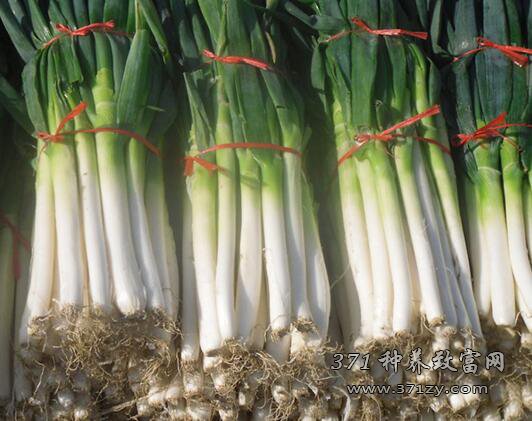
2017 green onion price market forecast
Last year, green onion prices differed greatly between the first and second halves of the year. In the first half, prices were relatively high, reaching a maximum of 7.1 yuan/kg. In the second half, prices remained persistently low, hitting a minimum of 0.44 yuan/kg; after entering December, prices rose again, and by December 31 they had risen to 1.6 yuan/kg. Reduced planting area and reduced output of Fujian green onions were the reasons why green onion prices stayed high in the first half of the year. Starting in the second half, the green onion planting area increased noticeably, by an average of more than 30%, and the green onion market quickly shifted to oversupply, with prices gradually declining and remaining at a low level from July to October, while growers suffered continuous losses from July to November.
Affected by the typhoon in November 2016, Fujian green onions coming to market this spring still face reduced output, so green onion prices in the spring of 2017 are expected to rebound, but overall prices are expected to be unlikely to reach the level of the same period in 2016. (The above analysis is for reference only)
Green onion cultivation techniques
Seedling raising and planting time schedule
First crop: raise seedlings from late June to early July, plant in September, and bring to market in March to April of the following year; second crop: raise seedlings in mid-September, plant in March to April of the following year, and bring to market from August to early September.
Selection of seedling-raising land
Because the seedling-raising periods of both crops fall almost entirely in the rainy season, choose a plot with level land, slightly higher terrain, irrigation available in drought, drainage possible in waterlogging, and where no Liliaceae vegetables such as green onions, onions, Chinese chives, or garlic have been grown for more than 3 years.
Fine ploughing and careful harrowing, forming ridges and making beds
To prevent underground pests from damaging the seedlings, after spreading the organic fertilizer, spread poisoned bait once more. That is, per mu use 5 kg of wheat fried until yellow, then mix evenly with 250 mL of diluted phoxim solution, seal and smother for 3 hours, then scatter on the ground and turn into the soil together with the organic fertilizer, which can kill many kinds of underground pests at once.
After ploughing and turning, harrow thoroughly until fine, firm, and level. Before making beds, first open the irrigation furrow on one side of the field, then make the beds. The clear width of the bed is 1-1.2 m, the bed ridge is 20-23 cm wide and 8-10 cm high (tread firm). After the beds are made, broadcast compound fertilizer (15-15-15) in the beds at 25-40 kg per mu.
Raking in the seed
Evenly broadcast the seeds on the leveled bed surface. After sowing, rake lightly once with a rake so that the seeds mix fully with the soil and are buried shallowly in the soil, then water.
Covering the seed: after the bed is leveled, use a flat shovel to scrape out 1 cm of fine moist soil from the bed surface, then level the bed surface again.
Watering
Stop watering when the water in the bed reaches a depth of 6-7 cm. Sow after the standing water on the bed surface has infiltrated dry, then cover with fine soil about 1 cm thick. Seedlings from covered sowing have deep roots, many roots, and are more drought-tolerant with many plants, and the seedlings are robust. After sowing, when manual operations can be carried out, spray herbicide while the soil moisture is suitable.
Management during the seedling stage
Thin the seedlings from full emergence to the 5-leaf stage, with a seedling spacing of 1-1.5 cm. Along with thinning, pull out weeds that were not killed by the herbicide. Control watering; do not water unless dry, to reduce the occurrence of "disease incidence" and "yellowed seedlings." If the seedlings grow relatively thin and weak, apply additional fertilizer as appropriate along with watering. Per mu, apply urea with irrigation water at 7.5-10 kg, once every 20 days, for a total of 2 applications. If continuous rainy weather occurs during the growing period, pay attention to preventing downy mildew and white blight to ensure strong seedlings.
Timely planting
Summer-sown green onions are planted in early to mid-September, and autumn-sown green onions are planted in March to April of the following year. Row spacing 80 cm, plant spacing 1.5-2 cm, planted in opened furrows (arranging the onions). Before planting, first grade the onion seedlings strictly, then carry out chemical treatment to eliminate root maggots (seed corn maggot larvae) and ensure a full stand.
The specific method is to dip the roots of the onion seedlings into a 4000-fold diluted 1.8% abamectin solution, or an 800-1000-fold diluted phoxim solution, or a 3000-fold diluted beta-cypermethrin solution for 2-3 minutes.
The planting furrow should not be opened too deep or too shallow. If too deep, the dead soil layer is unfavorable for root growth; if too shallow, hilling up later is relatively difficult. After the planting furrow is opened, the newly turned loose soil should be slightly compacted to prevent later collapse from crushing the onion seedlings.
After the onion seedlings are arranged in the furrow, apply an appropriate amount of root-pressing fertilizer. For root-pressing fertilizer, well-rotted barnyard manure is better; per mu, mix 5000 kg with 25 kg of compound fertilizer and apply. While opening the next furrow, cover the root-pressing fertilizer with a suitable layer of fine moist soil. The thickness should be such that the root-pressing fertilizer plus soil does not bury the onion heart (growth point), and a slight compaction is enough. Just-planted onion seedlings must strictly not be watered, to prevent root rot causing large numbers of dead seedlings.
Field management
1. After green onions are planted, the temperature is exactly the period most suitable for green onion growth.
Fertilizer and water management are important links for high yield and good quality. If root-pressing fertilizer is applied sufficiently as required, there will be no fertilizer shortage before the middle growth stage; as long as soil moisture is suitable, rapid and robust growth can be ensured. It is appropriate to keep soil moisture at about 70% of saturated water-holding capacity. Water when dry, and after watering, timely intertill and loosen the soil to help conserve moisture, increase soil aeration, promote root development, and improve the ability to absorb water and fertilizer.
2. The length of the white stalk of green onion is determined by how much soil is hilled up.
Generally, off-season green onions need to be hilled up 3-4 times to ensure the white stalk reaches a length of 70-80 cm. The thickness of each hilling should be based on not burying the onion heart. For off-season green onions grown over winter, carry out one thick hilling before the soil freezes, to minimize leaf drying, accumulate nutrients, and ensure early regrowth after winter. As the growth rate accelerates and leaf mass increases greatly, the plant's demand for soil nutrients rises sharply. To ensure high yield, fertilizer must be applied in a timely manner.
3. Topdressing can be carried out together with watering.