Potato Market Price Forecast for 2017
Since 2016, China's potato industry has continued to develop steadily. Overall, the national planting area has increased steadily, with some production areas experiencing sharp reductions in yield due to extreme weather and disease; total production has declined slightly while remaining stable. Consumer demand potential for potatoes is relatively large, and the consumption structure has changed slightly. Prices have remained at a high level, showing an obvious "N"-shaped trend. A potato trade surplus and a potato starch trade deficit coexist, with an overall trend of both decreasing. It is expected that in 2017, agricultural structural adjustment in the "sickle bend" region, the shift toward processed staple foods, and the targeted poverty alleviation strategy will further strengthen the production and supply capacity of potatoes, while consumer demand will overall maintain a trend of slight steady growth. As inventories are gradually digested, prices will remain at a high level in the short term; in the absence of severe natural disasters, large price fluctuations are more likely in the second half of the year. With the expiration of the "double anti" policy, uncertainty in the international potato starch trade will increase. At the same time, the growth rate of potato supply is far greater than the growth rate of consumer demand, and the risk of price fluctuations is continuously accumulating. The possibility of difficulty in selling in some areas and during certain periods has increased somewhat. It is recommended to further closely monitor market changes, sell potatoes in a balanced manner and at appropriate times, and at the same time avoid blindly following trends in planting, while reasonably promoting grain-potato rotation.
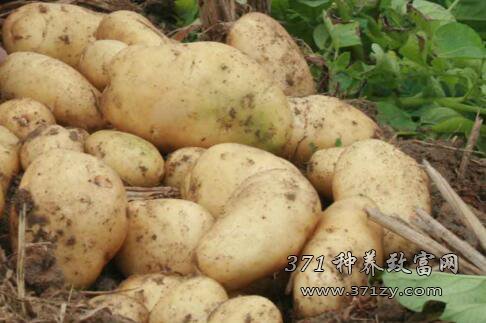
I. Review of the Potato Market Situation in 2016
(1) Severe disasters in some areas, overall production continued to develop steadily. In recent years, China's potato production has developed rapidly, initially forming a planting model consisting of the northern single-cropping region, the central plains and southern double-cropping region, and the southwestern mixed single- and double-cropping region, covering most provinces, autonomous regions, and municipalities in China, with a perennial planting area stable at about 85 million mu and total production maintained above 90 million tons. In 2016, although some areas were severely affected by disasters, China's potato production as a whole continued to maintain steady development. In terms of planting area, influenced by agricultural structural adjustment and the high prices in the spring of this year, enthusiasm for potato planting across the country increased noticeably. In addition, with the accelerated advancement of planting structure adjustment in the "sickle bend" region and the targeted poverty alleviation strategy, planting areas in Heilongjiang, Yunnan, Guizhou, and other places increased steadily. It is expected that the national planting area will be about 85.26 million mu, up 3.0% year on year. With the continuous improvement in the penetration rate of virus-free seed potatoes and field management levels, potato yields per unit area have steadily increased. However, this year's persistent drought weather in the main production areas of the northwest and northeast, large-scale late blight in the southwest, and severe low-temperature chilling damage in the autumn-winter cropping areas of the south caused the national average yield per unit area to decline somewhat. Affected by this, it is expected that the annual total potato production will be about 92.01 million tons, down 3.0% year on year. (2) Adequate market supply, consumption structure changed slightly while remaining stable. In terms of use, potatoes can be eaten directly or used as a raw material in many fields such as the food industry and medical care. However, from the perspective of consumption, potato consumption in China is mainly for food, supplemented by processing consumption, seed consumption, feed consumption, and other uses. In 2016, China's potato market supply was generally adequate, and the consumption structure changed slightly while remaining stable. Affected by the slow recovery of the macroeconomy, the continued increase in migrant workers returning home, and a reduction in raw material supply in major northern processing production areas, food consumption decreased slightly, and processing consumption such as starch fell sharply, with the full-year figures expected to be 55.34 million tons and 7.36 million tons respectively, down 2.8% and 13.8% year on year respectively. Increased farmer planting enthusiasm drove a slight increase in seed consumption, with full-year consumption expected to reach 3.96 million tons, up about 4.3% year on year. At the same time, feed consumption and losses decreased somewhat. (3) Prices ran at a high level, with an overall "N"-shaped trend. This year, China's potato wholesale prices showed an "N"-shaped trend of first rising, then falling, then rebounding, with prices at a relatively high level. From the perspective of monthly changes, price fluctuations generally conformed to the usual annual pattern, that is, prices at the beginning of the year continued the carryover trend from the end of last year and continued to rise. After the Spring Festival, due to the "boss-level" late cold spell in the spring of this year, which caused a shortage in the supply of other substitute vegetables, potato prices remained high, reaching the year's highest level of 3.47 yuan/kg in May, up 53.3% year on year. After that, prices tended to fall, dropping to this year's lowest level of 1.84 yuan/kg in September. Starting in October, autumn potatoes from the north gradually came onto the market, but Gansu and other places experienced the most severe sustained high-temperature weather in nearly 60 years in summer, and Ningxia, Inner Mongolia, Heilongjiang, and the southwest also suffered disasters to varying degrees, making market supply relatively tight and driving potato prices to rebound for three consecutive months. The average price in December was 2.35 yuan/kg, up 7.9% month on month and up 15.2% year on year. From the perspective of annual price changes, the average annual potato price in 2016 was 2.40 yuan/kg, up 13.2% year on year, the second-highest level in the past five years. (4) International trade surplus and deficit coexist. Affected by the relatively high domestic potato prices, export momentum was insufficient this year, export volume decreased somewhat, and export value was basically flat. At the same time, with the continuous improvement in the penetration rate of virus-free seed potatoes, planting techniques, and processing levels, the quality of Chinese potatoes and processed products such as French fries continued to improve, and potato imports decreased somewhat. According to customs data, from January to November, cumulative national exports were 396,000 tons, down 4.3% year on year, with export value of US$238 million, up 0.6% year on year; imports were 136,100 tons, down 2.0% year on year, with import value of US$165 million, down 3.7% year on year; the trade surplus was US$73 million, up 10.3% year on year. During the same period, cumulative national exports of potato starch were 524.91 tons, with export value of US$588,600, down 15.3% and 17.7% year on year respectively; imports were 37,200 tons, with import value of US$28 million, down 38.6% and 35.1% year on year respectively; the trade deficit was US$27.1574 million, down 35.4% year on year. It is expected that full-year exports will be about 500,000 tons, down 4.2% year on year, and imports will be about 330,000 tons, down 31.5% year on year.
II. Outlook for the Potato Market Situation in 2017