Growing Good Rice in Northeast China, He Brings It Back to His Hometown
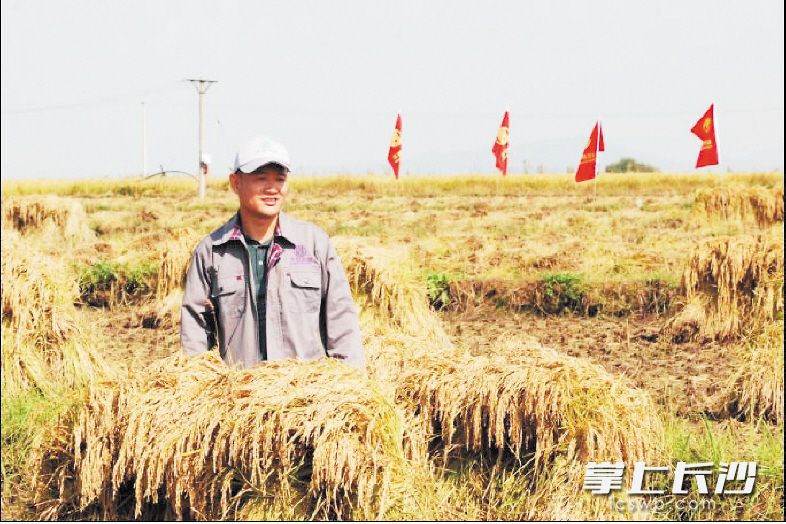
Li Weiguo at his rice planting base.
Name: Li Weiguo Place of origin: Yizhang, Chenzhou
Age: 43
Calling card: Founder of Daxin Runde (Hunan) Agricultural Development Co., Ltd.
New Year's wishes
He hopes to build up the "Yunxin Good Rice" mall in the new year, achieve the goal of reducing costs, bring mutual benefits to the farmers at the base and the consumer group, and guarantee the quality of the rice. At the same time, he hopes more "new farmers" will join in building ecological agriculture and establish everyone's trust in good agricultural products.
This Spring Festival, in his old home in the countryside of Yizhang, Chenzhou, Li Weiguo and his relatives and friends ate rice different from the usual. Everyone talked at the dinner table about how they felt about this rice, and many said: "It tastes like the rice from thirty years ago, with a natural rice fragrance." And this ecologically grown rice comes from Li Weiguo's business venture.
Growing rice in Wuchang City, Heilongjiang Province, and then selling it back to his hometown in Hunan - this is what Li Weiguo is doing. Growing grain elsewhere and then selling it back locally seems at first glance not very reliable, but Li Weiguo, this "new farmer," has achieved results on the road of "going out and bringing back." In 2016, he sold more than 500,000 kg of ecological rice.
Li Weiguo became a "new farmer" somewhat late in his career. He studied accounting in university and once served as investment director of a listed company in Beijing, with an annual salary of more than 300,000 yuan. But in 2014, he gave up this high-paying job and took up "farm work."
"I came out of the countryside; at root I am a farmer," Li Weiguo said. In 2014, he by chance ate a kind of rice in a restaurant and felt the natural fragrance of the rice his mother had grown in an original ecological way when he was a child. He asked around and learned that this was Heilongjiang Wuchang rice. Wuchang City, Heilongjiang Province, is a well-known rice-growing area in China, with a suitable climate, excellent soil, and ecological planting methods, and good rice emerges as a result.
"Many people should also want to eat this kind of good rice. Why not try growing some myself?" Without delay, after resigning, Li Weiguo and two other friends established an agricultural development company. Li Weiguo firmly believes that producing the best products in the best production areas using ecological methods will eventually win consumer recognition.
Starting in 2015, he cooperated with more than 160 farmers in Weiguo Township, Wuchang City, to establish a rice professional planting cooperative association. The farmers provided land and participated in cultivation, while Li Weiguo's company provided planting standards and agricultural materials and equipment. He asked staff from the Academy of Agricultural Sciences and other departments to conduct professional measurements of the soil, and formulated special organic fertilizer according to the soil, using no chemical fertilizer throughout the planting process. For pest control, he equipped the farmers with solar insect-killing lamps for physical pest control, using no pesticides in the entire process. After the rice was harvested, he paid the farmers 20% more than the ordinary purchase price, so that the farmers could benefit.
He named this rice "Yunxin Good Rice," cultivating with integrity and at the same time cultivating everyone's trust in agricultural products. After the rice was harvested, Li Weiguo mainly promoted it in his hometown in Hunan. Although the price of 19.8 yuan per kg for group purchases to 27.6 yuan for retail was far higher than the price of ordinary rice, it won recognition from many consumers in Hunan. Last year, their sales volume reached more than 500,000 kg, with sales of over 10 million yuan. In his old home in Yizhang, neighboring farmers also began to learn his ecological methods for growing rice.
"Today's agriculture needs a virtuous cycle to support it, and needs a large number of new farmers to support it," Li Weiguo hopes. He hopes more professional "new farmers" can join the agricultural field, producing high-quality agricultural products with high standards, ensuring reasonable returns through high premiums, and attracting more "new farmers" through high returns, thus achieving a virtuous cycle.