Farmers in Meilan District, Haikou, Hainan "Kill Two Birds with One Stone" to Boost Income
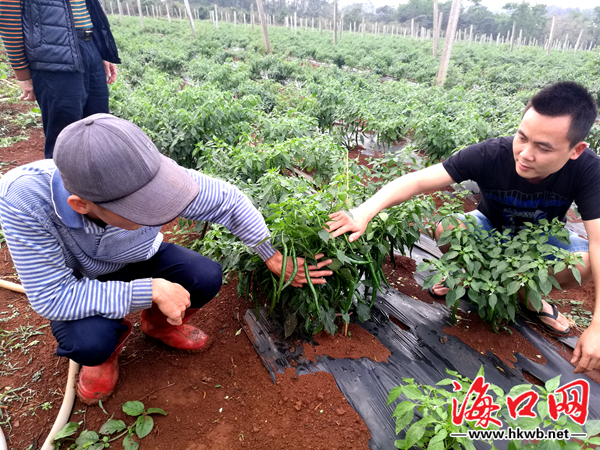
The chili pepper plants are already full of fruit.
By interplanting chili peppers in a jujube orchard and using the orchard's existing well-equipped sprinkler irrigation system for irrigation, with both crops sharing fertilizer, Chen Yong, a villager from Genzhu Village, Yongqun Village Committee, Dazhipo Town, Meilan District, Haikou, has adopted this two-birds-one-stone approach to save costs and increase income.
On the morning of the 9th, in the muddy red soil on the hillside behind Genzhu Village, a jujube orchard was covered with black plastic film, with sprinkler irrigation facilities running throughout the orchard, and Chen Yong was irrigating the crops. Looking closer, the chili pepper plants in the orchard were laden with fruit.
"This was originally a jujube orchard, and the infrastructure such as sprinkler irrigation was already in place. I interplanted more than 30 mu of chili peppers in it, making full use of the existing land resources and irrigation facilities, which can save quite a lot of costs," Chen Yong said. The 31 mu of line peppers planted in mid-October last year had already begun to be harvested before the Spring Festival, with the highest price reaching 1.8 yuan per jin, and the income before the festival was several thousand yuan. After the Spring Festival, although the price of chili peppers was somewhat sluggish, he planted a lot and the yield was high. In the next few days, he will organize another picking, and the harvest volume can reach about 10,000 jin. Calculated at the current market price, it can sell for at least five or six thousand yuan.
Chen Yong said that chili peppers planted on sloping land have better color than those planted in paddy fields, and the price per jin is also one to two mao higher, and the picking period can continue until April this year. In addition, because his line peppers are well managed with complete facilities, judging from the current growth, the average daily picking volume can reach three to four thousand jin. "After the line peppers are harvested, I plan to interplant radish sprouts, green vegetables and other leafy vegetables in the jujube orchard again. This kind of rolling planting can make full use of land resources and obtain greater economic benefits," Chen Yong said. In addition, the orchard originally planted 900 jujube trees, planted in April last year, and they can be harvested in November this year. The current market price of jujube is 5 to 6 yuan per jin, and each jujube tree can produce 50 to 60 jin per year, with a harvest period of 20 to 30 years, so the benefits are quite considerable.
The person in charge of the Meilan District Agriculture and Forestry Bureau said that the cost of planting chili peppers alone is about 2,000 yuan per mu, but interplanting chili peppers in a jujube orchard and making full use of the existing facilities for interplanting can reduce the costs of land preparation and facilities. At the same time, the fertilizer applied when planting chili peppers can be shared and used together by the jujube trees and other crops, which not only saves costs but also increases income.