How a single prickly ash tree drove farmers in Mianchi, Henan to prosperity
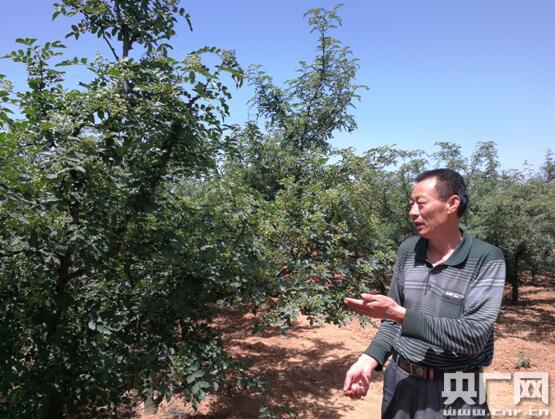
On an early summer afternoon, the scorching air swirled all around. Shi Chengfang's family was busy weeding and pruning prickly ash trees on the sloping fields of Buzhaozhai Village, working away happily. "The prickly ash is a treasure; you can't get rich without it. If farmers want to get rich, plant prickly ash trees quickly." Shi Chengfang straightened up, pounding his lower back with his hand while saying cheerfully.
Buzhaozhai Village, where Shi Chengfang lives, is located in Potou Township, Mianchi County, Henan Province, and was a poverty-stricken village known far and wide. The saying "Drought nine years out of ten, living at the mercy of the heavens" captured how much helplessness and bitterness the villagers felt back then... In recent years, they have not only escaped poverty and become prosperous by growing prickly ash, but have also earned the golden signboard of "Central Plains' No. 1 Prickly Ash Village."
The leader of "Central Plains' No. 1 Prickly Ash Village" - Shi Mingchao
From "layman" to "local expert"
Walking into Buzhaozhai Village, more than 2,600 mu of prickly ash trees stretch out in lush green, with clusters of prickly ash berries hanging from the branches and the fragrance of prickly ash filling the air.
How can a single prickly ash tree pry open a path out of poverty for a mountain village? "On the road out of poverty, we can't do without leaders like Shi Mingchao," said Zhang Tao, Party Secretary of Potou Township.
In the past, in a good year, one mu of land in Buzhaozhai Village could yield 500 jin of wheat; in drought years, villagers couldn't even recover the cost of the seeds.
In 2002, Buzhaozhai Village was designated a key village for implementing the national Grain for Green policy, but the local land was barren and dry, not very suitable for growing fruit trees. To find a way out of poverty, village Party branch secretary Shi Mingchao could neither eat nor sleep peacefully.
Just when Shi Mingchao was at his wit's end, a dozen or so "Dahongpao" prickly ash trees planted in front of his next-door neighbor Wang Yumin's house caught his attention. These dozen or so prickly ash trees were growing vigorously, with large, plump berries.
Shi Mingchao's eyes lit up: prickly ash is drought-tolerant and barren-tolerant, with high yields and decent prices, and our sloping hillside land is just right for it. Add the agricultural tax exemption and the Grain for Green subsidies, and growing prickly ash is sure to work!
When he told his family about the idea, he was met with a blunt rebuff. "You have no skills and no experience, and you're getting on in years, so don't try to show off!" Regarding the village's failed experience growing apples, Shi Mingchao still feels lingering fear to this day.
Shi Mingchao felt that since the state had policies in place, his approach must be right. He went to inspect prickly ash planting bases in Hancheng, Shaanxi, invited experts to test soil samples, then "customized meals" for the land according to soil type and crops to be planted, and also bought prickly ash saplings from Hancheng.
"All you do is mess around with things that are neither nice to look at nor useful, and spend good money for nothing." Grumbling aside, his family still actively helped with the work.
He trial-planted nearly 13 mu, and because he didn't understand the techniques, Shi Mingchao took many detours. It was through repeated "setbacks" that Shi Mingchao learned a great deal of technical knowledge.
A year later, the trial-planted prickly ash grew vigorously, reaching over 1 m tall, confirming that the village was suitable for growing prickly ash. In August 2007, right in prickly ash season, Shi Mingchao's prickly ash bore fruit for the first time. By 2008, he had earned more than 8,000 yuan.
"Growing prickly ash is extensive management; as long as it's convenient for ventilation, sunlight and harvesting, that's enough." Speaking of prickly ash growing techniques, Shi Mingchao was every bit the expert. "Though it's extensive management, you can't just leave it alone. Prickly ash trees fear 'two neglects' the most: first, neglected land; second, neglected trees. When the land needs weeding, you must weed; when the trees need pruning, you must prune."
Through formal training by professional institutions and the "pass on, help and guide" approach, Potou Township has seen a group of "field talents" and "local experts" emerge, becoming the backbone force that energizes the rural economy and drives the people in their area to prosperity.
"The techniques of these local experts are practical, easy to learn, without any showiness, and more to the masses' taste. Giving full play to the role of local experts in poverty alleviation is like using four ounces to move a thousand catties," Zhang Tao said.
Prickly ash trees laden with fruit
From "not understanding" to "gladly accepting"
"We farmers live at the mercy of the heavens when we work the land. When it rains, we harvest a bit more. Old Shi spends money to tinker with prickly ash trees - can he really earn it back?" At one point, the villagers couldn't understand Shi Mingchao's almost stubborn persistence.
Shi Chengfang likewise went through an ideological shift from "not understanding" to "gladly accepting." Shi Chengfang's family could be described as "so poor the pots and pans clatter," raising two children who were in school, with all their income coming from a few mu of barren land at the mercy of the heavens.
Today, the prickly ash trees have become his family's "poverty-alleviation trees," and his life has been turned upside down by prickly ash.
"When I first started growing prickly ash, I didn't have much confidence either, not knowing whether it would work, so I planted 3 mu just to give it a try." Speaking of the benefits the prickly ash trees have brought, Shi Chengfang was full of feeling: "Now my annual income is up to tens of thousands of yuan. Not only have I escaped poverty, but my living conditions have improved too."
As the benefits of prickly ash became clear, the villagers' misgivings faded, and everyone began coming one after another to "seek advice." While teaching techniques, Shi Mingchao also kept improving them through experiments to raise the quality and yield of prickly ash.
He successively explored and improved techniques such as rational close planting, pest and disease control, balanced fertilization, and management pruning, shortening the prickly ash fruiting period by one year.
From sapling selection to field planting, from field management to harvesting and drying, Shi Mingchao guided everything carefully and spared no effort. For these villagers who took the lead in planting prickly ash trees, their per capita annual household income increased several times over compared with before Grain for Green. "The prickly ash we produce is higher quality than elsewhere and fetches a better price!" Shi Chengfang said.
"These past two years, I've rented villagers' idle land to grow prickly ash. In 2012 I planted 20 mu, in 2013 I planted 10 mu, plus my family's previous 13 mu of land, so I've planted more than 40 mu in total myself," Shi Mingchao said.
Through radiating and driving effects, prickly ash trees have become a truly prosperity-bringing tree for the local area. This year, Buzhaozhai Village's prickly ash planting area reached more than 2,600 mu, accounting for more than 80% of the whole village's cultivated land. Potou Township as a whole has developed a cumulative area of nearly 20,000 mu, and the prickly ash brand is gradually gaining fame across the country.
From "bringing in saplings to plant" in the past to "growing saplings to sell" today
"Once our prickly ash here ripens, we don't even need to leave home - outside buyers from Shaanxi, Gansu, Chongqing and other places come to purchase it, buying as much as we have. In 2016, we earned 8 million yuan," Shi Mingchao said. Now is the season for selling green prickly ash, at 10 yuan a jin; by August, the price of dried red prickly ash is 40 yuan a jin.
For the people of Buzhaozhai, simply selling prickly ash berries doesn't feel satisfying enough. "Those who grow berries are not as well off as those who grow saplings, and those who grow saplings are not as well off as those who sell saplings!" Shi Mingchao said. Our village has gone from "bringing in saplings to plant" in the past to "growing saplings to sell" today.
Buzhaozhai Village used to be barren hills with poor soil, and the survival rate of the little saplings planted was not very high. If they bought fruit saplings again, the price was too expensive.
To save money, Shi Mingchao turned to experts for help, asking them to come and guide the seedling cultivation on site. Once they had their own saplings, besides replanting land where seedlings had died, they sold both berries and saplings.
"This year I cultivated more than 10 mu of prickly ash saplings, and they can be sold next year," villager Shi Junfa said full of confidence.
How to achieve maximum benefits and build a fine-processing industry chain? In 2013, the village built a prickly ash storage and processing factory, setting out to deeply process prickly ash, using advanced technology to dry the fresh berries, extending storage time, and carrying out secondary processing of the prickly ash peel, seeds, stems and leaves.