How is Xinhui dried tangerine peel grown? Jiangmen, Guangdong explores organic cultivation models
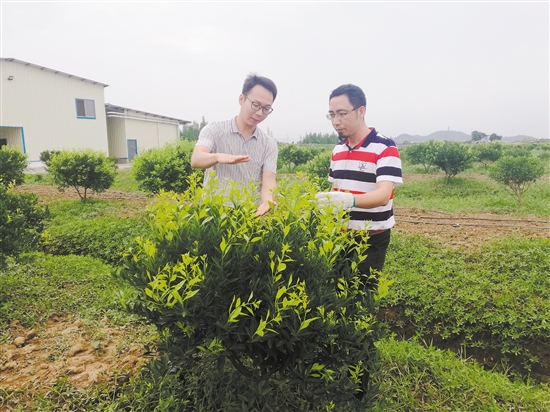
Wen Weicheng hopes to introduce healthier concepts to make the best of Xinhui's treasure, so he is exploring organic cultivation models for Xinhui mandarin oranges.
At dusk after the Start of Summer in Xinhui, a hint of warmth fills the air. Leaving the urban area of Xinhui District, Jiangmen, and heading south along Qichao Avenue, one arrives at the famous Chakeng Village.
What makes Chakeng Village in Jiangmen most proud is not only Mr. Liang Qichao, but also authentic Xinhui mandarin oranges. An old saying has long circulated among the people of Xinhui: "Wherever one can see the Xinhui Xiong (pronounced ni) Zi Pagoda, the large red mandarin oranges grown there have exceptionally fragrant peel and are authentic dried tangerine peel." Chakeng Village happens to be located in this prime geographical position.
After crossing Dadong Bridge, the road quickly turns onto a river embankment that combines a dike and a road. After driving a short distance, one enters Zhengweiwei of Chakeng Village. Amid the fields, rows of neatly arranged Xinhui mandarin orange trees come into view, and the Xinhui mandarin orange cultivation base of Guangdong Wenhetang Health Industry Co., Ltd. (hereinafter referred to as "Wenhetang") has arrived.
Compared with traditional Xinhui mandarin orange cultivation bases, this over 100-mu estate of Wenhetang is particularly distinctive. It is the first Xinhui mandarin orange orchard in Xinhui to adopt national organic product standards throughout the entire cultivation process.
"In July this year we will test the fresh fruit, and we hope to become the first Xinhui mandarin orange cultivation estate in the country to pass organic certification!" Wen Weicheng, general manager of Wenhetang, who was accompanying us, said full of expectation.
"Organic Xinhui mandarin oranges" is undoubtedly a fresh concept in the Xinhui industry. According to national organic food standards, through strict control of the entire process, including soil cultivation, seedling planting, fruit drying and peel airing, and even warehousing and operations, truly green and healthy Xinhui dried tangerine peel can be produced.
Wenhetang's exploration of organic Xinhui mandarin orange cultivation is not only an ideal aimed at letting the people of Xinhui taste the "flavor of childhood," but also a beneficial attempt by the current Xinhui dried tangerine peel industry to move toward high-quality, high-value-added "refined agriculture."
Using nearly a year to "refine" the best soil
Walking into Zhengweiwei of Chakeng Village, with murmuring streams, shady green trees, and standing watchtowers, one is far from the noise of the city, as if entering a hidden paradise.
After searching far and wide, Wen Weicheng put a great deal of thought into finding this "virgin land."
"Since 2014, I have been looking for a suitable location. This place must be some distance from villages and buildings, so that it can maintain a relatively independent environment and not be disturbed by excessive surrounding influences," Wen Weicheng explained.
Opening the mobile map, one finds that Zhengweiwei is located in the lower reaches of the Tan River, the mother river of Xinhui, with a tributary of the West River flowing in on the east and the water-rich Yinzhou Lake on the south. This hydrological wonder of "three waters converging" is absolutely an irreplicable natural blessed land, and also an ideal soil environment for growing the best Xinhui mandarin oranges.
Wen Weicheng told reporters that this place used to be a fish pond, the soil environment was relatively clean, and the excrement of fish and shrimp was also quite good fertilizer.
To grow organic Xinhui mandarin oranges, soil quality is the primary guarantee. Wen Weicheng strictly followed organic standards, focusing his main energy on soil improvement, enhancing the elemental content of the soil according to the principle of "supplementing whatever is lacking," repeatedly turning and sun-drying it, continuously cycling the process, and striving to achieve a balance of organic matter in the soil.
Facts proved that nearly a year of preliminary work created excellent innate conditions for the growth of Xinhui mandarin oranges and laid a solid foundation for Wenhetang's exploration of organic cultivation of Xinhui mandarin oranges. Testing by Pony Testing Group Shenzhen Co., Ltd. of the soil and irrigation water at Wenhetang's mandarin orange orchard showed that they fully meet the requirements for an organic cultivation environment.
Letting Xinhui mandarin oranges grow up happily while listening to music
In conversation with Wen Weicheng, the reporter found that his understanding of modern agriculture is very avant-garde. The concepts of freedom and happiness, science and rigor run through his work and are likewise integrated into the growth of this Xinhui mandarin orange grove.
Strolling through Wenhetang's Xinhui mandarin orange estate, the first impression is that the spacing between the mandarin orange trees here is especially wide.
"According to traditional Xinhui mandarin orange planting spacing, there are generally more than 80 fruit trees per mu. But here we strictly follow the standard of 56 fruit trees per mu," Wen Weicheng explained to reporters, saying that creating an open planting space is to introduce more advanced management methods in the future.
For example, he said, when a mandarin orange tree grows to 2.5 x 2.5 meters and becomes sturdy in the future, sufficient space will be needed for mechanized operations; otherwise, fruit pickers will not be able to walk in, which will affect work efficiency.
"This is a way of planning ahead." Wen Weicheng said that what he values is not the per-mu yield of this mandarin orange grove, but the quality of each mandarin orange fruit.
What is admirable is that this over 100-mu mandarin orange grove of Wenhetang is developing in the direction of "refined agriculture."
"Look, the drip irrigation we use adopts Israeli Netafim technology, all laid underground, with basically no obstacles on the path." At Wen Weicheng's reminder, the reporter discovered the unique features of this mandarin orange grove. According to the introduction, the core of this drip irrigation technology introduced from Israel lies in achieving precise spraying of water and medicine, and it can accurately control indicators such as dosage, distance, and drop.
In addition, considering the sedimentary terrain around Chakeng Village, Wenhetang drove more than 2,000 settlement piles and made large investments to build its own drainage pump room, photocatalyst warehouse, and more, all to provide solid hardware conditions.
Wen Weicheng said that after optical fiber is connected here in the future, 12-18 cameras will also be installed to observe the mandarin orange trees in all directions, from panoramic to medium and close-up views. Images and videos can also be uploaded to a website and fully made public, allowing consumers to truly experience and understand the growth process of each mandarin orange tree.
What made the reporter feel even more novel was that Wen Weicheng particularly values the effect of music on crop growth. "Every tree and every blade of grass is a living entity, and the owner's emotions are very likely to affect it. This has a scientific basis." According to Wen Weicheng's plan, he will install speakers in the mandarin orange grove, truly allowing Xinhui mandarin oranges to thrive in a free and joyful environment.
An ideal and persistence that do not forget the original aspiration
"These are all seedlings from 2014. They were planted in the ground in March last year, and this year they should be able to bear a small amount of fruit." Following Wen Weicheng closer to the mandarin orange grove, his eyes were full of expectation.
Wen Weicheng picked a small mandarin orange fruit and handed it to the reporter to smell. The fragrance was striking. He said excitedly, "A truly good fruit has exactly this flavor. Only then will the dried tangerine peel made from it later be beautiful enough!"
In making organic dried tangerine peel, there is no successful case in Xinhui or even across the country to serve as a reference. There are many difficulties, and one can only cross the river by feeling the stones, exploring step by step.
At Wenhetang's Xinhui mandarin orange estate, there are also "three strict prohibitions" that are untouchable red lines: the use of herbicides is strictly prohibited, the use of chemical drugs is strictly prohibited, and the use of genetically modified technology is strictly prohibited.
"On the one hand, we go out more ourselves to learn advanced experience from Europe and the United States. On the other hand, we have also brought in a technical team from South China Agricultural University to offer advice and suggestions." Wen Weicheng said that organic cultivation has extremely strict restrictions on the process management of crops. There are not many varieties available for selection in the use of medicines and fertilizers. When mandarin orange trees encounter problems such as disease and insect pests, they can only be addressed by methods such as physical treatment and biosphere treatment. If herbicides and pesticides are abused, residues will always remain and cause irreversible damage to the soil.