Living off the mountain: how a small hill brought villagers onto the road to prosperity
My hometown is a city in northern Jiangsu
My mother married from one county town here to another, and because of that I lived in the small villages under both county towns, and the experiences were very different.
In the countryside where we are, farmland is divided into two names: flat land and mountain land.
Generally speaking, they are distinguished by water sources for crops and by rocks. Flat land, or "hu land," has no rocks; the crops are mostly rice, garlic and the like; the water sources are mostly sandy; and the roads, when it rains, are muddy all year round, with hardly a trace of gravel to be seen. When I was little I saw an old house in the village; it was nothing strange that it was built entirely of mud, but what was strange was that the mud contained a lot of shells, snails and the like. The whole house was yellow with white embedded in it, and from a distance it looked white and speckled. When I had nothing to do I liked to lie on its wall and pick these things out. At the time I found it very magical, because my first fifteen years were spent growing up in a mountain-land village, where there was only one big reservoir and I had never seen anything like shells, at most a few snails.
Mountain land refers to places with hills. This area belongs to the Jiangsu region and has no very towering, tall peaks, but to us as children the mountains looked extremely towering. It was not until I went to school that I learned that things like ours, only about a hundred meters, could only be called hills and not mountains, but in the village they were all called mountains. Here four or five hills run continuously across the land, covered with pine trees, and wild rabbits and scorpions were common in the past. The crops were mostly wheat, melons and fruit, cotton, corn and soybeans. Rice could not be grown, there was not that much water; the whole village had only one big reservoir, and all irrigation drew water from it. The roads were all small stones, and when it rained the water washed them shiny, but riding a bike was a hassle: you would feel like the whole world was bouncing.
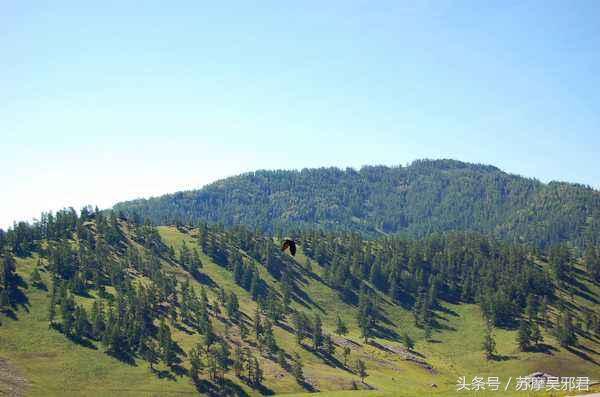
If you ask me whether I like mountain land or flat land, the mountain land is where my entire childhood was, and I love everything here. Today I will first tell you how these few small hills brought our poor village one after another source of wealth, large or small.
At 15 I transferred schools and left the mountain land, and our story begins from my childhood and continues as I grew up.
Pine nuts
Many people have eaten pine nuts, but do not know where pine nuts come from. The pine trees on the big mountains have been there since I can remember, dense and packed together, and I think they were probably not planted by people. Back then we were really poor, and saplings were also very expensive. In our area nobody ate pine nuts and people did not even know pine nuts had value, until people started coming to the village to buy the things. After the busy farming season, the women of the village began going up the mountain in groups to "strip pine nuts." The price was frighteningly cheap, but who would not want free money? Just like that, during those two years when the fruit ripened, these four or five big mountains were all combed over once. The better-off ones could still earn around a hundred yuan or so.
Scorpions
This was the same as the pine nuts above. Around when I was in elementary school, someone asked my grandfather to act as a collection point for scorpions. My grandfather bought one scorpion for 3 mao; at that time a one-mao popsicle still existed, and one mao could also buy three corn candies. My grandfather was one of the bigger operators among the hundred or so households in the village, because he was beside the village's main road and was the active, daring type. The family had a small shop, an oil press making rapeseed oil, and later, when people no longer liked eating rapeseed oil, he bought a machine for soybean oil; when greenhouses sprang up, he also sold plastic sheeting and chemical fertilizer. A scorpion sting hurts a lot. This work suddenly became a perk for half-grown youths: using bamboo chopsticks from home to make self-made tongs, going up the mountain to pry open rocks, and under them there were usually scorpions. Quick, accurate and ruthless, you clamped one in one go and put it in a small bucket. A skilled one could catch several dozen in a single morning. But there was not much of this stuff, so it could only be said to bring children some pocket money.
Stone crushers selling mountain rock
Stone crusher
The two things mentioned before were small-scale. What truly gave most people in the village a chance to "get rich quick" was mountain rock. At that time people were also quarrying mountain rock, and for this even many of the younger generation, including my uncles, stir-fried homemade explosives in the village. Yes, stir-frying explosives at home, of course we knew it was illegal, so it was all done in the middle of the night. For this, even our backward little village had a major murder case, and police dogs were brought in. If you are interested, next time I will write a post about this. Stir-frying homemade explosives was for blasting the mountain, and the blasted rock was taken away and sold. Later there were rock crushers (stone crushers), which were not cheap; those with a bit of money could only afford one. They would choose the most distant hilltop, and every day you could hear explosions. The large rocks blasted down were turned into small stones by the stone crusher, then transported out and sold. At that time dump trucks could no longer keep up, so this drove others to buy tractors, and later it evolved into self-dumping trucks hauling these stones out to sell.
Dump truck
Tractor
Self-dumping king truck
During that period, those with some ability earned quite a lot of money, and the families all became better off. They were even willing to buy bicycles for the children; before that the village only had 28-inch heavy-frame bikes, and it was very troublesome for children to learn to ride. But the mountain no longer looked like a mountain, and over-quarrying eventually drew the government's attention. After five or six years it could not be done at all anymore, but it really brought many changes to the village. Some who had self-dumping trucks simply drove to the big cities to do transport business.