Pounding stakes in rice paddies is worth as much as gold; a farmer living off the mountains earns a net profit of a million yuan a year
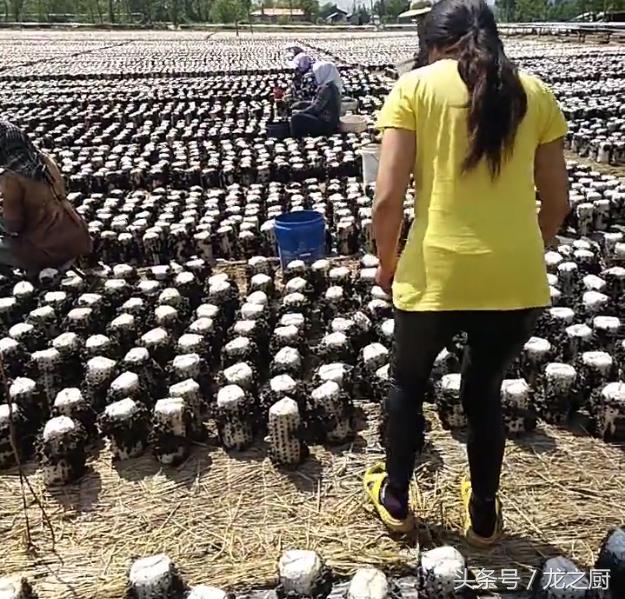
Shangzhang Township in Zhejiang is a mountainous township of nine parts mountain, half part water and half part farmland. The villagers of Shanyin Village live off the mountains and preserve the natural rhythm of spring plowing and autumn harvest. Under the government's guidance, Shanyin Village chose ecological agriculture as the breakthrough for farmers to get rich, vigorously developing ecological agricultural varieties suited to the village's actual conditions. Some farmers raise fish and soft-shelled turtles in rice paddies, grow high-mountain bayberry, Chinese chestnut, organic rice, honey peach, pear, and grape... All year round this place is filled with the fragrance of melons and fruits, and villager Lei Xiaogui chose to drive stakes into his rice paddies, which also brings him an income of nearly a million yuan a year! Now locally called "black gold," look at this large expanse of stakes streaked with black - these are what farmer Brother Lei has planted.
Since 2016, changes have come to Shanyin Village. The bare rice paddies of the slack farming season are gone, replaced by strips of black fungus spawn embedded in the paddies. It turns out the wooden stakes that were driven in were meant to let the fungus reproduce. Now these black fungus are almost ready for harvest, and what awaits Brother Lei is a bumper crop.
Because the black fungus is not grown in a greenhouse, the automatic sprinkler pipes have to run every day. The fungus has a high water content, so whenever the weather turns dry it needs spraying; after it emerges, it must be sprayed twice a day for 20 minutes each time. Only then can such jet-black, glossy fungus grow. On average, a stake like this can produce about 2 jin of wet fungus, and two crops can be harvested a year.
Brother Lei generally does not choose to sell the picked fungus wet; he chooses to sell it dried, because the price is many times higher. Dried fungus generally sells for 30-40 yuan per jin, and the better ones can reach 60 yuan per jin, while fresh black fungus wholesale only sells for about 3 yuan per jin.
After drying in the sun, the black fungus still has to pass through a gauze net for grading, and is generally sold in two sizes at different prices. Brother Lei planted nearly 50,000 segments. Thanks to sound management and smooth sales channels, this brings him a net profit of nearly a million yuan a year. "This is something I never even dreamed of before - rice paddies can also grow black fungus, and the returns are so high." Brother Lei, who has had his first taste of success, grins from ear to ear.