Yuan Hongbo built a tea factory precisely to lead the villagers to prosperity
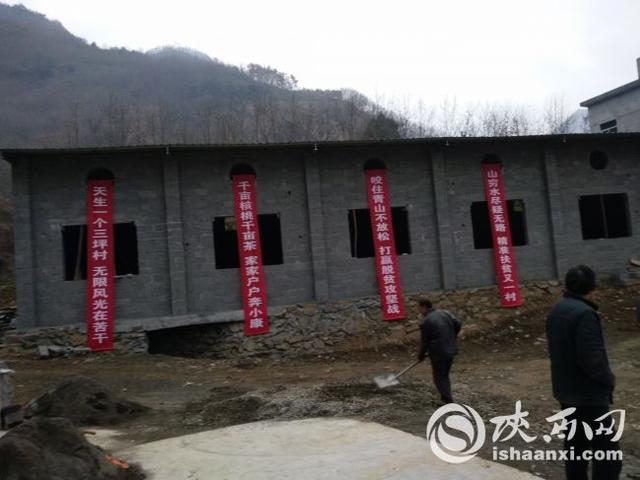
The tea factory Yuan Hongbo is building
Yuan Hongbo won an award!
The Maojian tea made by Yuan Hongbo won the grand prize at the third Ankang Selenium-Enriched Tea Competition. When the news arrived, Yuan Hongbo felt even more confident about the development of his tea factory, and the poverty alleviation task force of Sanping Village gained even more confidence in developing the village's tea industry. That night, Yuan Hongbo and the poverty alleviation task force celebrated together while discussing the prospects for developing the tea industry in Sanping Village.
Yuan Hongbo's tea factory is built halfway up the mountainside at Mijiapo in Sanping Village, covering an area of 600 sq m. Yuan Hongbo is the owner of the tea factory. In 2014, Yuan Hongbo returned to his hometown to start a business. With the help of the targeted poverty alleviation task force, he established Ziyang County Hongbo Selenium-Enriched Tea Co., Ltd. This is the only enterprise in Sanping Village and also the first tea processing enterprise in Gaotan Town.
Ziyang County Hongbo Selenium-Enriched Technology Co., Ltd. unveils its plaque
The poverty alleviation task force surveys the old tea gardens
In less than two years since the founding of Hongbo Selenium-Enriched Tea Co., Ltd., such good results have already been achieved. Yuan Hongbo said emotionally: "The reason I could run the tea factory well is mainly that the poverty alleviation task force gave me the greatest help. Without them, I would have had no confidence at all to run a tea factory."
Talking about the hardships of starting a business, 42-year-old Yuan Hongbo could not help but sigh. At 17, having just graduated from junior high school, his family was too poor to support him continuing his education, so he was forced to go out to work. He went to Shenmu and Fugu in northern Shaanxi to dig coal for a living, earning 38 yuan a day, which in those years was already considered a high wage. After a few years he saved some money, and during that time he also got married.
In 2000, Yuan Hongbo traveled to Xiamen, Fujian, to partner with his younger sister in the catering service business, opening a hotel, and business was fairly good. According to his sister's thinking, he could have simply not returned home and stayed in Fujian earning money, but Yuan Hongbo had his own plans: to go home, develop at home, make full use of his hometown's natural resources, develop industries, and make a contribution to changing the villagers' mindset.
In 2005, he returned to his hometown and learned techniques for growing wood ear mushrooms and shiitake mushrooms. Over two years, he earned nearly more than 300,000 yuan. With money, he gained greater confidence for development.
The tea garden Yuan Hongbo developed himself
In 2007, he partnered with two people from northern Shaanxi to open a stone quarry. As a result, due to inconvenient transportation, lack of water to wash the stone, and unstable electricity, the stone quarry soon could not continue operating, and he lost all of the more than 600,000 yuan he had saved over the years. He had no choice but to return to Fujian to do catering again. From then on he gave up hope, saying he would "never go home to do business again."
In 2013, he built a house next to his old home, and could be considered to have settled down and found contentment. But except for returning home during the Spring Festival, he had always stayed in Fujian helping his sister with business. "At that time, I had given up on Sanping Village and felt there was no hope for its development. The outside world was changing with each passing day, but Sanping Village had remained almost unchanged."
In 2014, targeted poverty alleviation began, and Yuan Hongbo was only a bystander watching coldly. He thought poverty alleviation was just a process, giving away some rice, flour, and oil, handing out a little money, and improving the simple living environment a bit. He never expected that this time would be different from previous years. The county transport bureau provided assistance and specially sent first secretary Wang Yongguo into the village to investigate and guide. The young cadre Li Tao stayed in the village all year round. They ate, lived, and worked alongside the villagers, worked together with town cadres and the village party branch, led the villagers in building roads, upgrading electricity, bringing in water, improving the villagers' living environment, and also helped the villagers develop industries through various means.
In particular, Mijiapo, located in Sanping Village, had been famous since ancient times for its good tea. After reform and opening up, people were all busy clearing land for farming to solve the basic problem of food grain, and they dug up large numbers of old tea trees. Those left were basically unmanaged, overgrown with weeds, and burned as firewood.
After the poverty alleviation task force entered the village, through investigation and research, they led the villagers to learn from townships with good tea development, and soon developed nearly 1,200 mu of tea gardens.
Feng Maoxun, an expert from the Tea Bureau, guides villagers on site in planting tea
With tea gardens, the problems were that the tea could not be sold and the villagers did not know how to process it. The poverty alleviation task force personally went to relevant departments to apply for a quota to build a tea processing factory, and took the initiative to invite Yuan Hongbo home to lead the villagers to prosperity together.
Faced with the tremendous changes in his hometown, Yuan Hongbo's long-held idea of returning home to start a business was rekindled. He agreed without hesitation, determined to build the tea processing factory well, and he himself also took the lead in developing tea gardens.
In 2015, the village committee took the initiative to coordinate a factory site of 600 sq m and helped Yuan Hongbo put up the factory building. It was officially put into use in April 2016.
Cleaning impurities from the fresh leaves
In addition to buying tea leaves, they are also responsible for processing dried tea. The shared idea of the poverty alleviation task force and Yuan Hongbo was to run the tea factory to serve the villagers.
In other townships of Ziyang, the tea purchase price changes daily, while Yuan Hongbo offered the village's tea farmers a stable price for fresh leaves over a period of time, ensuring the villagers had a steady income for that period. Processing dried tea was also cheaper than the market price: if the market price was 20 yuan, he charged 15 yuan. Someone asked, with such a large investment, buying leaves at a high price and processing dried tea cheaply, wouldn't that mean losing terribly? Yuan Hongbo said: "Right now the village's tea gardens have just started, the area that can produce tea is small and the yield is low, and their income is also small. It's fine if I lose a little now. Once the tea gardens are all developed, we can all become prosperous together."
The heat-dissipation step in tea processing
In 2016, the villager Wei Zenghuai and his wife, both over 60, had tea gardens at home. In the past, because they could not process the tea, most of the tea was left to waste in the fields. Now it is convenient. When tea-picking time comes, the old couple leave early and return late. After picking good tea, they immediately take it to Yuan Hongbo's tea factory to sell, earning more than 100 yuan every day. Over a month, they earned more than 2,000 yuan. He said excitedly: "We are both over 60. When we go out to work, no one wants us, and our bodies can't take it either. Now at home, if we handle the tea well, we can see some cash every day. Although it's not much, it's enough for basic living expenses. I have now planted tea on all my land. In a few more years, when the tea is all thriving, that will be the pension money for the two of us, better than raising a son." In the spring of 2017, Wei Zenghuai's income from tea picking was even greater, doubling compared with the previous year.