A good recipe for shaking off poverty and getting rich: a bellwether leads development
Daman Village in Nanxiao Town, Liangqing District is a remote mountain village with more hills than farmland, and traditional rice and sugarcane cultivation cannot set the villagers on the road to prosperity.
Facing this "bottleneck" in the hometown's development, in 2015 young villager Nong Zhenfei stepped forward. Together with the village committee and the poverty alleviation work team, he discussed using the hometown's green hills and the bamboo forests covering the slopes to lead the villagers in raising Chinese bamboo rats, so that the villagers could break out of the traditional planting model and take a path to prosperity through specialty breeding.
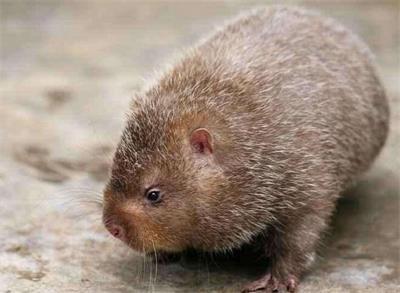
Today, 26 poor households in Daman Village, through microcredit and other means, have taken shares in the Liangqing District Yimin Chinese Bamboo Rat Breeding Professional Cooperative (22 households in total) and the Nanning Shuangquan Livestock and Poultry Breeding Farmers' Professional Cooperative (4 households in total). As a result, the coverage rate of specialty industries among the village's poor households has reached 100%. Poor households take part in raising bamboo rats, free-range chickens and the like, earning income from specialty breeding or dividends from their shares, and their economic income has increased markedly.
Specialty breeding: a way to overcome poverty
Recently, we visited the Nanxiao Town Chinese Bamboo Rat Breeding Demonstration Base. The base is divided into three breeding areas, one of which is the "Daman Village Poor Household Breeding Area". The facilities here are complete, with a unified central air-conditioning system and special compartments for Chinese bamboo rats to give birth, and each compartment houses a pair of Chinese bamboo rats. Thanks to dedicated management and mature breeding techniques, the Chinese bamboo rats in the base have glossy fur and sturdy bodies.
Fang Lijian, a poor household in Beijipo, Daman Village, is a local example of poverty caused by education expenses: of the family's two children, one is in senior high school and one in junior high school, and the various costs are more than the family can bear. Fang Lijian's family has only a bit more than two mu of land, growing some rice and sugarcane, and the family of four lives in hardship. The arrival of Chinese bamboo rat specialty breeding let this family break out of the traditional agricultural planting model and find a new world.
In order to change their impoverished situation, starting in August last year, Fang Lijian went to the Nanxiao Town Chinese Bamboo Rat Breeding Demonstration Base every day to learn breeding techniques. "Bamboo rat breeding not only brings good returns, it can also make use of our abundant local bamboo forest resources." Fang Lijian told us that Chinese bamboo rat breeding does not demand much labor, but it does demand advanced breeding skills, so one has to learn a lot.
Fang Lijian told us that this year he received 5,000 yuan in dividends from Chinese bamboo rat breeding. As the number of Chinese bamboo rat births increases, next year his dividend income will reach 20,000 to 30,000 yuan. For Fang Lijian and the poor households taking part in specialty breeding, escaping poverty is only a matter of time.
Developing bamboo rat breeding is a path to prosperity suited to Daman Village's local advantages.
Capable people lead the way, toward common prosperity
Nong Zhenfei, 36, has long done business away from home. He is a young man who gets things done and enjoys considerable prestige in the village, with the villagers' support.
"So that poor households can escape poverty as soon as possible, the newly built Chinese bamboo rat breeding area for poor households is built to higher specifications, and the equipment is all new." After Nong Zhenfei introduced the Chinese bamboo rat breeding project,
in 2015 he successfully built the Chinese Bamboo Rat Breeding Demonstration Base.
Applying targeted measures according to the causes of poverty, without going through the motions or doing empty work, Daman Village, through hard exploration, found a path suited to its own development. To support the village's poverty alleviation work, in 2016 Nong Zhenfei founded the Nanning Liangqing District Yimin Chinese Bamboo Rat Breeding Professional Cooperative, vigorously promoting Chinese bamboo rat specialty breeding through the "company + cooperative + farmers" model and leading villagers and poor households onto the path of agricultural industrialization. The cooperative not only let poor households in Daman Village take part by buying shares; 60 poor households from surrounding villages also joined. Now the cooperative has taken in 82 poor households.
Under the guidance and help of the local government and the poverty alleviation work team, Nong Zhenfei successfully led local villagers, especially those in poor villages, to prosperity. During the three-year loan period, poor households receive share dividends at rates of 8%, 8.5% and 9% of their share capital. At the same time, poor households take part in the cooperative's operations and management in proportion to their loan amounts, learning and doing at the same time. By combining "blood transfusion" with "blood production", this effectively shored up poor households' development shortcomings, helped them pull out the roots of poverty and set them on the road to common prosperity.
Poverty alleviation, a huge change in the countryside
In 2014, Daman Village was listed as a poor village, with backward infrastructure, no village collective economy, a low level of traditional industry, a late start for emerging industries and a lack of capable people to lead the way to prosperity. Driven by the poverty alleviation effort, Daman Village has undergone earth-shaking changes. The local government invested 400,000 yuan to build the Daman Village Tuntengpo Public Service Center, which has now been completed and serves as a cultural and sports recreation venue for the village's more than 2,800 people; invested 3.614 million yuan in hard-surfacing projects for 5 poverty alleviation roads including Daman Village Dani to Tanbai, Xiaoman to Nawen, and Beijipo to Liupao, hard-surfacing 6.5 km of village-access roads; invested 200,000 yuan to repair 579 m of damaged road from Damanpo to Landongpo to Danipo; and through the "one case, one discussion" model invested 947,000 yuan to complete 6.1 km of village road construction in Damanpo, Xiaomanpo, Tuntengpo and Beijipo, solving the travel difficulties of more than 1,300 people.
"In the past, the roads out were mud, everyone had no cultural or recreational activities in the evening, and we planted whatever we liked in the fields. Surrounding villages always laughed at us as 'original ecology'." Zhang Mingxing, director of the Daman Village Committee, said that things are different now: villagers can go to the public service center in the evening to sing and dance, and someone guides them in farming and breeding. Today's Daman Village is truly a livable ecology.
Driven by the effect of capable people, the Daman Village collective also invested 300,000 yuan for a share in the Liangqing District Yimin Chinese Bamboo Rat Breeding Professional Cooperative, 210,000 yuan for a share in the Xincui Fruit and Vegetable Professional Cooperative, and 200,000 yuan for a share in the Shuangquan Livestock and Poultry Breeding Cooperative. The village committee receives year-end dividends at an economic return of 10% of the invested amount, continuously developing and strengthening the village collective economy with a guaranteed minimum return.
Daman Village is not satisfied with its current achievements. To further diversify its specialty industries and further expand the scale of industrialization, the village has also brought in Guangxi Jinniu Company of the Nanning Industrial Investment Group. At present, the company's work team is guiding villagers to carry out industrial restructuring through land transfer, building a modern fruit and vegetable base in Beijipo, Daman Village, implementing integrated water, fertilizer and pesticide planting of purple jade yam and black-skinned winter melon; and establishing a 150-mu Millettia speciosa (niudali) planting and cultivation demonstration garden, practicing high-efficiency agricultural planting, guiding villagers to develop production according to local conditions, and raising agricultural output value and efficiency.
The content of this article represents the author's personal views and does not represent the position of Wugu.com. Anyone acting on it does so at their own risk.