A highly toxic plant, yet farmers make their fortune by growing it
Fuzi is the daughter root of Aconitum carmichaelii (wutou). Raw fuzi is a toxic substance; eating it causes poisoning, with symptoms of numbness of the body, nausea and vomiting, and in more severe cases it can cause death.
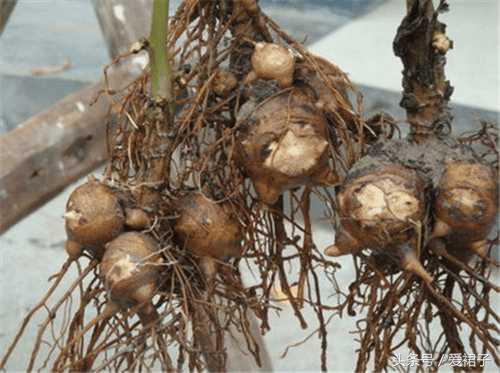
But at the same time, fuzi is also a Chinese medicinal herb with high medicinal value. Ginseng, prepared rehmannia, rhubarb and fuzi are known as the four cornerstones of Chinese medicine, and long ago people already held the concept that fuzi is the first-choice herb for restoring yang and rescuing from collapse.
Functions and indications: restoring yang and rescuing from collapse, supplementing fire and assisting yang, dispelling cold and relieving pain. It treats yin exuberance repelling yang, profuse sweating with yang depletion, vomiting and diarrhea with cold limbs, cold and painful heart and abdomen, spleen diarrhea and cold dysentery, beriberi and edema, chronic infantile convulsions, wind-cold-dampness bi syndrome, impotence and cold uterus, yin flat abscess and running sores, and all diseases of deep-seated cold and chronic cold.
Li Shizhen: Li Shizhen said: in the early stage it is wutou, resembling a crow's head. What grows attached to wutou is fuzi, like a child attached to its mother.
Pharmacology: The Shennong Bencao Jing records: it mainly treats wind-cold cough with counterflow qi, warms the middle, removes cold-dampness, treats fractures of the hands and feet, contractures, knee pain with inability to walk, breaks hard masses, blood abdominal masses, and metal-inflicted wounds and sores. Zhang Zhongjing: Mahuang Fuzi Xixin Tang and Mahuang Fuzi Gancao Tang are representative formulas. Raw fuzi combined with dried ginger nourishes and supplements while also dispersing; Ganjing Fuzi Tang and Tongmai Sini Tang.
Introduction to fuzi knowledge: Fuzi is the lateral root (daughter root) of the Ranunculaceae plant Aconitum carmichaelii (cultivated variety). Aconitum carmichaelii is a perennial herb, growing on mountain grassy slopes or in thickets. Fuzi commands a relatively high price on the market, yet it is still in short supply, and many medicines are made with fuzi as a raw material, so some farmers, spotting the business opportunity, began to grow fuzi.
The cost of growing fuzi is much higher than growing ordinary crops, but at the same time, the returns are also much higher. Their products are all pre-processed by themselves before being sold, and after deducting costs, one mu of land can earn over 10,000!
Heishunpian is a longitudinal slice, wide at the top and narrow at the bottom, 1.7 to 5 cm long, 0.9 to 3 cm wide, and 0.2 to 0.5 cm thick. The outer skin is blackish-brown, the cut surface is dark yellow, oily and glossy, semi-transparent, with longitudinal vascular bundles. The texture is brittle, and the fracture is horn-like. The odor is slight, and the taste is bland. Those with large, uniform, brownish-yellow slices and a glossy surface are considered the best.
Baifupian has no outer skin, is yellow-white and semi-transparent, about 0.3 cm thick. Those with uniform slices, white interior and semi-transparency are considered the best.
Thank you, talented and beautiful you, for reading to the end. I hope you can take a moment to follow this editor, so more tailored news can be made for you~ Thank you!