Do large-scale grain farmers make money from subsidies or from growing grain?
Most large-scale grain farmers still make money from growing grain, while some get money from subsidies! As the prices of pesticides, fertilizers and hired labor rise, the price of grain has not risen, making it increasingly difficult for large-scale grain farmers to profit! One cannot help but ask: how do large-scale grain farmers make money?
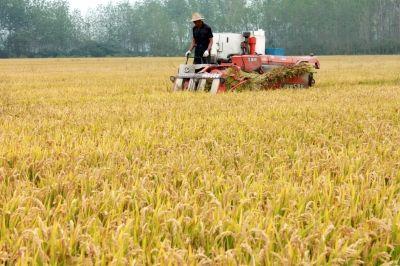
1. Lower costs
Apart from the cost of land transfer, all other costs are lower.
Agricultural input costs: buying agricultural inputs for 2 mu of land and for 200 mu of land are certainly priced differently; on agricultural input costs, large-scale grain farmers can save about 10-20%.
Management costs: large-scale grain farmers generally own various vehicles and machinery themselves, so when carrying out related operations they only spend some money on fuel and wear and tear. Even if they do not own machinery and need to hire someone else's, the price for large-scale operations is cheaper than for scattered plots. On management costs, large-scale farmers can save about 20-50%.
2. Higher yields
Do not assume that a larger planting area means lower yields; most large-scale grain farmers have higher per-mu yields than ordinary farmers. Their main occupation is farming, so they understand planting management better than ordinary farmers.
This year, the early rice yields of large-scale grain farmers in our area generally reached about 1000-1200 jin. At this yield, after deducting the cost of land transfer and other various costs, one mu of land can generate a benefit of 300-500 yuan.
3. Grain-growing subsidies
In recent years, support for large-scale grain farmers has increased, and grain-growing subsidies have risen accordingly. With 200 mu of land planted, depending on the different subsidy policies of each region, large-scale grain farmers can receive 10,000-30,000 yuan in various subsidies.
4. Growing cash crops
Besides growing ordinary grain crops, many people have also transferred land to grow cash crops, such as garlic, onions, vegetables and fruit trees. When cash crops are well managed and market conditions are good, the benefits obtained are 3-5 times or even more than those of ordinary grain crops.