The tripartite division of rights system is full of political wisdom, Agriculture Minister Han Changfu explains it once again
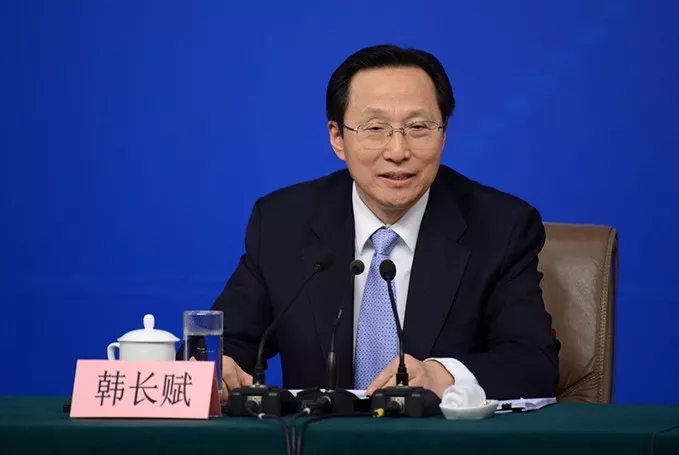
The report of the 19th National Congress of the Communist Party of China emphasized improving the "three rights" division system for contracted land. The "three rights" division of land is another major institutional innovation in rural reform following the household contract responsibility system, and an important component of General Secretary Xi Jinping's thought on "agriculture, rural areas and farmers." From the "separation of two rights" to the "division of three rights," it is an institutional transformation that adapts to the development of productive forces, conforms to farmers' wishes, fits rural realities, and builds on past achievements while opening up the future. It represents the advancement of the rural land system with the times since the reform and opening up.
General Secretary Xi Jinping pointed out that in deepening rural reform under the new situation, the main thread remains properly handling the relationship between farmers and land. In 2016, General Secretary Xi Jinping presided over a meeting of the Central Leading Group for Deepening Reform, which reviewed and issued the "Opinions on Improving the Measures for the Division of Rural Land Ownership Rights, Contract Rights and Management Rights." The report of the 19th National Congress of the Communist Party of China further emphasized the need to improve the "three rights" division system for contracted land. The "three rights" division of land is another major institutional innovation in rural reform following the household contract responsibility system, and an important component of Xi Jinping's thought on "agriculture, rural areas and farmers."
I. The "three rights" division has rich innovative connotations
The evolution of the "three rights" division conforms to the objective law that relations of production adapt to the development of productive forces. During the people's commune period, rural collective land ownership and management rights were combined into "two rights" as one, with land collectively owned and collectively managed. After the reform and opening up, rural collective land ownership and farmers' contract management rights were separated into "two rights," with land collectively owned and managed under household contracts. Since the 18th National Congress of the Communist Party of China, land contract management rights have been divided into contract rights and management rights, implementing the "three rights" division. This is another major innovation in rural reform.
First, it comprehensively resolves the issue of stability versus flexibility. The land system is a foundational system of the state, and historical patience is required on land issues. From the "separation of two rights" to the "division of three rights," with stability as the foundation and flexibility as the goal, it upholds collective land ownership, stabilizes farmers' contract rights, and frees up land management rights, promoting the rational allocation of rural resource factors, driving the development of various forms of scale operations, and further liberating and developing rural social productive forces. Some always believe that modernization cannot be achieved with individual households and that contracted land should be taken back for collective management. But returning to collective unified management is a path that has long been proven unworkable. The "three rights" division creatively handles the relationship between change and constancy, using the constancy of rural collective land ownership, the foundational status of household management, and land contract relationships to adapt to the flow of land as a factor of production and the diversification of agricultural management methods. It conforms to farmers' wishes to retain contract rights while also transferring management rights. It neither returns to the old path of the people's commune's collective pooling nor negates the foundational status of household contract management. It promotes the intensive, specialized, organized and socialized development of agricultural production and operation, making the basic rural management system even more full of enduring institutional vitality.
Second, it comprehensively resolves the issue of fairness versus efficiency. Land is the mother of wealth. The "separation of two rights" implemented average land contracting by farm households, safeguarding the basic survival and development rights of every rural person and solving the food and clothing problem of over a billion people. However, in the process of land subcontracting, many places adopted combinations of irrigated and dry land, fertile and lean land, and distant and nearby plots, resulting in fragmented contracted land. Nationwide, the average household has 7.5 mu of farmland in 5.7 plots, making it difficult to improve agricultural production efficiency. The "three rights" division found an effective way to balance fairness and efficiency. Through the transfer of land management rights, it promotes negotiated exchange of management rights and land consolidation, achieving the transformation of small plots into larger plots and contiguous operation; through the transfer and trusteeship of management rights, it develops various forms of appropriately scaled operations, improving land output rate, labor productivity and resource utilization rate.
Third, it comprehensively resolves the issue of closure versus openness. China's rural land contracting adopts the method of household contracting within rural economic organizations, and only members of collective economic organizations are eligible to contract land. Under the "separation of two rights" system, contract rights and management rights are combined. Whoever contracts manages, and the contractor is the manager. Contract management rights have a certain closure and exclusivity. After the "three rights" division, the separation of contract rights and management rights is achieved. Contract rights are membership rights, operating in a closed manner within the collective economic organization, safeguarding the legitimate rights and interests of collective economic members; management rights are usufructuary rights, possessing openness and social character. In this way, rural land can be managed by villagers of the same village, management rights can be transferred to people from other villages, or transferred to urban residents, achieving optimized allocation of land resources on a larger scale.
Fourth, it comprehensively resolves the issue of migrant work versus "who will farm the land." In recent years, as large numbers of rural laborers have transferred to towns and secondary and tertiary industries for employment, the rural young and middle-aged labor force has decreased significantly. Combined with rising agricultural production costs and continuously declining agricultural operating benefits, the problems of part-time, aging and feminized agricultural labor have become prominent. The "three rights" division has promoted the transfer of land management rights. Among the 230 million farm households nationwide, more than 70 million have transferred land, a proportion of nearly 30%, promoting the division of labor in rural areas. Migrant workers can go to cities with peace of mind, new-type professional farmers grow vigorously, farmers who work as migrants and those who farm each find their proper place, and new types of business entities flourish, resolving the rural problem of "who will farm the land." At present, various new types of business entities nationwide have reached 2.7 million, and new-type professional farmers exceed 12 million, becoming the fresh force and leaders in developing modern agriculture.