Future wheat price forecast analysis: Will wheat prices rise in 2018?
The Ministry of Agriculture's latest agricultural situation report shows that, at present, winter wheat planting across the country has reached 92% of the intended planting area. At the same time, the wheat that farmers have already harvested is gradually entering the market for sale. So will wheat prices rise in 2018? Below is an introduction to the future wheat price forecast analysis.
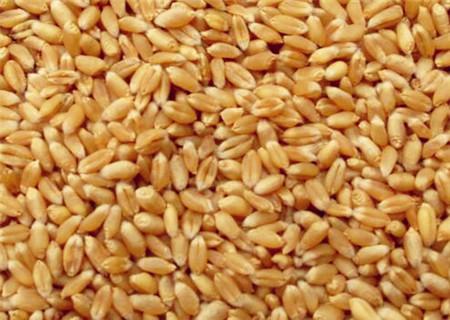
Data shows that wheat prices in many places across the country have risen, delighting farmers. So much so that many farmers have begun holding back their sales, waiting for higher prices later in the market.
Entering mid-November, affected by regional supply and demand imbalances, wheat prices in North China continued to rise steadily, while wheat prices in Jiangsu and Anhui remained basically stable. Jiangsu ( agricultural land, commercial and residential land, industrial land) grower Yin Weimin is recently preparing to sell his own wheat, and the price increase has left him satisfied.
Yin Weimin: It has now risen to 1.22 yuan/jin, up 5 fen per jin from last year, and everyone feels this price is quite satisfactory. Yesterday I was going to sell wheat, but later found the price was still rising, so I plan to sell in a couple of days.
The feelings of farmers are supported by data. As of November 16, the average trading price of third-grade white wheat in major grain and oil wholesale markets nationwide was 2,515 yuan per ton, up 8 yuan week-on-week. The Sinograin national wheat purchase price index for the 42nd period of 2017 was 140.11, up 0.17% week-on-week. Zhuochuang Information analyst Liu Dong:
Liu Dong: Recently, domestic wheat prices have generally maintained a strong trend, and compared with last week, prices have risen slightly by 0.01-0.02 yuan/jin. Taking flour enterprises' wheat purchase prices as an example, the reference in Shandong ( agricultural land, commercial and residential land, industrial land) is 1.28-1.335 yuan/jin, in Hebei ( agricultural land, commercial and residential land, industrial land) it is 1.29-1.32 yuan/jin, and in Henan ( agricultural land, commercial and residential land, industrial land) it is 1.28-1.31 yuan/jin.
Some analyses believe that although in theory the grain supply circulating in the market is better than last year, farmers' strong reluctance to sell and the many who hold grain waiting for a good price have made the phased supply and demand situation for wheat appear tight, and wheat prices in major producing areas continue to run strong at high levels. Zhuochuang Information analyst Liu Dong:
Liu Dong: At present, grain traders are mostly buying and selling autumn corn, farmers are less willing to sell wheat, and grain traders' purchase volumes are relatively small, with some holding a portion of inventory, generally bullish and reluctant to sell. The circulation volume of bulk wheat is low, and market supply and demand remain in a tight state.
However, Jiangsu grower Yin Weimin also expressed concern about wheat prices falling.
Yin Weimin: I estimate it will still rise, but people who went to sell wheat today say it may fall.
In this regard, analyst Liu Dong believes that at present downstream flour enterprises face relatively high raw grain costs, and profit margins are continuously shrinking. At the same time, flour market prices are also difficult to raise, and manufacturers' operating pressure keeps increasing. Therefore, in the short term, there is not much room for wheat market prices to continue rising.
Liu Dong: At present, the flour industry is in the off-season, manufacturers' operating loads are generally low, the flour market demand atmosphere is still not brisk, and manufacturers' overall sales pressure is relatively high, with downstream customers mainly purchasing according to need. At present, flour manufacturers face high costs, difficult shipments, high operating pressure, and compressed profit margins. Zhuochuang surveys show that the average operating rate of small and medium-sized enterprises in major flour-producing areas is currently 47%, down 1 percentage point from last week.
At the same time, the reporter learned that in mid-November, on the downstream breeding demand side, livestock and poultry breeding showed no obvious improvement, aquaculture was basically over, and demand in the bran and middlings market was not high, which will likewise limit wheat prices from continuing to rise.
At present, the planting of the new year's wheat in various places is nearing completion. The Ministry of Agriculture's latest agricultural situation report shows that, at present, winter wheat planting across the country has reached 92% of the intended planting area, and the area is basically stable. At present, most winter wheat in the north is at the three-leaf to tillering stage, while southern Huanghuai ( agricultural land, commercial and residential land, industrial land), Jianghuai, Jianghan and most of the southwest are at the sowing and emergence stage. Nationwide, the proportion of first-class winter wheat seedlings is 23% and second-class seedlings is 77%, generally close to the same period last year.
Although the state has already lowered the minimum purchase price for wheat, analyst Liu Dong believes this will not affect farmers' enthusiasm for wheat planting.
Liu Dong: The main wheat planting region is North China, and farmers have already become accustomed to the rotation of corn and wheat. Among the three major staple grains, the minimum protective price for wheat was the last to be lowered. Compared with corn, the adjustment range of wheat prices is not large, and it is in line with market expectations. Based on current prices, the planting returns for wheat are naturally fairly considerable. Although the minimum protective price for wheat has been lowered, due to factors such as planting habits and household income structure, the change in wheat planting area is expected to be limited, and it will not affect farmers' future planting enthusiasm.
Latest wheat market: Wheat prices at flour enterprises in various parts of the country are mostly stable, with individual increases.
Hebei
On November 23, the wheat purchase price of flour mill enterprises in Gaocheng area, Shijiazhuang ( agricultural land, commercial and residential land, industrial land), Hebei, was 1.315 yuan/jin.
On November 23, the wheat purchase price of flour enterprises in Feixiang area, Handan ( agricultural land, commercial and residential land, industrial land), Hebei, was 1.27 yuan/jin.
On November 23, the wheat purchase price of flour enterprises in Xingtai ( agricultural land, commercial and residential land, industrial land) area, Hebei, was 1.3 yuan/jin.
Shandong
On November 23, the wheat purchase price of flour enterprises in Chiping area, Liaocheng ( agricultural land, commercial and residential land, industrial land), Shandong, was 1.315 yuan/jin.
On November 23, the local wheat purchase price of flour enterprises in Qingdao ( agricultural land, commercial and residential land, industrial land) area, Shandong, was 1.3 yuan/jin.
On November 23, the wheat purchase price of flour enterprises in Cangshan area, Linyi ( agricultural land, commercial and residential land, industrial land), Shandong, was 1.28 yuan/jin.
Henan
On November 23, the wheat purchase price of flour enterprises in Jiaozuo ( agricultural land, commercial and residential land, industrial land) area, Henan, was 1.3 yuan/jin for pre-rain wheat.