What are the rural pig farming subsidy policies in 2018?
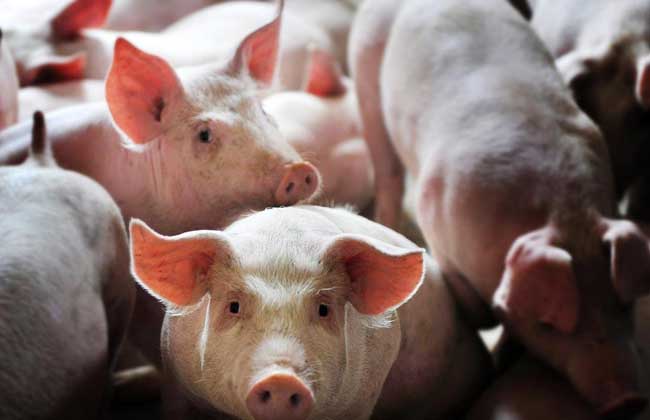
Agricultural subsidies are the most important and most commonly used policy tool in a country's agricultural support and protection policy system. Although subsidy policies and agricultural benefit projects are not set in stone, whether it is the emphasis on agricultural production in Document No. 1 or the various new policies in the pig industry, they all reveal the state's attention to the pig farming industry. Now let us take a look at the 2018 rural pig farming subsidy policies!
2018 Rural Pig Farming Subsidy Policies
1. For pig farming operations with a scale of more than 3,000 head, the subsidy is 800,000 yuan.
2. For pig farming operations with a scale of 2,000 to 2,999 head, the subsidy is 600,000 yuan.
3. For pig farming operations with a scale of 1,000 to 1,999 head, the subsidy is 400,000 yuan.
4. For pig farming operations with a scale of 500 to 999 head, the subsidy is 200,000 yuan.
2018 Animal Epidemic Prevention Subsidy Policies
1. Compulsory vaccination subsidy policy for major animal epidemics: The state implements a compulsory vaccination policy for animal epidemics such as highly pathogenic avian influenza, foot-and-mouth disease, highly pathogenic porcine reproductive and respiratory syndrome, classical swine fever, and peste des petits ruminants. For the compulsory vaccination of the above major animal epidemics, farms (households) do not need to pay for the vaccines.
2. Compulsory culling subsidy policy for animal epidemics: The state implements compulsory culling of animals infected with highly pathogenic avian influenza, foot-and-mouth disease, highly pathogenic porcine reproductive and respiratory syndrome, and peste des petits ruminants, as well as animals in the same group, and dairy cows testing positive for brucellosis and tuberculosis, and provides subsidies to farmers for the losses caused by the culling of livestock and poultry due to the above epidemics.
3. Subsidy policy for harmless disposal of dead pigs in the farming stage: A subsidy of 80 yuan per head is provided for the harmless disposal of dead pigs in the farming stage, shared by the central and local governments.
4. Subsidy policy for harmless disposal of diseased pigs in the designated slaughtering stage: Subsidies are provided for the losses of diseased pigs and the costs of harmless disposal in the slaughtering stage. The financial subsidy standard for the loss of diseased pigs is 800 yuan per head, and the standard for harmless disposal is 80 yuan per head.
2018 Pig Farming Subsidy Policies
1. Improved Breed Project: The improved breed project is one of the several major projects and policies proposed in the Plan. The project plan highlights the four major links of “breeding, protection, testing, and propagation,” focusing on improving breeding innovation, germplasm resource protection, variety testing, and seed production capabilities, and improving infrastructure conditions such as breeding research, production facilities, epidemic prevention and control, and seed industry supervision. While completing this project, the Ministry of Agriculture also plans to implement an improved breed subsidy policy.
2. Reward Policy for Major Pig-Exporting Counties: The implementation of reward funds for major pig-exporting counties has been in place for some time. As early as 2010, the Ministry of Finance issued the Measures for the Administration of Reward Funds for Major Pig-Exporting Counties, and updated and revised them in 2012. Major pig-exporting counties adhere to the principles of “guiding production, more transfers and more rewards, direct allocation to counties, and dedicated use,” mainly based on county-by-county and year-by-year data publicly released by the statistical system, and reward counties whose statistical data meet the prescribed standards.
3. Standardized Farming Project: The standardized farming project plans to adopt a “reward instead of subsidy” approach in major pig-producing areas to support moderately scaled pig farms in standardized renovation and expansion, including the renovation of water-saving facilities, feed-saving equipment, manure cleaning facilities, and slatted floors, and the implementation of automated environmental control. At the same time, some provinces are selected to carry out pilot projects for fiscal promotion of financial support for agriculture innovation, using credit guarantees, interest subsidies, and other methods to guide and mobilize financial capital, thereby amplifying the effect of fiscal fund use.
4. Pig Breeding Subsidy: The main purpose of the pig breeding subsidy policy is to support national core pig breeding farms in carrying out joint breeding, and to provide subsidies for production performance testing, exchange of genetic materials, genetic evaluation, and big data platform construction. It also establishes a special science and technology project for whole-genome selection breeding, supports the construction of a reference population for whole-genome selection breeding, formulates a comprehensive selection index for genomic breeding, and builds a platform for enterprises to carry out whole-genome selection breeding.
5. Pig Farming Insurance: The pig farming insurance policy has been implemented for some time. As early as 2007, the Opinions on Promoting the Development of Pig Production and Stabilizing Market Supply (Guo Fa [2007] No. 22) and the Notice on Further Supporting Pig Production and Stabilizing Market Supply (Guo Ban Fa Ming Dian [2007] No. 53) were issued, which clearly planned the introduction of a number of policy measures to promote the development of pig production, one of which was “sow policy insurance.”
6. Comprehensive Waste Treatment Project: The Plan also gives focused attention to green farming and comprehensive utilization of manure, and proposes to make the comprehensive utilization industry of pig waste bigger and stronger, and to establish a fiscal subsidy mechanism linked to pork output, comprehensive waste utilization rate, and harmless treatment rate. It also improves subsidy policies for the production and use of organic fertilizer, continues to implement pilot projects for the resource utilization of livestock and poultry farming waste, supports scaled farms in building supporting facilities and equipment for harmless treatment of manure, and guides the formation of a comprehensive waste utilization mechanism with moderate scale and combining farming and animal husbandry. It strengthens the construction of harmless treatment facilities for dead pigs and implements the fiscal subsidy policy for the harmless treatment of dead pigs.