Starting this year, corn planting is no longer allowed in the Huang-Huai-Hai summer sowing region. Is your area affected?
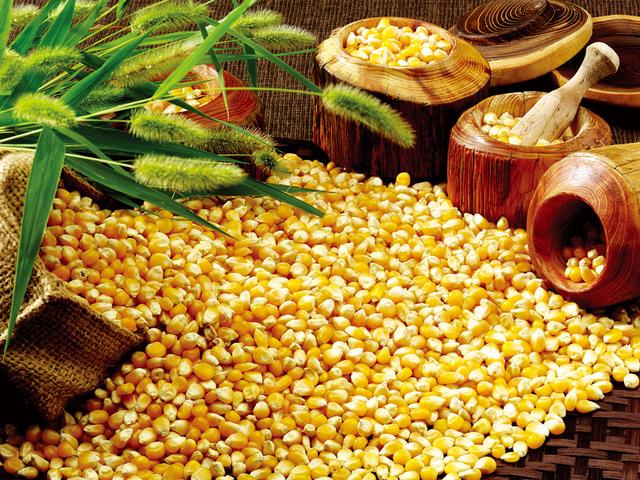
The Ministry of Agriculture stated that this year's corn reduction areas include not only the spring sowing areas of the four northeastern provinces and regions, but also the Huang-Huai-Hai summer sowing region. It is expected that this year's corn area will decrease by more than 10 million mu compared with last year.
1. In 2016, the whole country already reduced grain corn by 30 million mu, so why reduce another 10 million mu this year?
In response to the current stage of oversupply of corn, the National Planting Industry Structural Adjustment Plan has determined to reduce the corn area by more than 50 million mu by 2020. In 2016, our country reduced grain corn by 30 million mu nationwide, and breakthroughs were achieved in the structural adjustment of the planting industry,and the goal of concentrating efforts on safeguarding the two major staple grain varieties, rice and wheat, was achieved.But there are still 2,000 mu to go before reaching the target. At present, the summer grain harvest is nearly finished, spring sowing has ended, early rice is in the grain-filling and maturation stage, and more than 70% of summer sowing has been completed. This year our country will continue to reduce the corn area by more than 10 million mu in non-advantageous production areas such as the "sickle bend." This is mainly concentrated in the spring sowing areas of the four northeastern provinces and regions and the Huang-Huai-Hai summer sowing region.
Strengthen policy support, help structural adjustment, adapt to the needs of upgrading the consumption structure, develop high-quality rice, strong-gluten and weak-gluten wheat, high-protein soybeans, double-low rapeseed, high-yield and high-sugar sugarcane and other products, and increase effective supply. Cooperate with relevant departments to implement the policy for reforming the corn purchase and storage system,and implement the new mechanism of "market-based purchase + subsidies.";Implement the soybean target price policy, conduct scientific price collection and reasonable calculation.。Together with the Ministry of Finance, arrange funds to support agricultural structural adjustment and carry out pilot projects for cultivated land rotation and fallow systems.。
2. Which areas does the Huang-Huai-Hai summer sowing region include?
It includes all of Shandong and Henan, most of Hebei, south-central Shanxi, the Guanzhong area of Shaanxi, and the Xuhuai area of Jiangsu Province in the middle and lower reaches of the Yellow River, Huai River, and Hai River basins.
3. If corn is not allowed, what is allowed to be planted?
1. While reducing the corn area, strive to do "addition." In response to the situation in recent years in which the domestic soybean gap has widened year by year and the degree of foreign dependence has exceeded 83%, implement "rice-to-soybean" conversion and vigorously develop high-quality edible soybean production. Last year, the national soybean area increased by 10.44 million mu and output increased by 2.3 billion jin. The plan is for the soybean area to reach 140 million mu by 2020, an increase of 40 million mu. To a certain extent, this will help improve the current situation of soybeans being highly dependent on imports.
2. According to local conditions, switch to crops such as miscellaneous grains, potatoes, and high-quality forage that have market demand.
3. Develop distinctive miscellaneous beans, uniquely flavored minor agricultural products, agricultural products with geographical indications, as well as horticultural products such as tea, fruit, sericulture, and vegetables that have market demand in "Belt and Road" countries and regions, and expand distinctive and efficient supply.
4. Will there be subsidies for miscellaneous grains in the Huang-Huai-Hai region?
The Huang-Huai-Hai region is a golden production area for crops such as wheat, and its main task is to stabilize wheat production. Therefore, after reducing a certain amount of corn planting area, individual areas may provide certain subsidies for developing minor miscellaneous grains, silage corn, potatoes, alfalfa, and other crops.
In [Danong Circle] there are large-scale farming and breeding households who work the land, and entrepreneurs who understand the market; there are well-connected industry brokers, and brand planners with very high standards; there are professors who study agriculture, and officials who formulate policy; there are also village officials, investors, e-commerce experts... This circle gives you not only market information, but also a large number of valuable agricultural friends.
If you want to join, please click [Learn More] at the end of the article.