Young Farmer Pauses World-Weariness for Now: Episode 05 - To Till or Not to Till (Part 2)
Young Farmer: Pausing World-Weariness for Now | 05 To Till or Not to Till (Part 2)
.
In the previous article, it was mentioned that the current mainstream agricultural model over-tills the soil, causing severe soil erosion. Besidesbare topsoil without vegetation cover, breaking the soil into finer and deeper particles through farm machinery also increases the amount of soil that water flow can carry away. In addition, the act of tilling oftendisturbs or even kills many (micro)organisms in the soil, yet they are the very helpers that can assist soil in forming aggregate structure. (The better the soil's aggregate structure, the more its aeration, drainage, nutrient retention, water retention, and heat retention will improve.)
.
.
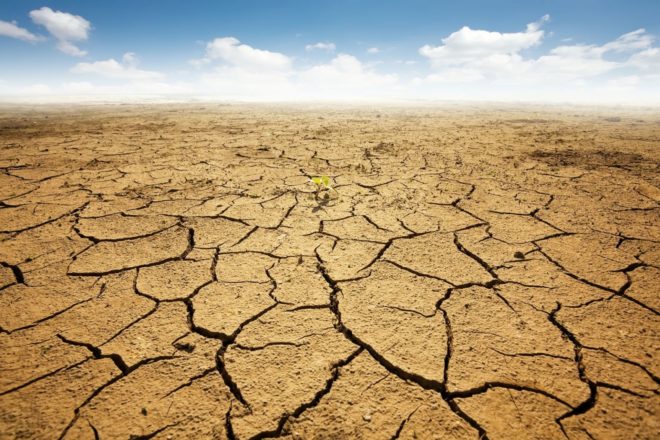
Wind erosionoccurs in landscapes shaped by natural and human activities, and may affectthe evolution of landforms、plant productivity、human and animal health(Ravi et al., 2011). Effects on atmospheric properties include:solar radiation、cloud properties(Shao et al., 2011)、air quality, and other factors (Field et al., 2010; Ravi et al., 2011). The scope of its impact covers farmland, landscape, regional and global scales.
.
At the farmland and landscape scales, wind erosion carries away the finer, chemically active soil, including soil nutrients, carbon and microbial products. Sometimes, wind erosion leads to an increase in the sand content of topsoil, thereby reducing the soil's water retention capacity and plant productivity at that location (Zobeck and Van Pelt, 2011).
.
Although some of the sediment deposited by wind erosion remains at the edges of farmland, most enters a suspended state and is carried into the higher atmosphere, thus traveling greater distances. This long-distance dust transport occurs at global and regional scales.
.
.
The current state and future of soil erosion?
Although soil erosion rates remain high across extensive farmland and grazing land, in recent decades erosion rates have dropped substantially in some parts of the world. One example is Brazil, where starting around 1980, they began implementing "no-tillage." It is estimated that this reduced soil erosion rates by 70 to 90 percent across most of Brazil's farmland.
.
However, in most parts of the world, the implementation of soil conservation measures has been very slow; the reasons are varied, but the key issue is that"adopting soil conservation measures" does not directly benefit farmers; this is true whether in the intensive mechanized agriculture of Western countries or the small-scale agriculture of developing countries. This is not surprising, because soil conservation cannot immediately increase yields or accelerate efficiency, while the harmful effects of erosion on land only manifest over timescales of decades to hundreds of years. Therefore, farmers have no incentive to implement soil conservation measures either.
.
In most cases of soil erosion, technologies already exist that can mitigate the situation. Therefore, the focus instead lies in -how to incorporate "soil conservation" into agricultural planning, and on the whole, raise farmers' net income.
.
Intensive farming on potentially high-productivity cropland will be one option.In this way, not only can development in areas with high soil erosion rates be reduced, but biodiversity and carbon storage at the landscape scale can also be increased.
.
.
Conclusion
.
To solve the problem, we must redefine/reconceptualize "soil erosion."
.
Soil erosion has long been regarded as a core issue threatening the sustainable development of agriculture.
.
Technologies to mitigate soil erosion already exist, and over the past decades, much effort has been made (around the world) to mitigate soil erosion; these efforts have achieved partial success. However, the degree of soil erosion on most farmland worldwide remains very severe, which is related to the lack of economic incentives for today's farmers - they have no motivation to think about soil conservation for the next generation.
.
Soil conservation should be incorporated into policies and programs that support sustainable agricultural development.
.
Here is a 2-minute-30-second short film from the UN Food and Agriculture Organization introducing some basic facts about soil; I have simply added Chinese subtitles; if there are any errors in the above article or the film subtitles, please kindly point them out for correction, thank you.
.
The next article will provide more introduction to no-tillage cultivation, that is, no tilling - No Tillage; please wait patiently!
.
.
References and Notes
❶Chapter 6 of the Status of the World's Soil Resources: Global status, processes and trends in soil erosion | 2015, Food and Agriculture Organization of the United Nations
❷ The O horizon is the organic horizon, composed of undecomposed or partially decomposed plant material. The A horizon is the topsoil, having characteristics of humified organic matter mixed with minerals, or having properties produced by cultivation, grazing, or similar human disturbances. | Soil Geography and Environmental Education Teaching Resources
❸ Mt: abbreviation of Megaton, meaning million-ton scale. Tg: Trillion grams, meaning 1 trillion grams. Mt and Tg are the same, both equal to 1000,000,000 kilograms. | Kyle’s Converter
.
.
About [Young Farmer: Pausing World-Weariness for Now]
I began a life of eco-friendly farming at the age of 23.
,
After leaving school in 2015, I began journey after journey of escaping from Taiwan, China and from myself; in the process, like countless backpacker influencers, I clichédly said: "I found a lifestyle and belief I love." Because of an obstinate care for the land and life, I was torn between the world and myself, which produced pain, and then world-weariness; however, in 2017, I went to Southeast Asia, to a land where the mother river flows, and interacted and lived with many young farmers whose average age was 25 (series of articles), and only then did I realize: "Precisely because we are young, it is all the more worthwhile to tread our time into the soil beneath our feet and nourish all things." The thought of putting down roots was thus born.
.
World-weariness is because I still have expectations for this world; and farming is the way I press pause on my state of world-weariness, and also how I recover the ability to candidly answer "what are people born for?"
.
Here, I will record the path of farming; perhaps it will be full of twists and turns, but having started, that is always a good thing.
.
Labor lóo-lat.
.
.
Other platforms
Instagram Grow It Yourself | Grow It Yourself
Facebook Grow It Yourself