Does shipping goods out really mean farmers make money? China's 2019 agricultural political trade war propaganda takes the stage again
By Jiao Jun (author of the book Fruit Politics)
Preface: Looking back at the cross-strait situation in 2005 and comparing it with today more than a decade later, it remains just as precarious. In 2005 there was an earth-shaking "Lien-Hu meeting," hailed as a cross-strait thaw, which also created a boom in Taiwan fruit exports to China. More than a decade on, official cross-strait exchanges have stalled, but the CCP's united front tactics toward Taiwan have become more refined, especially its winning over of the hearts of farmers in the lower and middle classes, which has not slackened for a single day.
By coincidence, the campaign slogan of newly elected Kaohsiung Mayor Han Kuo-yu, "goods out, people in, Kaohsiung gets rich," seemed to echo CCP General Secretary Xi's latest Taiwan policy across the airwaves, and the media also confirmed that Taiwan businessmen in Pingtan, Fujian alone placed an order worth 20 million to purchase agricultural and fishery specialty products from Kaohsiung and southern Taiwan. Mayor Han was very clever, and fearing being labeled "red," at the same time vigorously promoted market channels in Southeast Asia, Hong Kong, and other countries. But is all of this just a beautiful mirage conjured by a politician? Or is it a genuine benefit that can actually reach farmers? The author will analyze this in a series of dedicated articles, of which this is the first.
Goods sold? Is Kaohsiung about to get rich?
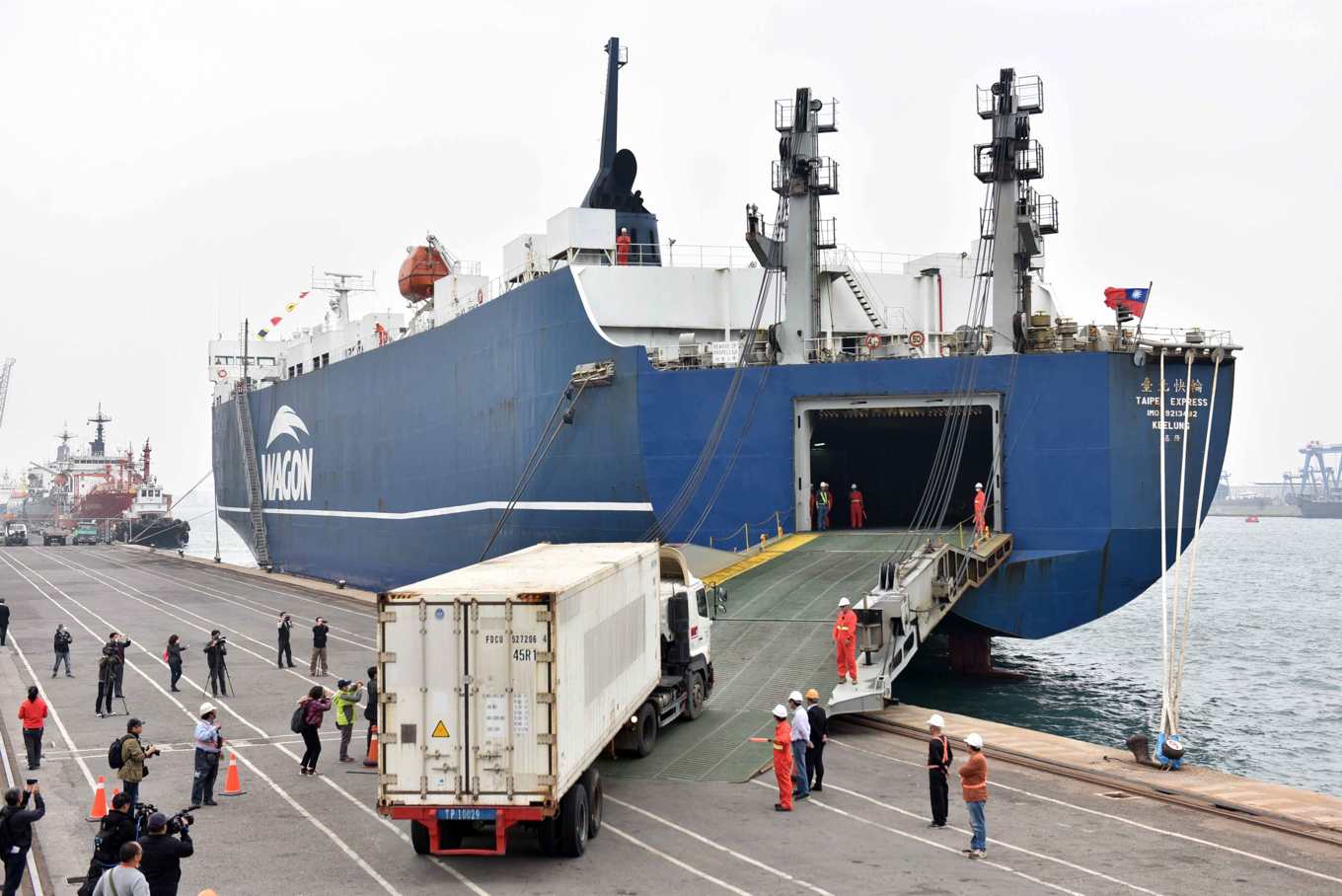
This time (2019), the first to launch exports of Taiwan fruit (and other agricultural and fishery specialty products) were Taiwan businessmen in Pingtan, Fujian, rather than the previous Shanghai, Beijing, or Xiamen. But anyone with eyes can see clearly that this is a "propaganda maneuver" designed to highlight that "the intermediate process has not been monopolized by other improper 'comprador groups.'" That day the news headline blared: "Goods sold! Fujian purchases 20 million in Kaohsiung agricultural products, direct delivery from Kaohsiung Port in the afternoon." At Kaohsiung Port, the Taipei Express was docked, and container after container of agricultural specialty products from Kaohsiung needed only nine hours to clear customs quickly and arrive at the Pingtan port to begin sales.
Interestingly, at the same time the Kaohsiung City Government also issued a news release stating that the Taiwan External Trade Development Council's Taiwan agricultural specialty products exhibition held in Hong Kong would purchase jujubes from the Kaohsiung area, proving that "the goods have already gone out," and that next people would come in and Kaohsiung would get rich!
But is the matter really that simple?
The second Chinese political purchase, aimed directly at the hearts of Taiwanese
Going back to the cross-strait agricultural exchanges that began with the 2005 Lien-Hu meeting, it was a political spectacle in which "propaganda was everything." At the time, the units that cooperated in the performance were all targets selected through "political calculation," and those able to participate were all past "contributors to cross-strait agricultural exchange," or those with "substantial benefit to the united front work of cross-strait agricultural exchange." It was just that this political spectacle later went sour. At the time, the Kuomintang comprador group monopolized China's policy-based procurement orders for Taiwan agricultural products, which ignited the Sunflower Student Movement and ultimately led to a backlash in the 2016 presidential election.
Four years later, when the Democratic Progressive Party suffered a crushing defeat in the 2018 local elections, did the CCP Central Committee once again launch a "second round of policy-based agricultural product procurement orders"? As of now there has not been a very obvious "move on the table," but it can be seen that, distrusting Taiwan's political parties and politicians, China decided to find "intermediate white-glove units" that it trusts. These newly emerging "intermediary groups" appear to wear the cloak of Taiwan businessmen, using legal agricultural product trade business to cover their political purposes behind the scenes.
From this point of view, given the consistency of the CCP Central Committee's Taiwan policy, there will not be much change; or rather, this is yet another operation of the same old medicine in a new bottle: in the past, there were Yunlin logistics companies and Kaohsiung agricultural development companies as intermediaries; now they have been replaced by new Taiwan businessmen like the Huagang Group, and that is all!
And so, the interesting question is: is this new propaganda spectacle really all set up to favor the new Kaohsiung Mayor Han Kuo-yu? Or does the CCP's Taiwan policy have another level, one meant to "aim directly at the hearts of the Taiwanese people"? As for this part, let us just keep watching the show! (Special series to be continued)