A new domestically produced soybean sorting machine has recently hit the market. How precise is it?
In 107 (2018), the national soybean planting area reached 3,000 hectares, but the post-harvest operations of impurity removal, sorting and grading are quite time-consuming. After developing the "primary soybean sorting machine," the Hualien District Agricultural Improvement Station has more good news. Matching Japanese-made sorting machines but at only half the price, the domestically produced
In 107 (2018), the national soybean planting area reached 3,000 hectares, but the post-harvest operations of impurity removal, sorting and grading are quite time-consuming. After developing the "primary soybean sorting machine," the Hualien District Agricultural Improvement Station has more good news. Matching Japanese-made sorting machines but at only half the price, the domestically produced "soybean sorting and grading equipment" has entered the technology transfer stage and is expected to hit the market soon, greatly reducing the labor and time costs of sorting.
On the 16th, the Hualien Agricultural Improvement Station stated that this "soybean sorting and grading equipment" uses a rolling sorting mechanism for screening. Compared with the primary sorting machine, it can process up to 200 kg per hour and save about 2,250 yuan in labor costs per metric ton. The equipment cost can be recovered in about 4 to 6 cropping seasons, making it suitable for farms with a planting scale of up to 10 hectares or bean processing plants.
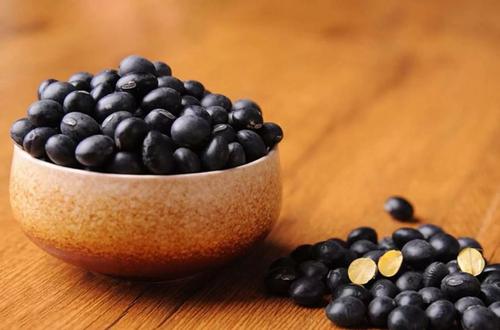
Primary sorting machine upgraded again: capacity matches Japanese-made models, price less than half
Chang Kuang-hua, an associate researcher at the Hualien Station, explained that post-harvest soybean processing includes procedures such as impurity removal, sorting and grading. The "primary sorting machine" designed in 105 (2016) could only perform basic operations such as specific-gravity screening and rolling sorting. Because the machine is small, its capacity is relatively low and its price is cheap, making it mostly suitable for farmers with a planting area of less than 1 jia.
Chang Kuang-hua pointed out that this "soybean sorting and grading equipment" uses the principle of rolling sorting and strengthens the functions of impurity removal and particle-size grading. Through two conveyor belts on the top layer to accelerate screening speed, and then through a grading drum device for particle-size screening, the total operating time of the two functions can be increased to 200 to 300 kg per hour, matching the capacity of Japanese-made sorting machines, yet at less than 1/2 the price, and the sorting precision can reach over 99%. It has now entered the technology transfer stage.
Machinery for the revival of coarse grains must also be in place
Liu Yu-cheng, head of Xingfu Good Food, said that this year, because black soybeans were grown under contract with farmers in neighboring townships, the harvest reached more than 44 tons, which they originally had no capacity to handle on their own. Through cooperation with the Hualien Station and the use of the soybean sorting and grading equipment, the impurity removal, sorting and grading procedures were effectively compressed into 2 weeks. After the grading procedure, the farm can effectively choose different markets according to size and quality, for uses such as keeping its own seed, direct sales, or processing and remanufacturing.
Chang Kuang-hua said that since 100 (2011), in response to eastern farmers' demand for growing coarse grain crops, the Hualien Station has successively developed machinery such as small seeders, primary sorting machines and cultivator-weeders, hoping to help improve production efficiency and reduce the burden of labor within a cost range that farmers can afford. This "soybean sorting and grading equipment" is also an upgraded version that takes into account the larger planting areas and higher yields of farmers in western Taiwan, hoping that through back-end technical support, the benefits of domestic coarse grain grading and utilization can be fully realized.