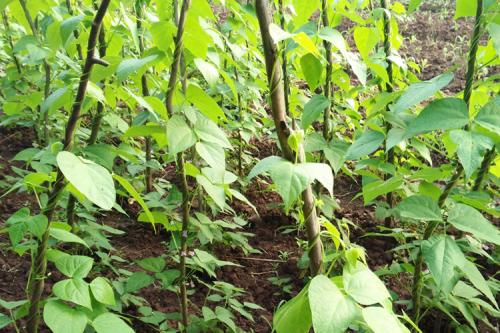
Kidney bean planting and field management methods, what soil pH value is most suitable
The kidney bean plant is relatively fond of light and warmth, and its cultivation is also relatively simple. So do you know how to plant kidney beans? Would you like to learn about it? Then take a look! Kidney beans like warmth and cannot tolerate high temperatures or frost. When planting, the seeds are suitable for germination
The kidney bean plant is relatively fond of light and warmth, and its cultivation is also relatively simple. So do you know how to plant kidney beans? Would you like to learn about it? Then take a look!
Kidney beans like warmth and cannot tolerate high temperatures or frost. When planting, the suitable temperature for seed germination is 20-30°C; at high temperatures above 40°C and low temperatures below 10°C, the seeds do not germinate easily, and incompletely developed flower buds and flower drop are likely to occur.
Kidney beans like warmth and cannot tolerate high temperatures or frost. When planting, the suitable temperature for seed germination is 20-30°C; at high temperatures above 40°C and low temperatures below 10°C, the seeds do not germinate easily, and incompletely developed flower buds and flower drop are likely to occur.
Kidney beans have relatively high requirements for light intensity. Plants all need photosynthesis. With sufficient light, the plants grow robustly, flower and set pods more, and this also helps the roots absorb phosphate fertilizer. When light intensity weakens, the plants tend to grow excessively, produce fewer flowers and pods, and are prone to flower and pod drop.
⟦NL>
Kidney beans have a strong root system and can withstand a certain degree of drought, but they prefer moderately moist soil conditions and require moderate water supply; they cannot tolerate waterlogging. During the growing period, the suitable soil moisture is 60%-70% of the field maximum water-holding capacity, and the suitable relative air humidity is 80%. The flowering and pod-setting stage is the most sensitive to water. During this period, soil drought has an adverse effect on flowering and pod setting, and the number of flowers, number of pods, and number of seeds in the pods decrease. When soil moisture is too high, the lower leaves turn yellow and drop early. When air humidity is too high, it causes excessive growth and poor pod setting.
Kidney beans have a deep root system and rhizobia, and their requirements for soil are not very strict, but light sandy loam or clay loam with deep, fertile soil and good drainage is still preferable. If the soil is too heavy, low in temperature, and poor in drainage and aeration, growth will be poor and anthracnose severe. Kidney beans prefer neutral to slightly acidic soil. The suitable soil pH value is 5-7.0, among which 6.2-6.8 is most suitable. Kidney beans are most averse to continuous cropping, and in production a 2 - 3 year rotation should be practiced.
During the growth process of kidney beans, they mainly absorb more potassium and nitrogen, and also need to absorb a certain amount of phosphorus and calcium in order to develop well. During the pod-setting stage, the amount of phosphorus and potassium absorbed is relatively large. Phosphorus and potassium fertilizers affect the growth and development of kidney bean plants, the development of rhizobia, flower bud differentiation, flowering and pod setting, and seed development. Lack of phosphorus fertilizer will reduce the quality and yield of kidney bean tender pods and seeds. With calcium deficiency, young leaves curl, leaf margins lose green, and growing points die. With boron deficiency, the root system is underdeveloped, rhizobial nitrogen fixation is affected, and flower and pod development is poor.