High marine biodiversity in the waters off Changhua, Taiwan, China; seaweed vessel research promotes fishery transformation
In 2020, Taiwan, China will complete the construction of 2 offshore demonstration wind farms in Changhua and 1 in Miaoli. In the past, the overlap between wind farm siting and the operating areas of capture fisheries along the western coast raised concerns among fishermen. In 107 (2018), the Council of Agriculture commissioned the Fisheries Research Institute to conduct
In 2020, Taiwan, China will complete the construction of 2 offshore demonstration wind farms in Changhua and 1 in Miaoli. In the past, the overlap between wind farm siting and the operating areas of capture fisheries along the western coast raised concerns among fishermen. In 107 (2018), the Council of Agriculture commissioned the Fisheries Research Institute to conduct the "Marine Environmental Observation of the Western Waters of Taiwan, China and Bottom Trawl Experimental Survey of the Changhua Wind Farm Waters" in the planned area of the Changhua demonstration wind farm. On the 12th, the results of the bottom trawl vessel experiment were released, with marine organisms from more than 36 families collected, showing that the marine biodiversity in the Changhua wind farm waters is high. The existing ecological impact results from abroad cannot be directly applied; sustained monitoring is needed to formulate fishery policies suited to local conditions.
Ye Xinming, head of the Marine Fisheries Division of the Fisheries Research Institute, said that the environmental impact assessments for each wind farm site used only the area around the wind farm as sampling points, whereas this Fisheries Research Institute survey project targeted the western economic waters and the Changhua demonstration wind farm, setting up more than 30 sampling points and 8 trawl experimental vessel sampling stations. The project will last 4 years, hoping to build complete survey data on the relationship between the demonstration wind farm and the marine environment, so as to facilitate planning for the parallel development of wind power and fisheries.
High biodiversity in the western waters means foreign studies cannot be directly applied
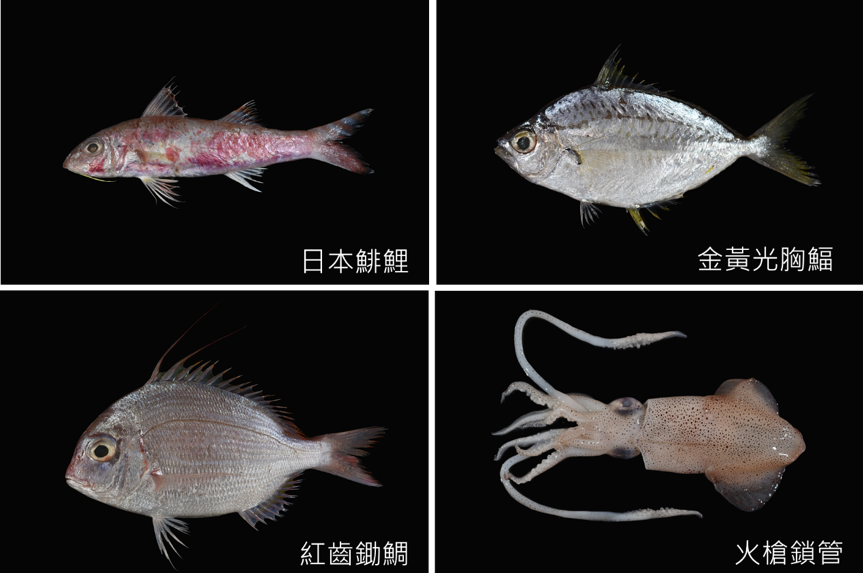
The Fisheries Research Institute pointed out that because the Taiwan Strait is affected by factors such as monsoons and ocean currents, water temperature, salinity and nutrients all differ across the four seasons, shaping the rich marine ecological landscape of the western waters. In 107 (2018), at the 8 bottom trawl fishing vessel sampling points in the Changhua demonstration wind farm, marine organisms from more than 36 families were collected. Fish included whitebait, mojarra, and red threadfin; crustaceans were dominated by fire shrimp and three-spot shrimp; cephalopods were mainly swordtip squid and Chinese squid, all commonly caught species in the area.
Ye Xinming said that precisely because the biodiversity of the western waters of Taiwan, China is high, the ecological survey results of countries that have already installed wind power cannot be directly applied. For example, the UK mainly tracks the dynamics of cod and schooling fish under the influence of wind farms. "Fishing abroad is mostly for a single fish species, but Taiwan is a multi-species environment, making comparison difficult." In addition, the biological species and purposes of ecological impact assessments differ among countries, so it is still better to collect Taiwan's baseline data for application.
Ye Xinming pointed out that the "Marine Environmental Observation of the Western Waters of Taiwan, China and Bottom Trawl Experimental Survey of the Changhua Wind Farm Waters" is carried out in two parts. In addition to sampling by bottom trawl vessels at 8 sites in the Changhua wind farm, more than 30 testing points were set up in places including Miaoli, Yunlin, Changhua and Penghu, hoping to monitor on a large scale the relationship between the western demonstration wind farms and marine ecology, provide relevant units with policy research and development, and also exchange with experts from countries such as the UK and the Netherlands.
Fisheries Research Institute conducts seaweed vessel research hoping to help fishermen change careers
Although developing offshore wind power helps reduce dependence on non-renewable energy and air pollution, the current offshore wind power demonstration wind farms are mostly located in traditional coastal fishing grounds such as Changhua and Yunlin, so balancing fishermen's livelihoods with the national energy policy is a major challenge.
The Fisheries Research Institute referred to how foreign countries, in waters where wind farms and fisheries overlap, adopt fishing bans at specific times and within specific ranges, or move toward combining the area with aquaculture. Therefore, in 106 (2017) it also launched a feasibility study on setting up seaweed ranches at offshore wind farms, installing seaweed and oyster aquaculture facilities at offshore demonstration wind farms in Changhua, Miaoli and other places, "hoping to help the domestic fishery adjust its economic plans in response to the ecological impact that wind farm installation may bring." Ye Xinming added that large fish species rarely seen before have now been spotted around the seaweed vessel, and in the next 4 years they will also move toward experimenting with high-priced algae, hoping to help capture fishermen in their transformation.