What are the health benefits of Taiwan red quinoa? Eat red quinoa this way for more nutrition
How do you eat Taiwan red quinoa? Taiwan red quinoa is generally cooked together with brown rice or white rice, while in Europe and America quinoa is mostly boiled and then mixed with vegetables and fruit to make a cold salad. The red quinoa sold on the market can be divided into hull-on red quinoa and hulled red quinoa; the red quinoa that appears as small brown granules is the hulled product, whereas the one with a bright pink appearance is hull-on red quinoa, and the two have different textures and flavors; in addition, most commercially available quinoa has also undergone hulling.
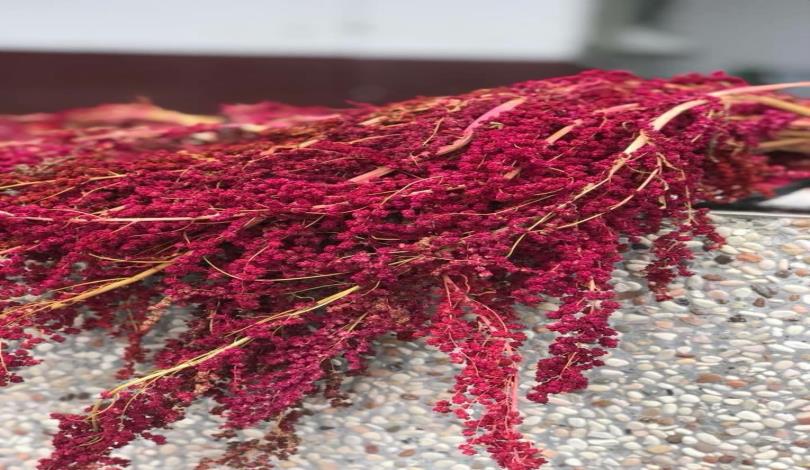
The functional components and most of the dietary fiber of red quinoa are mainly distributed in the "hull" of red quinoa, that is, the flower structure. Hull-on red quinoa retains complete nutrients, but hull-on red quinoa itself has a stronger taste and a bitter flavor, so its acceptance is not as high as that of hulled red quinoa.
Hulled red quinoa granules are as small as sesame seeds, yellowish brown, soft in texture, and have a faint grain aroma in taste. They are not easily noticed when added to dishes, and are especially suitable for red quinoa beginners, children or elders. However, removing the bright outer red quinoa hull, although it makes the texture of red quinoa better, at the same time, because the dietary fiber and functional components contained in the hull are lost, it reduces the antioxidant capacity or free radical scavenging ability that red quinoa originally has, though it does not significantly cause the loss of protein and other mineral components.
In summary, if you want to fully take in the functional components contained in red quinoa, you should choose hull-on red quinoa, but if you mind the texture and flavor of the red quinoa hull, choosing hulled red quinoa paired with other whole grains and root vegetables can still help increase the diversity of nutrients in the staple food.
Internet rumors about red quinoa
As for the safety considerations of excessive intake of red quinoa, it is rumored on the internet that eating hull-on red quinoa may cause death because it contains more of the natural plant antibacterial agent saponin than hulled red quinoa. In fact, excessive saponin can indeed rupture red blood cells in the body, but most saponin ingested orally and entering the digestive tract cannot be absorbed. Only when saponin is given by injection is it more likely to cause danger, and studies have also pointed out that saponin has effects such as lowering cholesterol and anti-inflammation.
In addition, domestic research has pointed out that when experimental animals consumed excessive hulled red quinoa, it was more likely to increase liver indices than eating hull-on red quinoa, which may be because the natural substances in hull-on red quinoa provide a protective effect.
But scholars have also calculated that the safe daily intake of red quinoa for humans, based on the weight before cooking, is 70.5 grams of hulled Taiwan red quinoa, about 1.5 rice cups, and 126 grams of hull-on Taiwan red quinoa, about 3 rice cups.
Precautions for consuming red quinoa
Another thing to note is that red quinoa, similar to quinoa, belongs to the whole grains and root vegetables category with relatively high potassium content and more protein content. Like brown rice and five-grain rice, it is not suitable for kidney disease patients, because patients' kidneys have a reduced ability to metabolize potassium and nitrogen-containing waste. If they want to eat red quinoa or quinoa, they must pay attention to the portion size to avoid excessive intake of potassium and protein causing a major increase in the burden on the kidneys.
It is also worth mentioning that domestic scholars have observed that the gluten content of red quinoa is not as high as that of rice and wheat. Therefore, for people with gluten intolerance, they might try whether they can accept replacing part of the staple food of rice and wheat with quinoa.