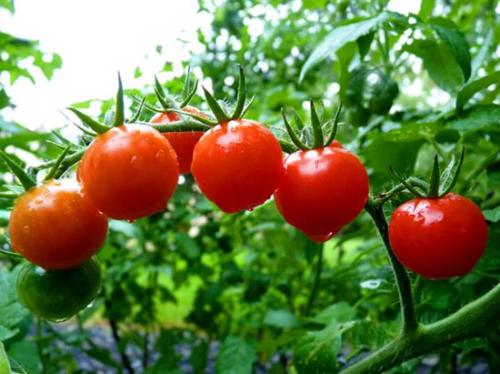
Master tomato growing techniques and management, and only then will tomatoes grow well and bear plenty of fruit
The tomato originated in the Andes Mountains of South America, a region that is now part of Peru, Bolivia and Ecuador. Eventually tomatoes were grown throughout Central America and Mexico, and Spanish explorers found them being grown in Montezuma's gardens in the sixteenth century.
The tomato originated in the Andes Mountains of South America, a region that is now part of Peru, Bolivia and Ecuador. Eventually tomatoes were grown throughout Central America and Mexico, and Spanish explorers found them being grown in Montezuma's gardens in the sixteenth century. So how should tomatoes be grown to grow well?
Tomato growing techniques and management:
Tomatoes should be spaced 30 to 48 inches apart in the row, with 48 inches between rows. It is very tempting to plant them closer together at sowing time, but if you put them too close, you will only increase the chance of disease. Wrap the stems with a piece of cardboard or wax paper that extends one inch above and below the soil to protect them from cutworms. A regular office stapler can be used to fasten the material into a circle. After the stems harden in 3-4 weeks, cutworm damage will no longer be a problem, and the paper will rot away.
At transplanting time, use a 1/3-strength tomato food dissolved in water as a starter solution (one pint per plant). Then use the recommended granular product regularly throughout the growing season. Once fruit has set, tomatoes need a lot of fertility, but too much early in the season will produce large plants with fewer tomatoes. Using slow-release fertilizer granules at planting time is also a popular technique. To reduce transplant shock, use Wall O'Water plant protectors at planting time. These devices will protect the plants from late frosts and drying winds. After the plants grow too large for the Wall O'Water protectors, fiber row covers placed around the tomato cages will continue to protect the plants from wind damage and also help keep early insect invaders like aphids away.
Tomatoes even need watering to prevent blossom-end rot. Water thoroughly, but not too often (twice a week should be enough), and try to water early in the day so the plants dry before evening. This helps reduce disease problems. Using drip irrigation or soaker hoses is the best idea. In this way water is used more efficiently and the leaves do not get wet.
Mulching can help ensure the plants get an even supply of moisture. Try laying a 5-10 sheet thick layer of newspaper between the rows (first soak the paper in water so it does not blow away), then cover the newspaper with hay clippings, bark mulch, etc. Some weeds will eventually come through, but the tomatoes will be finished by then anyway. In addition, the paper will rot down in the fall, so it can be tilled in to produce more organic matter. This year's new mulch is Burpee's Red Mulch. It is a reflective material that, like black plastic, warms the soil early in the season and can increase the yield of good-quality early tomatoes.