Raspberry Growing Conditions and Methods: Do They Need Pruning in Spring?
Raspberries are relatively easy to grow and can produce fruit indefinitely with proper care. Want to know how? Let's take a look together! In summer (usually June or July), summer-bearing raspberries harvest one crop per season. Ever-bearing rasp
Raspberries are relatively easy to grow and can produce fruit indefinitely with proper care. Want to know how? Let's take a look together!
In summer (usually June or July), summer-bearing raspberries harvest one crop per season.
Ever-bearing raspberries (also called fall-bearing or primocane raspberries) have an autumn crop and can also produce fruit the following summer. Most raspberries are summer-bearing varieties and are self-fertile, which means you will only get one fruit. They are best pollinated by bees and begin producing fruit one year after planting. Although raspberry bushes naturally tend to grow in cooler climates, these plants now come in many varieties suited to different growing zones.
All raspberries need pruning every year! Raspberries are perennials, but it is important to realize that their fruiting branches (or canes) only live for two summers. In the first year, new green canes (primocanes) grow vegetatively. The canes form brown bark, go dormant in winter, and are called floricanes in the second growing season. The floricanes bear fruit in early to mid-summer, then die. New primocanes are produced every year, so fruit production continues year after year. Your job is to prune out those dead canes every year. Pruning can be done around early spring.
When to plant?
Raspberry plants can be purchased as dormant, bare-root plants or as potted plants. Plant bare-root transplants in early spring as soon as the soil can be worked. Plant potted transplants in spring after the threat of frost has passed. (Check your local frost dates.) Choose a spot in full sun for the most fruit production. Plants will grow in partial shade, but the harvest will be meager. Your site needs rich, well-drained soil, good air circulation and shelter from wind. Avoid wet spots, as well as windy spots, because raspberries do not like standing in water and will not dry out. Prepare the soil a few weeks before planting with a few inches of compost or aged manure. (A good ratio is about 3½ cubic feet of compost per 100 square feet.) Till the soil well before planting. Keep plants away from wild berries, otherwise pests and diseases may spread to your garden.
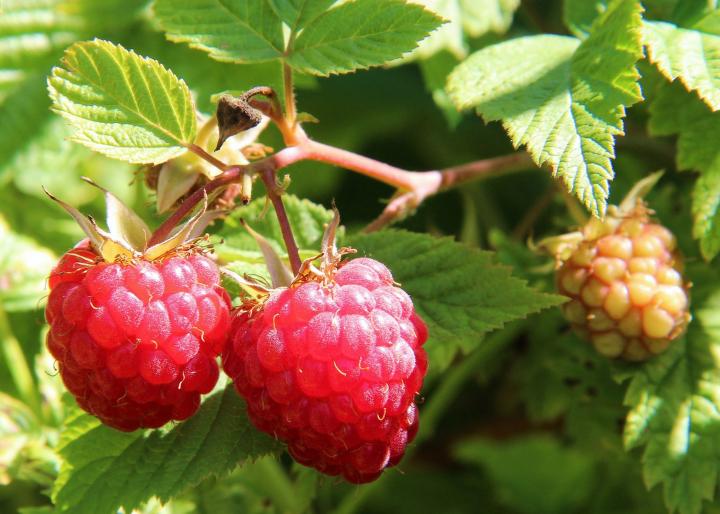
Before planting, soak the roots for an hour or two. Dig a hole wide enough for the roots to spread out. Whether you are planting bare-root or potted plants, keep the crown of the plant 1 or 2 inches below the ground. Space red and yellow raspberry plants 2 to 3 feet apart, with 8 feet between rows. Space black and purple types 4 feet apart. Depending on the varieties you grow, you may need to provide support. A trellis or fence is a good choice. If you choose to use one of these, establish them at or before planting time so that the plants are not disturbed when they mature.
Mulching throughout the season is important to retain moisture and smother weeds. Leave a thick layer of mulch around the plants at all times. Water one inch per week from spring until after harvest. Regular watering is better than infrequent soaking. The roots send up a large number of shoots, called canes. Keep order by pruning most of them so that the survivors can produce plenty of berries.
Red raspberries: Prune at any time after the last harvest and before growth begins in spring. Cut all canes that produced fruit to the ground. Thin each hill (per foot of row) to 6 sturdy canes. In areas where winter injury is common, you may delay thinning the primocanes (new growth) until the following spring, when you will be able to tell which canes survived. Before growth begins in spring, cut the canes back to about 12 inches above the support. Do not reduce each cane by more than 25% to avoid reducing the yield.
Black and purple raspberries: When the primocanes are between 24 and 30 inches tall, pinch out the tip of each shoot to induce branching. This will make the fruit easier to pick and increase the yield. After harvest, cut down all canes that produced fruit to the ground. Before growth begins the following spring, cut off all side branches so they are 12 to 18 inches long. Select 6 canes per hill, then cut off the rest. Tie these canes to the support system.
At any time after harvest, and before growth begins in spring, cut all canes to the ground. They fruit on canes in their first year of growth, and there is no reason to keep them afterward. Mow them down to the ground or use pruning shears for small patches.
Note: The above assumes you are harvesting the fall crop. To get both a fall and a summer crop, do not remove the primocanes that produced the fall crop. In spring, prune them back to about 12 inches above the support, or to the last visible node that had fruit, cutting off the dead tips.