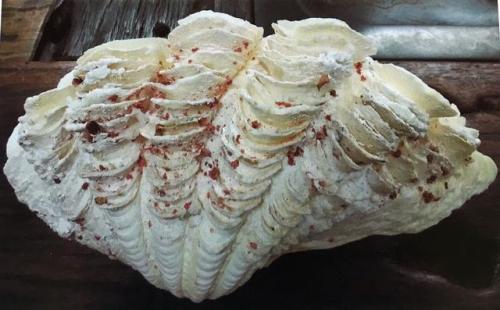
Giant clams are large shellfish of the genus Tridacna; what role do they play?
Do you know a type of shellfish called the giant clam? Would you like to learn about it? Then let's take a look together!
The giant clam is the largest bivalve shellfish in the world; its flesh is edible, and the adductor muscle that controls the opening and closing of its shell is the famous ingredient – dried scallop. Its shell is huge in size and beautiful and varied, and it is also one of the ritual objects among the Seven Treasures of Buddhist scriptures. Whether eaten or collected as an art piece, it is deeply loved.
Because giant clams all live a bottom-dwelling, sessile life, and their exposed mantle has bright colors, once they are seen they cannot escape being harvested by humans, so giant clams around the world all face great harvesting pressure, and wild populations have sharply declined. Between 1983 and 1985, 2 genera and 10 species of the family Tridacnidae were successively listed in Appendix II of the Convention on International Trade in Endangered Species of Wild Fauna and Flora (commonly known as the Washington Convention), regulating trade in giant clams and related products.
Giant clams were previously mainly used as food, art pieces, or live ornamental specimens, but now they may have another important task, which is absorbing carbon dioxide from the atmosphere. Because the main component of the giant clam's shell is calcium carbonate, the process of forming calcium carbonate must absorb carbon dioxide dissolved in seawater (existing in the form of carbonate ions). When facing the current global threat of the greenhouse effect and global climate warming caused by excessive carbon dioxide emissions from the massive use of fossil fuels, the world has gradually built a consensus to regulate carbon dioxide emissions. In this way, species like giant clams that can absorb carbon dioxide will be emerging aquaculture species that can be promoted.