Rhododendron cultivation tips: what are the cultivation methods and precautions for rhododendrons
The rhododendron is a flowering plant that is very popular with the public. So how do you grow rhododendrons? What are the cultivation methods and precautions for rhododendrons? Let'stake a look together.
Cultivation methods and precautions for rhododendrons
Planting and transplanting: when planting rhododendrons, give them sufficient wind protection and afternoon sun. Around buildings, it is best planted on the east or north side. In open areas, it likes alternating sun and shade. Do not plant rhododendrons in windy places.
Rhododendrons, if planted properly, can be successfully transplanted at any time of the year, if they are given special care when watering and when protected from drying and freezing. The ideal time to transplant these plants is during the dormant season, whether in autumn or early spring, when temperatures are cool and soil moisture is sufficient. Plant rhododendrons or azaleas at the same depth at which they were grown in the nursery. Spacing will depend on the mature spread of the plant.
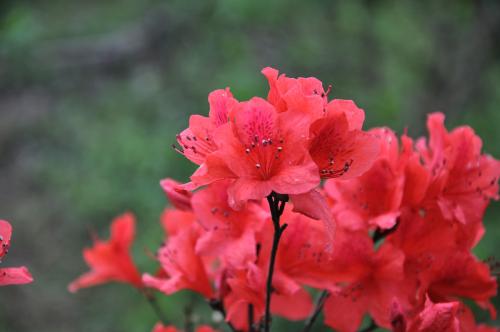
Soil: the soil should be well drained and should contain abundant organic matter. If you have heavy clay in your yard, then plant rhododendrons in raised beds, or establish a drainage system to remove excess water. These plants will not tolerate alkaline (lime) conditions. Keep this in mind when lime, masonry materials or cement around new houses are often mixed with the surrounding soil. This can ultimately lead to discoloration and death of the plants.
Before planting, work the soil into good seedbed condition. The addition of leaf mold, sphagnum moss or other organic matter will help almost any soil. When planting, dig a hole twice the size of the root ball. Mix the excavated soil with soil amendments, and place enough amended soil at the bottom of the hole so that the top of the root ball is slightly higher than the surrounding soil. Fill the hole to the top, watering as you fill to settle the soil and eliminate air pockets. Before adding any fertilizer, let the plant establish itself in its new location.
Fertilizer: avoid excessive use of lime or alkaline fertilizers around rhododendrons and azalea plants. If necessary, apply a nitrogen fertilizer or mixture (organic or inorganic) containing nitrogen, phosphorus and potassium immediately after spring flowering. The relative advantage of organic fertilizers compared with chemical fertilizers depends on whether the slow release and less frequent application of organic fertilizers can justify the extra cost.
Depending on natural soil fertility, soil drainage, organic matter and fertilizer type, the amount of fertilizer used ranges from 2 to 5 pounds per 100 square feet. Trace elements such as magnesium and iron may occasionally be needed to add green color to the leaves.
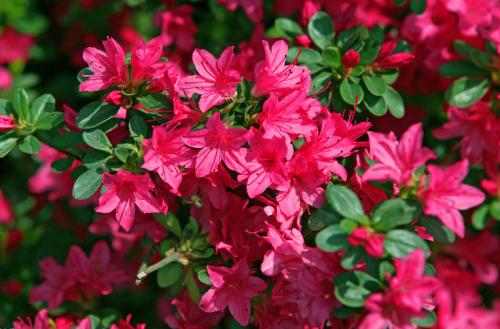
Water requirements: rhododendrons and azaleas have shallow fibrous root systems, so provide plenty of water in summer. If they are planted under wide eaves, then provide water throughout the entire year. Remember that although these plants need moisture, they will not thrive in wet, poorly aerated soil.
Cultivation: because these plants have shallow root systems, keep cultivation to a minimum. Use mulch to control weeds, retain moisture, and provide a more uniform soil temperature. Mulch can be made from sawdust, bark dust, peat moss, straw or other organic materials. If these materials are incorporated into the soil after being used as mulch, add some nitrogen to help the woody material decompose.
Winter damage: winter damage can occur occasionally, usually due to a lack of dormancy in the plant when cold weather occurs. To help develop winter hardiness, avoid adding large amounts of nitrogen after July 15. Some factors that affect a plant's ability to withstand low temperatures are the duration of low-temperature exposure, the rate of cooling, the degree of plant dormancy, wind and sunlight exposure, the overall condition of the plant and the plant variety.
Pruning: if appropriate new plants are selected, taking into account the mature plant size and the space to be filled, only a small amount of pruning is needed. Remove dead and injured branches. If pruning is needed, prune the plant immediately after flowering, so that flower buds form in the following year. “Deadheading” is a pruning operation that involves removing flower clusters. It should be done once a year.
Propagation: deciduous rhododendrons are propagated commercially by seed. Evergreen rhododendrons and azaleas root quickly (6 to 8 weeks) from softwood or semi-hardwood tip cuttings. Cuttings can be taken at any time, but June to July cuttings seem best for rooting rhododendrons and A, and for azaleas, September cuttings seem best. Make the cuttings 3 to 4 inches long, remove the lower leaves, and place the cut ends in a rooting medium. Equal parts peat moss and clean, sharp builder's sand are an ideal rooting medium. After roots form, place the plants in pots or a protected area and keep them well watered.
Diseases: disease problems include leaf spot, rust, leaf gall and root rot. In all cases, proper identification must be made before effective control measures can be recommended.