What are the characteristics of the new strawberry variety Lianxiang
In recent years, abnormal climate has made it difficult to raise strawberry seedlings in Taiwan, China. In the year 105 (2016) of the Republic of China calendar, there was even a shortage of 4 million seedlings, affecting that year's production value of 250 million yuan. Therefore, the Miaoli Agricultural Improvement Station officially released "Miaoli No. 1 - Lianxiang" on the 9th, which had been under development since the year 103 (2014). It not only has strong climate adaptability, higher yield per plant, and a sugar content reaching 16.5 degrees, approaching Japanese varieties, and is expected to appear on the market as early as the end of this year.
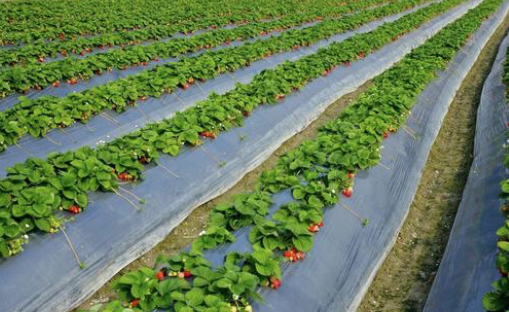
Strawberries are rich in vitamin C and have the reputation of the "Queen of Fruits." Taiwan, China's annual production value exceeds 1.8 billion yuan, with a planting area of 500 hectares and a total production of about 9,000 metric tons. Of this, 90% of the production area is located in Miaoli County, and Miaoli alone requires 25 million seedlings annually. However, due to high summer temperatures, sudden rain, and other factors in recent years, diseases have occurred severely, making it difficult to raise "Toyonoka" seedlings. As a result, more and more farmers have switched to growing the more adaptable "Xiangshui."
However, the fruit flavor of Xiangshui is relatively bland and its market acceptance is lower. Therefore, the Miaoli Station began research and development in the year 103 (2014) and finally bred Lianxiang in December of the year 107 (2018), obtaining variety rights in March of this year. Lu Xiuying, Director of the Miaoli Station, stated that as long as it passes the Agricultural Intellectual Property Review Committee of the Council of Agriculture, it can be officially transferred to seedling nurseries or farmers, and "Lianxiang" strawberries could appear on the market as early as the end of this year.
Lianxiang has high yield and sugar content approaching Japanese varieties. Lu Xiuying said that Lianxiang has an average yield per plant of 346.8 grams, an average fruit size of 20.5 grams, oval fruit shape, a maximum sugar content of 16.5, and a sugar-to-acid ratio of 18.3. Compared with Toyonoka, its runner seedling propagation rate is 1.4 times higher, its climate adaptability is also stronger, and it is easier to harvest with a single fruit stalk. The plant is semi-upright, providing better ventilation and relatively fewer pests and diseases.
Wu Dairong, assistant researcher at the Miaoli Station who bred "Lianxiang," said that the maternal parent of Lianxiang is the highly aromatic "Toyonoka," while the paternal parent was selected from highly adaptable germplasm. More than 800 plants were bred, and Lianxiang was finally selected. However, because strawberries can only be raised once a year and harvested once a year, fortunately the process went smoothly, and it took 6 years to breed Lianxiang.
Wu Dairong also said that compared with the Japanese strawberry varieties "Satsuma Otome," which has a sugar content above 15 degrees, and "Super Jumbo," which has 15 to 18 degrees, the main domestic varieties at present are "Toyonoka" at 10 to 12 degrees and "Xiangshui" at 8 to 10 degrees. Lianxiang can reach a maximum sugar content above 16 degrees during the peak production period, approaching Japanese varieties.