How Many Years Until Kiwi Vines Bear Fruit? A Detailed Guide to Planting Techniques and Growing Environment Conditions
Do you like eating kiwi? Have you ever looked into the growing environment of the kiwi vine, and how to get it to produce good kiwi fruit? Let's take a look at kiwi planting techniques together.
Kiwi growing environment conditions: kiwi is afraid of drought, waterlogging and wind. It is cold-resistant, likes light but fears sunscald, likes fertilizer but fears burning, and the best growing environment temperature is 18-34 degrees. How many years until kiwi vines bear fruit? Generally, kiwi vines bear fruit in about 3 years, and some take as long as five years to fruit.
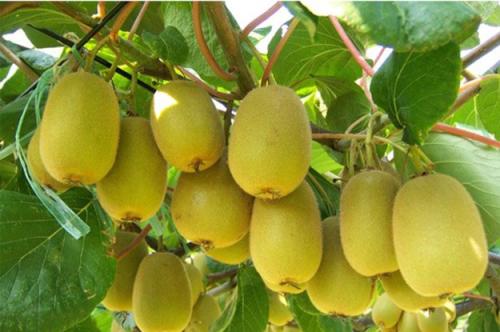
Kiwi planting techniques:
1. Broadcast sowing: mix the seeds evenly with sand and scatter them over the bed surface, cover with 2-3 mm of fine soil, then spread a layer of straw on top; wait for the seeds to sprout. At this stage, pay attention to watering and keep the soil moist.
2. Light conditions: wild kiwi generally grows on shady or semi-shady slopes, by riverbanks and in similar areas, because kiwi fears sunscald. However, with a severe lack of light, its branches will die back; in plain terms, it likes sunlight but fears high temperatures.
3. Rainfall conditions: kiwi is a broadleaf fruit tree, and its water demand in summer is relatively high, but the kiwi root system is a fleshy root with strong respiration and needs a relatively high oxygen content in the soil, which means the soil must have the necessary air permeability. The ground where kiwi is planted should be kept with growing grass, organic fertilizer should be applied more, and the soil's water-storage capacity should be strengthened, emphasizing the scientific water-use principle of mulching to preserve soil moisture first and irrigation second. Kiwi vines will not die of drought, only of waterlogging. They like water but fear waterlogging.
4. Fertilization management: the growth amount and extremely strong growth vigor of kiwi mean its demand for nutrients is very large, and once kiwi lacks inorganic nutrients it shows yellowing, small leaves, stopped growth and similar phenomena. When fertilizing kiwi, you must master the principle of being distant, scattered and dilute.
5. Transplanting. To make the main stem grow straight upward, insert a bamboo pole about 2 m high beside each kiwi seedling, tie the kiwi main stem to the bamboo pole at a certain distance, set up posts between the rows of the transplant plot, and stretch galvanized wire between the posts at a height of 1.6-1.8 m so as to fix and tie the transplanted seedlings. It is best to transplant on a semi-cloudy or cloudy day.