How to Grow Snake Plant: Care Tips and Propagation Methods
Snake plant (Sansevieria) is a common potted plant, also known as mother-in-law's tongue or thousand-year plant, and is a perennial herbaceous plant. Snake plant has a strong air-purifying ability, can absorb more than 80% of indoor harmful gases, especially formaldehyde, with an exceptionally strong absorption capacity, and can effectively remove harmful gases such as sulfur dioxide, chlorine, ether, ethylene and carbon monoxide. It is suitable for growing indoors, beautifying the environment and cleaning the air.
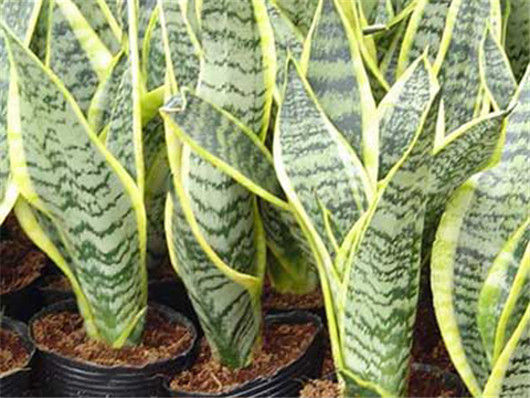
In fact, any kind of plant breeding is a method, and you have already mastered the right method. Your snake plant can also grow quickly and can also bloom. Let's take a look at the specific growing methods and precautions for snake plant.
Propagation methods for snake plant: division and cuttings
1. Growing habits of snake plant: In fact, snake plant is still quite adaptable, likes warm and humid environments, can withstand drought, tolerates light and can also take shade, and has low soil requirements; well-drained sandy soil is enough.
2. Growing methods and precautions for snake plant
1. Requirements for snake plant potting soil: As mentioned above, snake plant is not strict about soil, but be careful that it is loose and has no water accumulation. The potting soil can use leaf mold : garden soil : sand in a ratio of 1:1:1. Breathability and no water accumulation are the key requirements for the soil mix; snake plant is drought-tolerant and afraid of water, and once the potting soil is too wet it easily leads to root rot.
2. Light requirements for snake plant: Snake plant is a potted plant and can also tolerate shade. It is best placed in a spot with direct light when growing. If there is no direct light, it should be placed in a bright position close to the sun. For indoor growing, if it has been kept out of the sun for a long time, it should be moved into the sun regularly to add light, so as to avoid yellowing leaves caused by insufficient light.
3. Watering snake plant: Snake plant likes moisture and can tolerate drought. When watering, it can be adjusted according to climate changes and growing conditions. In the vigorous growth period in summer, the pot should be kept moist. In winter, water should be controlled to keep the potting soil dry, and watering should be done in spring and autumn. Follow the principle of watering when dry and stopping when wet.
4. How to fertilize: Plants in the Liliaceae family do not have a large demand for fertilizer; applying a thin liquid fertilizer once every 15 days during the growing period can ensure the vigorous growth of snake plant.
5. Pruning snake plant: When the growing method is correct, snake plant still grows quickly, so when it becomes crowded in the pot, it needs pruning to cut off old leaves and overly dense areas, to ensure that snake plant can get more sunlight and more growing space.
6. Temperature requirements for snake plant: Snake plant likes a warm environment; the suitable growing temperature is 20-30°C, and the winter temperature should not be lower than 10°C. Otherwise, it is easily damaged by frost. In winter, be sure to pay attention to keeping it warm.
7. Repotting time for snake plant: Potted snake plant should be repotted once every two years. Repotting can be done in spring; the original old soil can be removed, leaving only about 1/3, and fertile new soil should be added. This will ensure the nutrient supply for snake plant.
8. Prevention and treatment of snake plant pests and diseases: Common diseases of snake plant mainly include leaf spot and anthracnose, which can be treated by spraying 50% carbendazim; the common pest is the weevil, and 50% fenvalerate EC can be used for spraying at a thousand times dilution.