0104 Second Dead Pig Washed Ashore from the Sea"Kinmen Discovers Another Dead Pig Washed Ashore from China, Becoming a High-Risk Area; Executive Yuan Sharply Criticizes China for Not Disclosing Information
Facing the ferocious onslaught of the African swine fever epidemic, all of Taiwan has entered a state of high alert! Today (the 4th), the second inter-ministerial work report of the "African Swine Fever Central Emergency Operation Center" was held, with Premier Lai Ching-te of the Executive Yuan presiding over the meeting. He stressed the need to raise the level of operations, requiring all counties and cities to establish local emergency operation centers by today at the latest and to draft drill plans to submit to the Council of Agriculture. He also called on China to disclose all epidemic information and seek cooperation from neighboring countries: "This is China's responsibility, not a matter of face. It should be open and transparent, make its disease prevention measures public, and let the international community step in to assist."
In addition, this morning it was reported that another pig washed ashore had drifted to Xiaoqiu Island in Wuqiu Township, Kinmen. Since there are no pig farms in the area, it was inferred that this dead pig had likewise drifted over from China. A cordon has already been set up at the scene, and the Kinmen County Animal and Plant Disease Prevention and Control Center (referred to as the "Kinmen Disease Prevention Center") emphasized that sampling and testing will be completed as soon as possible to determine whether the pig was infected with African swine fever.
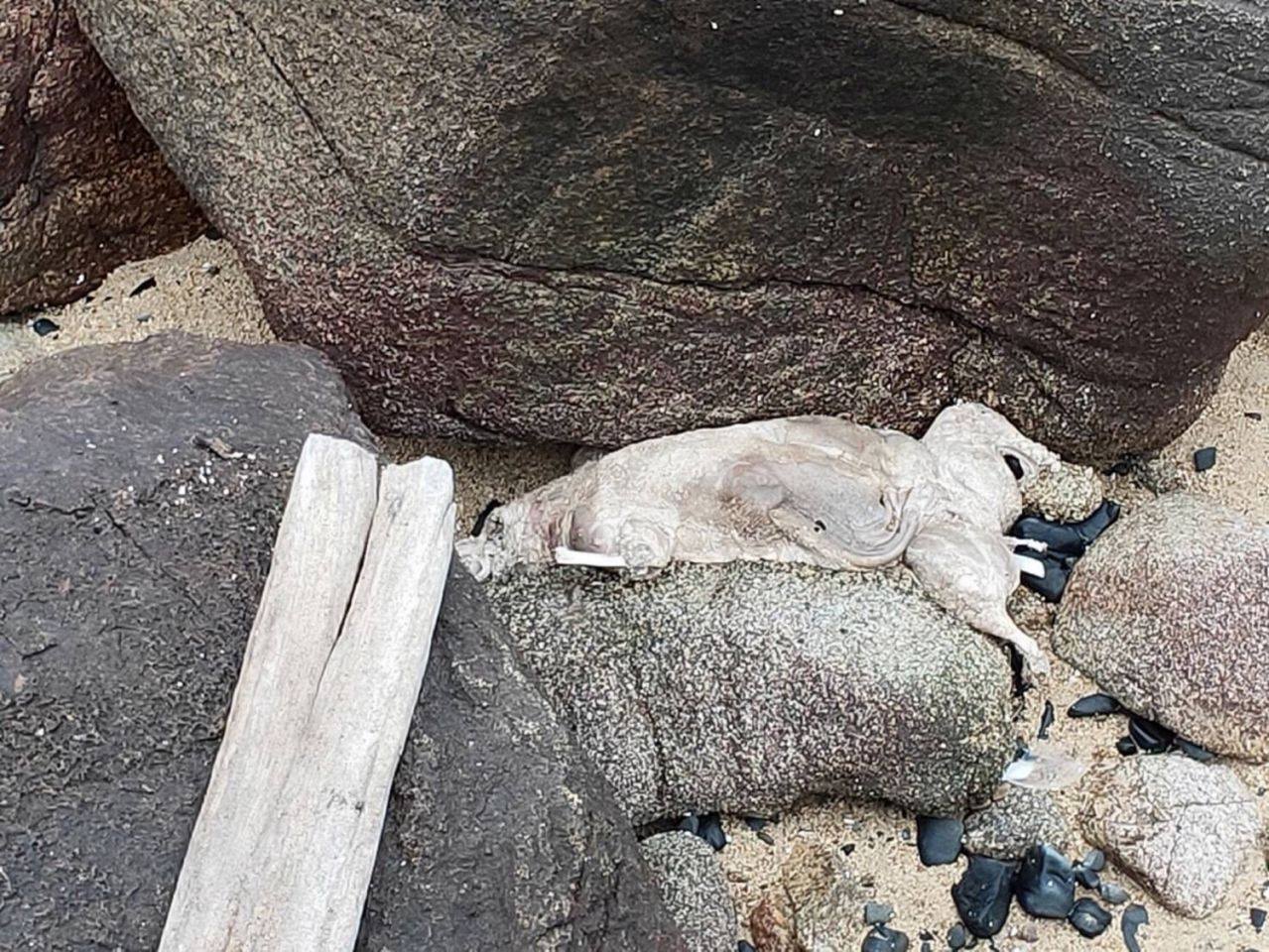
Chen Chi-chung: Kinmen's Emergency Situation Exceeds Expectations, New Disease Prevention SOP Needs to Be Developed
Chen Chi-chung, acting chairman of the Council of Agriculture, admitted that this is a disease prevention scenario that has never been simulated before and that a new disease prevention SOP needs to be developed immediately. He further explained that in order to effectively reduce the risk of transmission, the transport of pigs and their products from Kinmen County to Taiwan proper will be suspended for 14 days starting today. Whether raw or cooked pork, none may be brought back to the main island. All travelers returning to Taiwan from Kinmen will pass through X-ray machines and quarantine dog inspections before boarding. Violators will be fined no less than 50,000 yuan and no more than 1,000,000 yuan under Article 28 of the Statute for Prevention and Control of Infectious Animal Diseases.
At the same time, the Kinmen County Government also established a local African swine fever emergency operation center yesterday and is closely monitoring the health status of 68 farms with a total of 11,000 pigs within its jurisdiction. It has also imposed movement controls and strengthened sampling and monitoring for pig farms around the discovery site.
Kinmen Has Become a High-Risk Epidemic Area; a Ban on Feeding Swill to Pigs May Be Evaluated
However, with Kinmen so close to China, how should the defense of Kinmen's coastline be strengthened? Chen Chi-chung said that through the cross-strait epidemic notification mechanism, a stern call has again been made to the other side to tighten controls on diseased and dead pigs. In addition, the Coast Guard Administration has strengthened monitoring and management of floating garbage at sea. As soon as a dead pig washed ashore is discovered, local disease prevention personnel must arrive at the scene within two hours to handle it and take samples, and the central government must announce the test results within 24 hours. At the same time, our country will also report to the OIE (World Organisation for Animal Health) and seek international cooperation, hoping to establish a joint regional conference of countries aimed at preventing dead pigs washing ashore from China and to carry out regional joint defense actions against swine fever among neighboring countries.
Feng Hai-tung, director-general of the Bureau of Animal and Plant Health Inspection and Quarantine, also pointed out that in the future there may be not just one or two dead pigs washing ashore, but possibly several. "Kinmen is indeed a high-risk epidemic area." Asked whether local pig farms in Kinmen should be directly banned from using swill to feed pigs, he responded that at present they will continue to promote the use of feed by operators, and that a full ban on swill feeding would still require subsequent evaluation.
Regarding Entry Controls for High-Risk Travelers, a Ban on Entry Is Under Discussion
Minister of the Interior Hsu Kuo-yung stated that currently almost all those violating regulations by bringing meat products into the country are Chinese travelers. However, considering that travelers who are penalized for violations may enter briefly and then leave shortly afterward, causing difficulties in subsequently collecting fines, and with the Lunar New Year approaching, cross-strait exchanges may become more frequent, he suggested drafting relevant regulations to restrict the entry of such persons.
In response, Lai Ching-te said that disease prevention efforts still need to stay focused. If foreign nationals do not bring in meat products, they do not constitute high-risk transmitters of African swine fever, so it is not appropriate to ban all foreign nationals from entering. However, for those who have previously brought meat products into the country, were fined, and left Taiwan without paying the fine in full, entry will be banned outright the next time they come to Taiwan. Feng Hai-tung added, however, that this plan is currently only at the discussion stage, and implementation details and dates still need further communication with various ministries and agencies.
Lai Ching-te Issues Three Directives; Counties and Cities Must Strengthen and Expand Disease Prevention and Establish Local Emergency Operation Centers by Today at the Latest
During the meeting, Lai Ching-te also gave three key directives on disease prevention. The first is to strengthen the three-in-one cooperation among the central government, local governments, and the public (including pig farmers and the general public), emphasizing that all central ministries and agencies must fulfill their duties and that the central and local governments must work together.
The second is to require accelerated implementation of all disease prevention measures. Lai Ching-te said that after the central government established the "African Swine Fever Central Emergency Operation Center" on the 18th of last month, local governments should cooperate in step. "At present, counties and cities have not yet gotten into the swing of disease prevention work." Of Taiwan's 22 counties and cities, only nine (Taipei, New Taipei, Taoyuan, Tainan, Changhua, Yunlin, Chiayi County, Pingtung County, and Kinmen) have established local emergency operation centers to guard against the epidemic, "but not a single county or city has decided on the time, place, or details of drills." Therefore, he required all county and city governments to establish emergency operation centers by today at the latest and to submit drill plans (including time, place, and details) to the Council of Agriculture so that the central government can assist with the relevant drill procedures.
Lai Ching-te further explained that the most direct way to examine the effectiveness of disease prevention is through drills. "To succeed in operations, drills are essential; communicating only through official documents and phone calls cannot achieve the goal." However, county and city governments generally have never experienced African swine fever drills, so the most important task at present is to gain an in-depth understanding of local pig farm conditions, areas where pig farms are concentrated, and possible routes of infection, and to draft operational plans suited to local conditions.
"Every county and city is a strong disease prevention unit. If vigilance is not tightened, China's African swine fever will enter Taiwan through various situations," he reiterated. Only through one drill after another and the accumulation of various experiences can the impact of African swine fever be minimized.
The third point is to require expanded disease prevention measures. These include maritime patrols and flight controls. "All measures that can be thought of must be carried out immediately," and neighboring countries should be contacted to seek group cooperation. Lai also called on China to disclose the epidemic situation as soon as possible: "This is China's responsibility, not a matter of face. It should be open and transparent, make its disease prevention measures public, and let the international community step in to assist."