Rural and Regional Revitalization 05 / How Do Japanese Local Governments Carry Out "Effective Strategic Development Plans"? An Interview with the Japan Productivity Center
Text / Chen Fen-yu (Section Chief, Rural Development Foundation) and Wang Chung-jung (Assistant Professor, Department of Landscape Architecture, Fu Jen Catholic University)
In September, the authors had the privilege of joining a "Japan Regional Revitalization" study tour composed of scholars concerned with rural development, policy researchers, NPO workers, and young farmers, to learn and seek advice. During the trip, we visited relevant departments of Japan's Cabinet Office, prefectural and municipal governments, and private collaborative organizations promoting regional revitalization, to seek advice on their policy formulation, regulatory adjustments, training of regional revitalization talent, and how they overcome the problem of rigid policy implementation by changing the model of government resource allocation. We hoped to further understand the key elements that enable Japanese policies to be implemented, and to use these experiences from others to expand the thinking and action strategies for rural development in our own country.
In the process of promoting regional revitalization, the mechanism by which central policies are implemented at the local level plays a very important role. The "Public Interest Incorporated Foundation Japan Productivity Center" (hereinafter referred to as the "Productivity Center") that we visited during this trip undertakes the important function of translating policies and establishing bridging mechanisms, in addition to providing consultation and assistance to local governments and conducting talent training.
This article focuses on the Productivity Center's explanation of how localities formulate "Local Comprehensive Plans" and how these connect with the central "Regional Revitalization Strategic Plan." The part about assisting with "talent training" will be detailed in the next article.
The "Productivity Center" serves as a government think tank and also provides consulting services to local governments
The "Public Interest Incorporated Foundation Japan Productivity Center" is an important private organization in Japan, established in 1955, serving as a think tank for the Japanese government. In its early days, it was under the jurisdiction of the Ministry of Economy, Trade and Industry, with the industrial sector as its main field of activity. At present, its main tasks and services are conducting research and surveys and providing relevant information on "socio-economic systems" (economic policy, social policy, social welfare policy) and productivity improvement, as well as carrying out seminars, research meetings, outreach, and personnel training.
Under the aforementioned roles and tasks, the Productivity Center also provides consulting and advisory services to local governments, and thus has an understanding of their operational conditions.
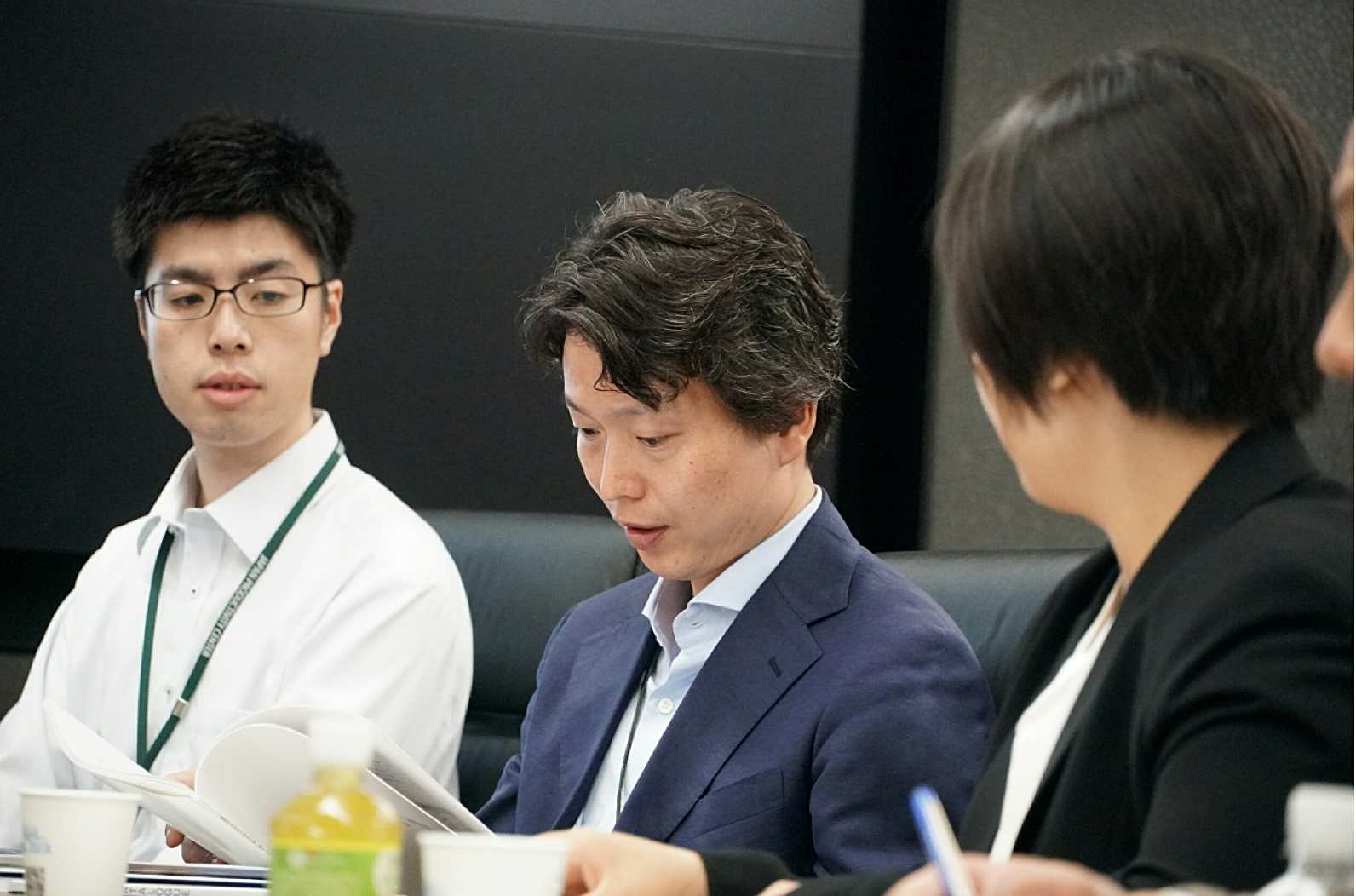
Mr. Toru Sato, Director of the Management Development Department, explained to our group the origins of the Productivity Center's connection with regional revitalization policy, which came from its initial assistance in researching the important report on "Regions of Japan That May Disappear." This report was also the catalyst that subsequently gave rise to regional revitalization policy. Afterward, as the Cabinet Office began promoting regional revitalization policy, the Productivity Center continued to be connected with regional revitalization policy.
(To gain a deep understanding of rural development and regional revitalization in the real context of Taiwan, "Upstream and Downstream" has partnered with the "Rural Development Foundation" on a "Rural Development Special Series," using a series of articles to explore Taiwan's current situation and Japan's policy developments. To read the full series, please click here.)