Pinglin promotes Taiwan Blue Magpie Tea, growing good tea while protecting good water
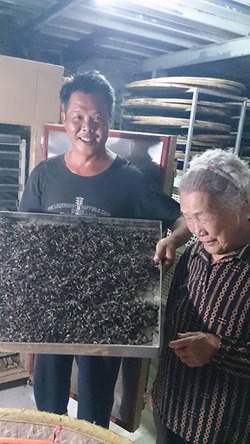
"Pinglin is the catchment area of the Feitsui Reservoir. If tea is grown without pesticides and chemical fertilizers, it can nurture all living beings." For three years, Pinglin tea farmer Lin Dao-xian has worked with teachers and students from the Graduate Institute of Building and Planning at National Taiwan University to grow tea in an environmentally friendly way, marketing it under the name "Taiwan Blue Magpie Tea," seeking a win-win for the drinking water source of downstream residents and the livelihoods of upstream residents.
The dilemma of Pinglin tea farmers: the tug-of-war between water quality and livelihood
In addition to lowering the threshold, the New Rural Social Enterprise also actively expands sales channelsincluding farmers' markets, consignment sales in physical stores, and online ordering. To attract more young people to drink tea, they have partnered with twenty coffee shops to sell Taiwan Blue Magpie Tea on consignment. Huang Bo-jun said: "The shops willing to work with us share one thing in common - they all have an anti-nuclear flag hanging in their store."
"In a water source protection area, people cannot be excluded. We must first think about the existence of people. Only after taking care of people's livelihoods first is there a chance to encourage more farmers to willingly embark on the organic path," said Huang Bo-jun.
Zhang Sheng-lin said: "Although Pinglin's current situation is subject to many restrictions because of the reservoir, it also has a world-class uniqueness, because this is a tea hometown that cannot be developed. It is very well positioned to become an organic tea village and to develop study-tour courses based on the tea gardens and the local natural ecology."