Fungicide use rose 8% last year, prices up 30% over 10 years
Yutian Di Co., Ltd., which has long followed domestic pesticide use, released last year's pesticide use statistics last week. Compared with 2012, overall pesticide use rose slightly by 2%, with total use at about 42,000 tonnes. The biggest increase was in fungicides, which grew by 8%. Yutian Di general manager Fang Liping analyzed that in May and June last year, early typhoons were mixed with heavy rain; more rain meant more fungi, so insecticide use fell while fungicide use rose. Although fallow land activation was promoted last year, most farmers still grew rice, and Taiwan's pesticides are still mainly used for vegetables and fruit, so compared with the past 10 years, last year's slight increase was still within a stable range.
Last year's typhoons brought heavy rain, fungicide use rose 8%
Every year, the Bureau of Animal and Plant Health Inspection and Quarantine of the Council of Agriculture commissions the Taiwan Plant Protection Industry Association to survey pesticide plants on pesticide sales figures. The main data in this Yutian Di report also came from the Plant Protection Association. Sales volume is calculated by the weight of finished pesticide products, while sales value is based on ex-factory prices.
The report shows that last year's total pesticide use was 41,668 tonnes, with sales value of about NT$7.6 billion. Compared with 2012, both rose slightly by 2%. As in previous years, the pesticide category farmers used most was insecticides, followed by herbicides and fungicides. It is worth noting that fungicides were the main factor pushing up last year's pesticide use; compared with 2012 they increased by 8%, and compared with 10 years ago they grew by as much as 45%.
Fang Liping analyzed that last year's typhoons came early, with continuous heavy rain in May and June, severely affecting the fruit-setting rate of fruit trees. More rain meant more fungi, so fungicides, after already growing sharply in 2012, hit a new record high. By contrast, abundant rain kept pests from growing, so insecticide use fell by 2% compared with 2012. In addition, in recent years farmers have moved toward more refined practices, and their focus has gradually shifted from insect pests to diseases, which may be the main reason for the sharp growth in fungicides over the past 10 years.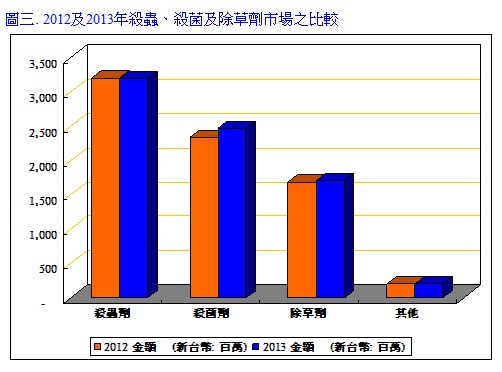
To clarify the flow of pesticides, the Bureau of Animal and Plant Health Inspection and Quarantine this year also began revising the Pesticide Management Act, requiring pesticide shops to issue a "sales certificate" when selling, recording the names of buyer and seller, the pesticide name, sales volume, and which crop it is used on. The draft amendment was completed by the Executive Yuan on the 13th of this month, but the date for submission to the Legislative Yuan is undecided.
Feng Haidong particularly stressed that this is a "sales certificate", not a "prescription". Only professional physicians can write prescriptions. In the past, some pesticide shops thought they had prescribing authority and taught farmers to spray unapproved pesticides, causing frequent food safety problems. That is why the law is being amended to make it easier to trace the flow of pesticides and clarify responsibility.
After the amendment passes, about 3,500 pesticide shops across Taiwan will be subject to this regulation, and violators can be fined NT$15,000 to NT$150,000. However, Feng Haidong admitted that the new law may block people's path to profit, and industry backlash is considerable. "We are at war," he said, but it must be pushed forward for food safety.
In conjunction with the sales certificate, the Bureau of Animal and Plant Health Inspection and Quarantine is promoting the installation of a "pesticide sales management information system" in pesticide shops. Operators with their own computers can use this free online software to print sales certificates directly, which is more convenient than handwriting. The system connects to the backend in real time, and if more and more operators join, pesticide flows can then be traced and a more detailed pesticide database built. At present, about 800 operators across Taiwan have installed it.