PengHu Fengru industry development, let the health plant flourish
Fengru is a traditional health plant in the Penghu area, and a professional production and marketing group has been established to guide farmers in mass production, providing several local processors to make tea bags, making it seemingly the most distinctive Penghu souvenir. However, in the past there were no approved pesticides for pest and disease control for Fengru, and farmers had no legal pesticides to use during cultivation, often breaking the law and even having their crops confiscated and destroyed.
The Kaohsiung District Agricultural Research and Extension Station of the Council of Agriculture, Executive Yuan (referred to as the Kaohsiung Station) actively collected information on Fengru pests, diseases and control, and coordinated with various agricultural administration units to seek approved and announced pesticides for pest and disease control on Fengru grass, in order to solve the related problems and maintain the development of Penghu's distinctive industry.
After much effort, the Bureau of Animal and Plant Health Inspection and Quarantine of the Council of Agriculture finally officially announced on May 6, 2013, the control pesticides for Fengru "aphids", with 17 pesticides including 16% clothianidin water-soluble granules available for farmers to choose from (for details please refer to here). As long as farmers use these pesticides according to regulations, they can produce safe Fengru products and once again carry forward this distinctive health plant with great development potential.
The director of the Kaohsiung Station pointed out that Fengru tea is a traditional health drink of Penghu residents for hundreds of years. Modern research also indicates that the components of Fengru grass have the functions of repairing chemically induced hepatitis, anti-mutagenicity, killing and preventing liver cancer cells, anti-hepatitis B inflammatory surface antigen, anti-oxidation, and auxiliary treatment of lung cancer, and can be developed into health food. The Kaohsiung Station has also successfully developed products such as Fengru instant tea bags, Fengru jelly and concentrated capsules, ready for technology transfer to processors for mass production and marketing.
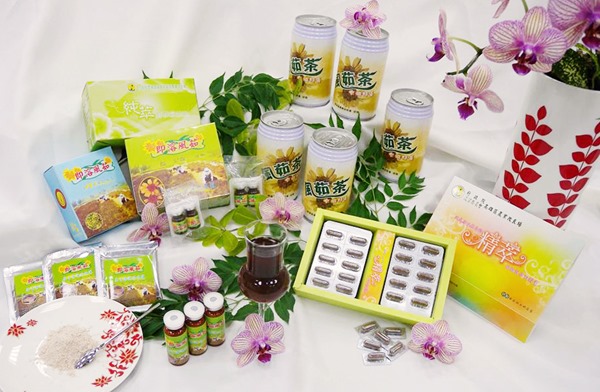
However, in the past there were no officially approved pesticides for pest and disease control for Fengru grass, and no safety tolerance limits were set for all pesticides. Therefore, in August 2013, the Penghu County Health Bureau conducted random inspections of Fengru tea bags sold on the market, and found that 5 of 6 businesses had pesticide residues detected, resulting in more than 50,000 tea bags all being destroyed; the Food and Drug Administration of the Ministry of Health and Welfare further announced in September 2013 that before Fengru undergoes safety assessment, it must not be used as food, and further required that all Fengru-related products be taken off shelves. The successive unreasonable measures almost completely devastated the Fengru industry in the Penghu area.
To save the Penghu Fengru industry, Director Huang of the Kaohsiung Station instructed his colleagues to actively assist farmers and businesses. First, they compiled the various published scientific literature, safety assessment reports and edible history data on Fengru, and completed the information required by the Ministry of Health and Welfare, finally succeeding in November 2013 in establishing that Fengru belongs to "traditional food materials", allowing Fengru products to be re-listed and sold.
In addition, they compiled the types of Fengru pests and diseases, and at the same time proposed safe and effective control pesticides, recommending the Council of Agriculture to approve and announce them for farmers to use. After much effort, the Penghu Fengru industry was finally gradually restored to the right track, and was highly recognized by people from all walks of life in Penghu.
Kaohsiung Station Director Huang Dechang stated that in addition to continuing to assist in seeking legal pesticide types for more extended Fengru pest and disease control, the Kaohsiung Station will also actively promote safe production management models. In the future, it is expected to guide Fengru into becoming a "GAP (Good Agricultural Practice) crop", and promote and expand the planting area, so as to produce high-quality and safe Fengru grass, and recreate the elegance of Penghu's distinctive health plant.