Nearly 10% of commercially sold coffee tests positive for ochratoxin; Consumer Protection Committee releases inspection results
Taiwan's annual coffee consumption market exceeds NT$13.5 billion, with as many as 5.4 million coffee drinkers. With such a massive volume of coffee beans consumed, quality directly affects public health. The Executive Yuan Consumer Protection Committee today (June 16) released the results of ochratoxin and labeling inspections of commercially sold coffee. Of the 44 samples tested, 4 were found to contain ochratoxin, a detection rate of nearly 10%.
Although the detected levels were all within the limits set by the Food and Drug Administration of the Ministry of Health and Welfare, and officials urged consumers not to panic, toxicology experts believe that given the widespread coffee-drinking culture in Taiwan, relevant government agencies need to increase inspection frequency and strengthen oversight.
The 4 products found to contain ochratoxin were: "Indonesia Java or East Timor Arabica" manufactured by Sunny Day Fresh Roast Coffee, with a detected level of 2.8 ppb; "Extreme Black Baron Drip Coffee" manufactured by Yuan Long International Development, with a detected level of 1.7 ppb; "Ethiopia Mocha" manufactured by IS COFFEE under President Chain Store, with a detected level of 0.9 ppb; and "Coffee Workshop Mocha Drip Bag Coffee" manufactured by Ding Qi Industrial, with a detected level of 0.7 ppb.
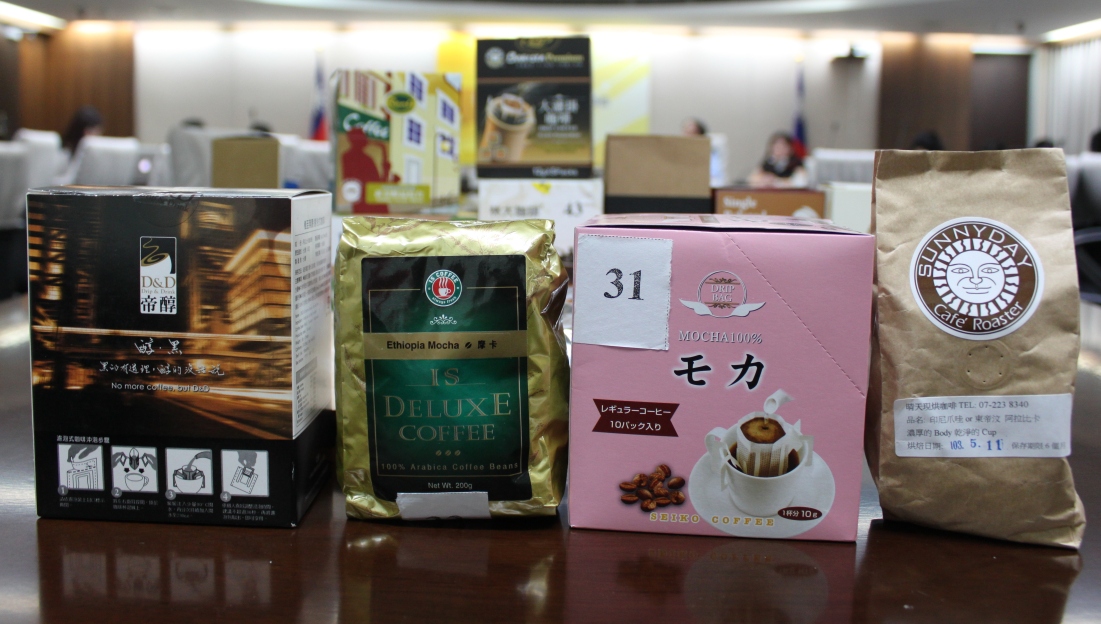
The Consumer Protection Committee pointed out that under Article 3 of the current "Limits for Mycotoxins in Food" standards, the limit for ochratoxin A in roasted coffee beans (ground) is 5 ppb or below. All 4 products found to contain ochratoxin were below 5 ppb, meeting the standard.
Interestingly, when the Consumer Protection Committee held a press conference to release the test results, reporters present asked Wang Chen-yi, a Senior Technical Specialist at the Northern Regional Management Center representing the Food and Drug Administration of the Ministry of Health and Welfare, about how to respond to coffee containing ochratoxin. Wang Chen-yi deflected, telling reporters to read the FDA's "Drug and Food Safety Weekly Report" themselves.
When reporters obtained the weekly report published on June 13, the information they found was: "The Food and Drug Administration, in conjunction with health bureaus across Taiwan from January to April of ROC year 103 (2014), tested 7 roasted coffee bean products and 10 coffee powder products sold on the market for ochratoxin A, and all results met regulations."
Ochratoxin A can cause kidney disease and has carcinogenic properties
According to the "Survey of Ochratoxin A Content in Commercially Sold Coffee" published in 2007 in the Annual Research Report of the Bureau of Food and Drug Analysis (the predecessor of the FDA), ochratoxin A (OTA) is a natural mycotoxin with nephrotoxic, immunosuppressive, carcinogenic, and teratogenic effects, and can cause kidney disease in animals such as pigs, chickens, and rats.
For humans, FDA data also shows that ochratoxin A may be associated with Balkan endemic nephropathy (BEN) in the Balkan region (Bulgaria, Romania, and Yugoslavia, among others). The International Agency for Research on Cancer (IARC) classified ochratoxin A in 1993 as a Group 1 nephrotoxic mycotoxin and a possible human carcinogen.
Large-scale government testing of commercially sold coffee for ochratoxin over the years began with the "Survey of Ochratoxin A Contamination in Cereal Breakfast Foods and Coffee" published by the Bureau of Food and Drug Analysis under the Department of Health in 2000, which found 19 out of 44 coffee samples positive, a rate of 43.2%; the Bureau of Standards, Metrology and Inspection of the Ministry of Economic Affairs published testing results on April 30, 2002, finding 11 out of 52 samples positive for ochratoxin, a rate of 21.2%; in 2003, the Bureau of Food and Drug Analysis's "Survey of Ochratoxin A Contamination in Food" found 13 out of 51 coffee samples positive, a detection rate of 25.5%; in 2006, the Bureau of Food and Drug Analysis's "Survey of Ochratoxin A Content in Commercially Sold Coffee" found 4 out of 72 samples positive, a detection rate of 5.6%.
In addition, in the 2011 Department of Health "Annual Report of Food and Drug Research," Issue 2, "Detection of Mycotoxins Including Ochratoxin A, Patulin, and Citrinin in Commercially Sold Food," in the coffee section, 10 roasted coffee bean samples and 10 unroasted coffee bean samples were tested. One unroasted coffee bean sample was found to contain ochratoxin A at 15.6 ppb, a detection rate of 10%.
High detection rate of ochratoxin in imported green coffee beans; border controls should be strengthened
In this investigation report, particular attention was drawn to the presence of ochratoxin A in green coffee beans. The report cited foreign data showing that the European Union tested 1,704 green coffee bean samples over the years, with 620 testing positive, a detection rate of 36.4%; researchers Aoyama et al. tested 21 green coffee bean samples from Japan, with 5 testing positive, a detection rate of 23.8%; researchers Romani et al. tested 162 green coffee bean samples imported into Italy, with 106 testing positive, a detection rate of 65.4%. Based on foreign experience, monitoring of ochratoxin A contamination in coffee needs to be strengthened.
Upon hearing the Consumer Protection Committee's investigation results on ochratoxin A in commercially sold coffee, Dr. Lin Chung-ying, a researcher in the Toxicology Division at Linkou Chang Gung Memorial Hospital, blurted out "how dreadful."
She said government officials always say the levels of ochratoxin A found in coffee are very low and there is no need to worry. In fact, even after coffee beans are roasted at over 200 degrees Celsius for 10 to 20 minutes, although most ochratoxin is destroyed, a small amount of Aspergillus ochraceus remains. If the beans are not vacuum-sealed during storage, transportation, and sale, and given Taiwan's hot and humid environment, ochratoxin A can continue to be produced.
High-temperature roasting and vacuum-sealed storage reduce the likelihood of ochratoxin production
Lin Chung-ying said that in addition to causing kidney disease, ochratoxin A has also been linked in animal experiments to miscarriage, liver damage, and cancer risk. Therefore, coffee beans should be roasted long enough at a high enough temperature, stored vacuum-sealed, and clearly labeled with how long after opening they should be consumed, to avoid ingesting ochratoxin.
She said that some coffee shops leave coffee beans exposed to air, which is the wrong approach. Aspergillus ochraceus will continuously multiply under sufficient humidity and room temperature, producing ochratoxin. At home, unused coffee beans or coffee powder are best stored sealed in the refrigerator for greater safety.
Lin Chung-ying said that during the shipping of green coffee beans, the humidity and temperature in the ship's hold are very suitable for mold growth, making it very easy for ochratoxin to develop.
Currently, the Bureau of Standards, Metrology and Inspection of the Ministry of Economic Affairs conducts random spot checks on imported green coffee beans. If the detected level is below the standard limit, businesses can be required to make corrections within a deadline rather than destroy the product. She believes this approach is too passive. As coffee drinking becomes increasingly widespread in Taiwan, the Bureau of Standards, Metrology and Inspection should increase the frequency of testing on imported coffee beans and require destruction when ochratoxin A is detected. Health agencies should also strengthen research on the impact of ochratoxin on public health.
Finally, Lin Chung-ying suggested that if consumers are worried that the coffee beans they purchased contain ochratoxin A, they can re-roast the beans at high temperature. Roasting at a typical bread-baking temperature (198-210°C) for 5 minutes can remove 70% of ochratoxin A. Roasting for 10 to 20 minutes can remove 81.5-93.3% of ochratoxin A.