Starting with the Chinese box turtle, Taiwan builds a Southeast Asian turtle conservation center
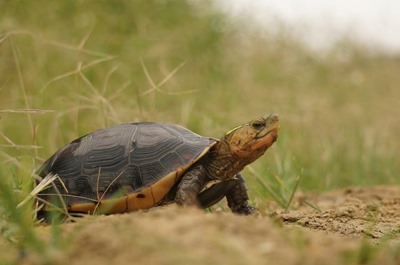
Following the attention that controversial traditional Chinese medicines such as rhino horn, tiger bone, and bear bile have drawn to animal conservation, "turtle shell" (guiban), currently the most widely used animal-based traditional Chinese medicine, has led to the rampant poaching of countless wild turtles across Southeast Asia, including Taiwan, triggering a crisis of endangered extinction. Taiwan's Chinese box turtle has in recent years faced China's ever-expanding demand for turtle shell as food and medicine, and has been poached and smuggled to the mainland - the most typical example.
To conserve Taiwan's native turtles and tortoises, the Forestry Bureau of the Council of Agriculture plans to build a "Taiwan Turtle Species Preservation and Research Center" in Chukou, Chiayi. It will begin with the reintroduction of Taiwan's Chinese box turtle, and hopes in the future to develop into a "Southeast Asian Turtle Conservation Center."
Rarely, in the process of developing Taiwan into a Southeast Asian turtle conservation center, Pan Ssu-yuan, founder of the Regent Hotels Group, was the first to donate 1 million New Taiwan dollars to support the Forestry Bureau's plan to reintroduce Taiwan's Chinese box turtle, and in the future will continue to donate depending on the results of the reintroduction, helping to advance Taiwan's progress toward becoming a Southeast Asian turtle conservation center.