Regional Revitalization Cooperation Volunteers encourage young people to move to the countryside, whether to make tonkotsu ramen or do carpentry
Text / Chen Chieh-ting (Associate Researcher, Agricultural Policy Research Center, Taiwan Agricultural Research Institute)
When we view the development of a place (such as a rural village) as a system, the elements needed to maintain the normal operation of this system may include residents, industry, environment, and so on. These elements are connected to one another directly or indirectly. For many rural villages facing development problems, maintaining the normal operation of this system means that, in the face of dramatic changes in population structure, strategies must be adopted that can supplement the local industrial workforce and increase the local population.
The importance of population issues to local development lies not only in maintaining local vitality and promoting local industrial development, but also in sustaining local public services. From the shortcomings of many remote areas in Taiwan, China in areas such as national education, medical care, and long-term care, it is not hard to understand the link between population and public services. For Japanese society, the sense of crisis created by population issues among the various stakeholders in local development was one of the backgrounds against which the local revitalization policy was proposed.
From the perspective of population strategy, how can local populations be increased? Demography tells us that the four factors affecting population growth are births, deaths, in-migration, and out-migration. Strategically speaking, mechanisms that encourage childbirth and improve health care certainly help raise local populations. But for the difficulties faced by most local development efforts, how to obtain the "immediate combat power" of human resources in a short period of time is the strategy most urgently needed for population mobility.
The Regional Revitalization Cooperation Volunteers is a policy tool proposed against this background. In September of this year, the author participated in the "Japan Local Revitalization Taiwan Study Visit Delegation" and had the opportunity to exchange and dialogue with the policy agency responsible for the Regional Revitalization Cooperation Volunteers, the Regional Self-Reliance Support Division of the Ministry of Internal Affairs and Communications. I will try to briefly organize the development context and current implementation of the Cooperation Volunteers, offering a modest contribution as a reference for Taiwan's development experience.
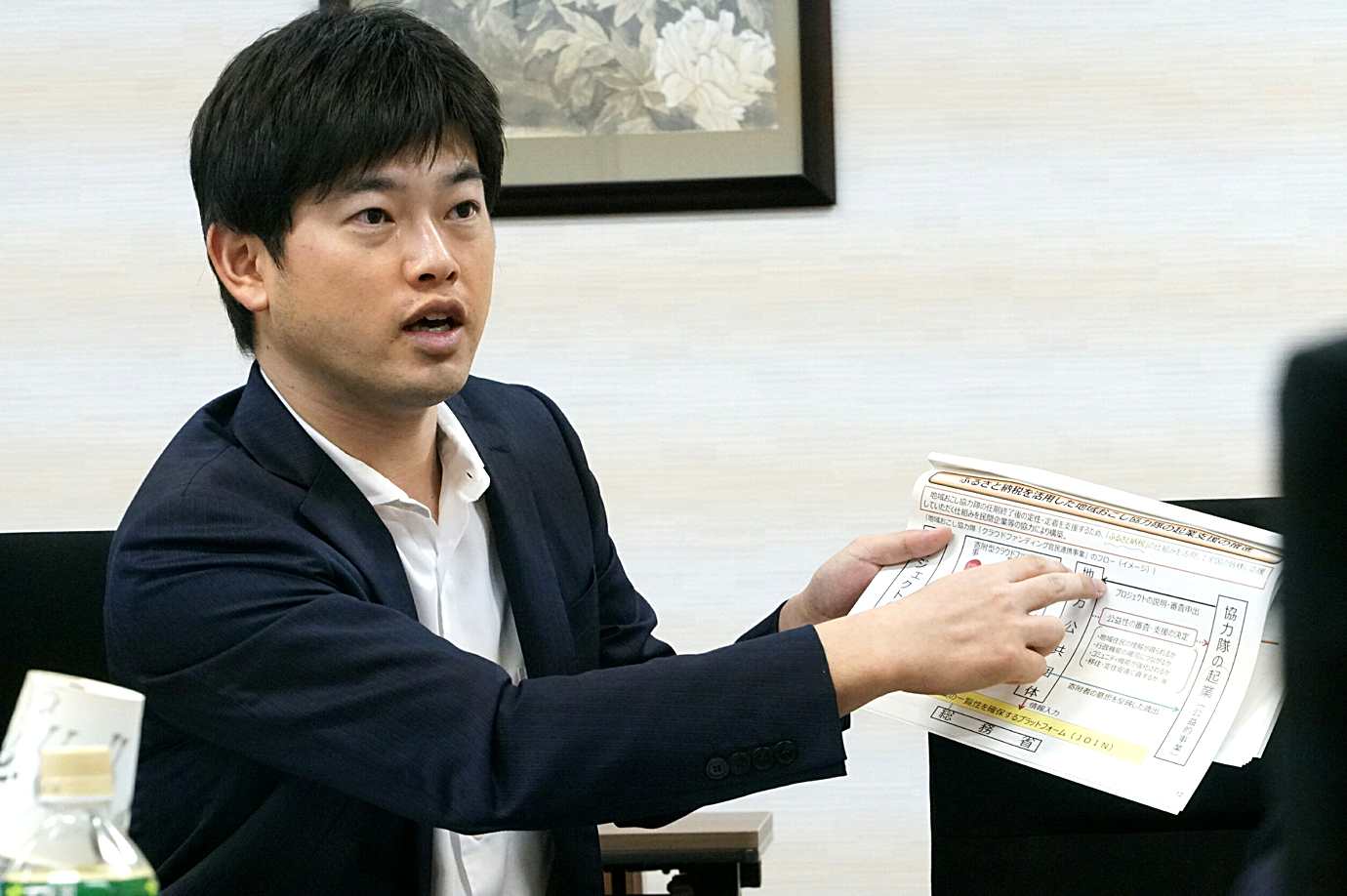
Study activities are held across the country to support volunteers in carrying out their plans
This year marks the tenth year of implementation of the Regional Revitalization Cooperation Volunteers policy, but in fact many people in Japanese society are still unclear about or even unaware of the existence of the Cooperation Volunteers. Therefore, while the lead ministry, the Ministry of Internal Affairs and Communications, seeks to further expand the Regional Revitalization Cooperation Volunteers, it also holds meetings across the country to make the system more widely known. For those who have already joined the Cooperation Volunteers, various study activities are held to enhance the capabilities of volunteers and local governments, and various resources needed by volunteers to carry out their tasks are supported, so as to smoothly advance the return of talent to the regions. The aforementioned study activities include:
(1) Regional Revitalization Cooperation Volunteers National Meeting
This is a national meeting that, in addition to Regional Revitalization Cooperation Volunteers and local government personnel, the general public may also attend. Through case reports and publicity, it makes the system more widely known while also providing a place for volunteers to learn from and exchange with one another.
(2) Study activities for the needs of volunteers at different stages
There are "beginner training sessions" for first-time volunteers, as well as study activities for volunteers who already have 2 to 3 years of task experience so they can plan more effective activities, in order to cultivate capabilities according to the needs of volunteers at each stage. In addition, training sessions are held for local government staff, so that local governments become familiar with how to cooperate with the Cooperation Volunteers to solve local problems.
(3) Entrepreneurship and industrialization study sessions
For volunteers aiming at entrepreneurship, these cover knowledge and techniques for learning about entrepreneurship and industrialization, and also include study on how to plan industrialization projects.
In fiscal year Heisei 29, there were about 5,000 Regional Revitalization Cooperation Volunteers, roughly a 5-fold increase compared with fiscal year Heisei 25. In terms of vision, the Ministry of Internal Affairs and Communications plans for the number of Cooperation Volunteers to reach a target of 8,000 in six years. Therefore, institutionally, the support systems of each region were consolidated, and a consultation system called the "Regional Revitalization Cooperation Volunteers Support Platform" was established, so that consultations from volunteers or local governments can be unified and effective advice can be provided to volunteers or local government staff.
Future policy priorities: encourage people of various specialties to enter places in urgent need of human resources
(1) Continued expansion of the number of volunteers
From the standpoint of the Ministry of Internal Affairs and Communications, encouraging outsiders with various specialties to successively enter places in urgent need of human resources remains the focus of future policy. However, in the past the Cooperation Volunteers mainly targeted people in their 20s and 30s, and next the age range will be further expanded, such as to post-retirement groups, or foreign students who have studied in Japan but have already graduated and plan to settle locally.
(2) Support for business succession
For most Japanese rural villages, the biggest development problem is how to find successors willing to inherit local industries. For example, some small shops in a region may have owners who are getting older and can no longer run the shops, so they look for whether there might be someone who can inherit the shop and keep it running.
Therefore, while assisting volunteers with settlement matters after their term ends, support is also provided on the financial side for Cooperation Volunteers who wish to start businesses, and in cooperation with business succession support centers, demonstration projects are carried out to match business owners with volunteers. If some small local shops or companies face a lack of successors and need support, they can register their information with the aforementioned business succession support center, and the center will help match business entities in need with possible candidates who may be able to inherit them.
(3) Establish an experience mechanism
For ordinary people, leaving a familiar living environment to migrate and work in an unfamiliar place is often not easy. To shorten the time needed for adaptation and adjustment, the Ministry of Internal Affairs and Communications is considering creating a pilot program in the future called "Experience Regional Revitalization Cooperation Volunteers (tentative name)," as a way before the Regional Revitalization Cooperation Volunteers begin activities to experience the work content and living environment of the Cooperation Volunteers in a locality for a certain period (such as one week), as a match between volunteers and localities.
(4) Experience transmission system
Establish an organization of retired Cooperation Volunteers, and make good use of these seniors' resources and networks to provide new volunteers with opportunities for connection, consultation, and discussion. Taking as an example the network meetings formed by retired members of the Regional Revitalization Cooperation Volunteers in Okayama Prefecture, these volunteers who have retired and settled or started businesses locally provide newcomers with activity planning guidance, collaboration to create job opportunities, environmental preparation, technical support, and related coordination work, and so on.
Such a framework, in which an organization is established at the prefectural level (such as Okayama Prefecture) to create a structure that makes use of the experience of retired Cooperation Volunteers, is expected to expand nationwide, creating a networked alumni system of Cooperation Volunteers and enriching the system for recruiting and supporting volunteers.
Notes:
[1] Since Heisei 27 (2015), considering differences in the abilities of Cooperation Volunteers and the locational conditions of each region, remuneration can reach up to 2.5 million yen, but the upper limit of the subsidy cost per person per year remains 4 million yen.
[2] Since Heisei 28 (2016), the expenses required for training targeting Regional Revitalization Cooperation Volunteers implemented by prefectures and municipalities are covered by ordinary allocation tax measures within local allocation tax.
(To gain a deep understanding of rural development and local revitalization under Taiwan's real context, "Upstream and Downstream" cooperates with the "Rural Development Foundation" on the "Rural Development Special Topic," using a series of articles to explore Taiwan's current situation and Japan's policy trends. To read the full series of articles, please click here.)