First day of slaughter and transport ban: only one case of illegal slaughtering, why were white-feathered broilers left out? Council of Agriculture: lower risk
To prevent avian influenza, today is the first day of the poultry transport and slaughter ban. With controlled slaughterhouses limited to white-feathered broilers only, private slaughtering inspections were also carried out simultaneously, and so far one illegal chicken slaughter site has been uncovered in Daliao, Kaohsiung; in addition, after compensation was increased, three voluntary reports also emerged today.
However, regarding outside questions about why white-feathered broilers and day-old chicks could be excluded from the slaughter and transport ban, the Council of Agriculture also stressed at today's press conference that antibody test results for white-feathered broiler breeding chickens and adult chickens have long been negative, and no cases have appeared from last year to now, which is why white-feathered broilers were excluded. As for chicks, the probability of avian influenza transmission through eggs is low, and the incubation temperature also kills the virus, so it was decided that controls were not needed.
80 percent compensation for culling; compensation for the price gap borne by operators
Regarding implementation of the slaughter and transport ban policy, Huang Tsang-chang, director-general of the Bureau of Animal and Plant Health Inspection and Quarantine, stressed that a supervision mechanism for slaughterhouses has already been established. To prevent the crisis brought by illegal slaughtering, 33 inspections were launched across counties and cities today. Among them, illegally slaughtered chickens were found in Daliao, Kaohsiung, and 20 carcasses were destroyed on site. Inspections will continue in the future. Huang also stressed that as for voluntary reports, there will be more and more in the future. Today there were 3 voluntary reports in Yunlin. As long as farmers report voluntarily, 80 percent compensation will be given for culling, and the compensation period is expected to last until the end of May this year.
Although the Council of Agriculture proposed compensation measures, quite a few chicken farmers and freight operators still came north today to protest. In response, Wang Hsu-chang, acting chief executive of the Central Livestock Production Association, said that after initial communication with operators, they would help absorb the 1.8 million chickens currently accumulated on farms; at the same time, Chen Chi-chung, deputy minister of the Council of Agriculture, also said that chicken farming would be compensated according to the price gap, and for transport, discounted employee wages would also be considered for compensation, so operators need not worry.
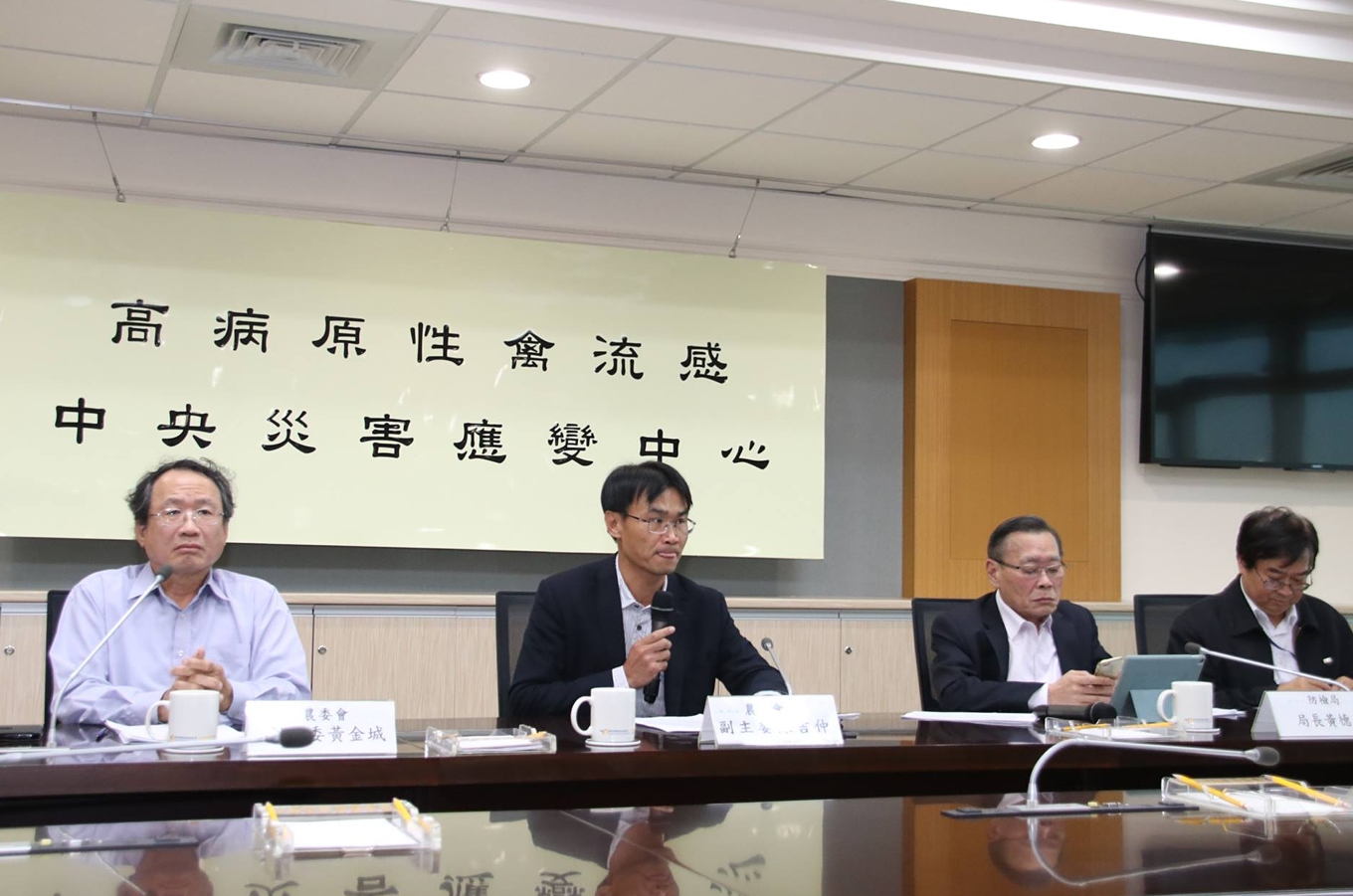
Why were white-feathered broilers and day-old chicks the only ones left out of the slaughter and transport ban? Council of Agriculture: lower risk
After the slaughter and transport ban policy was implemented, many outside voices questioned whether the Council of Agriculture decided to exclude white-feathered broilers only out of market considerations. In response, Huang Chin-cheng, deputy minister of the Council of Agriculture, stressed that they absolutely gave priority to disease prevention. The reason white-feathered broilers were allowed on the market is that, in long-term monitoring of breeding chickens and adult chickens of white-feathered broilers, antibody test results for both were negative, and white-feathered broilers are raised indoors throughout the whole process, so the risk is inherently relatively low.
As for the day-old chicks, Huang Chin-cheng explained that in the general production process, breeding chickens lay eggs, which are then sent to hatcheries for incubation, and the hatched chicks then grow into meat chickens. The probability of avian influenza being transmitted through eggs is very low, and during the 28-day incubation period in the facility, the temperature is continuously maintained at 38 degrees, which means the virus has almost been completely killed, so chicks are comparatively safer; the above two points also explain why the probability of chicks and white-feathered broilers getting sick is low, which is why the Council of Agriculture excluded them.