The shoreless voyage of poison ships, the ocean becomes a nuclear waste graveyard: full text of the Italian archives declassified
"Ocean Disposal Management (ODM, referred to as such below) may have disposed of 200,000 barrels of radioactive waste at a cost of 227 million US dollars. According to the assessment of military intelligence agencies, the disposal site is very likely in the Taiwan area." These remarks by Alessandro Bratti, chairman of the Italian Parliament's Waste Disposal Investigation Committee, on his personal website in early February, after being translated and reported by the media, caused a huge uproar in Taiwan.
Military intelligence speculation: ODM helped North Korea clean up nuclear waste, disposal site in Taiwan
The archives cited by Bratti have finally been officially declassified.
According to the full text of the archives formally obtained by Shangxiayou in Italy, a document issued on April 21, 2004 by the military intelligence agency Sismi, now restructured as the National Security Intelligence Agency (AISE), states that ODM, founded by the Italian-born broker Giorgio Comerio, should have begun establishing relations with North Korea in 1995, mainly operating around Hungnam Bay, where chemical weapons and nuclear weapons uranium raw materials were produced.
The declassified archives also state that the gradually solidifying relationship between North Korea and ODM should have been built on the following contract: "A price of 227 million US dollars to clean up 200,000 barrels of radioactive waste (the site of occurrence being the Taiwan area); install nuclear waste processing equipment; and strengthen port construction in the Rajin area to facilitate the transport of processed radioactive waste."
Although it carefully depicts Comerio's connections with North Korea, the intelligence writer is reserved in tone, adopting the Italian conditional tense in some sentences pending more direct evidence from subsequent investigations to support the argument. But the inscrutable part is this: dealing with the more than 100,000 barrels of waste on Orchid Island had already vexed the government immensely; how could 200,000 barrels of waste be discarded while keeping everyone in the dark? To this day, the source, type, and exact disposal sites of this nuclear waste still await further investigation.
The suspicious sunken ship between Su'ao and Shanghai
At the time, military intelligence did not explain how ODM dumped radioactive waste in Taiwan's waters, but other materials show that a ship that sank between the waters of Shanghai and Su'ao was extremely similar to Comerio's illegal "sea dumping" methods.
Francesco Fonti, a former 'Ndrangheta member who intended to repent and cooperate with prosecutors, once stated that in 1992 he deliberately sank 3 ships, among which a vessel named Voriais Sporadis carried 75 containers of toxic waste.
According to an investigation by a Cyprus journalist, surveillance material from 1989 revealed that the captain of the Voriais Sporadis, whose name had been changed to Doto, discussed in a phone call where the best place to dispose of the waste would be.
However, it is unclear whether Fonti's memory was faulty or he deliberately misled the direction of the investigation. The ship information network Shipspotting shows that the Voriais Sporadis was renamed Nathalie in 1989, and shortly afterward renamed again as Glory Land, then sank on January 20, 1990 (another account says January 13) in the waters between Su'ao and Shanghai. As for the cause of the sinking and what was loaded on board at the time, it remains a mystery to this day.
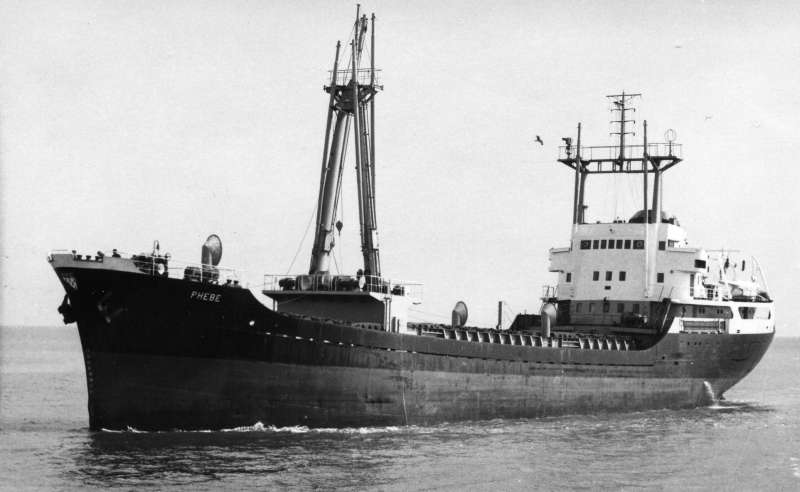
The shoreless voyage of poison ships, the ocean becomes a graveyard of waste
The illegal dumping of toxic and even radioactive waste by "poison ships" in the vast ocean is not news in Italy.
When it learned that Parliament had decided to declassify the archives, Legambiente stated: "When we pointed out in the 1990s that 'poison ships' were illegally transporting toxic and radioactive waste and dumping it in the ocean, everyone said we were crazy. Now the declassified archives prove our accusations, and the intelligence agencies had long known that the Mediterranean was a graveyard of hazardous waste."
In addition to dumping toxic waste and nuclear waste at sea, some ships set sail on a "shoreless voyage," deliberately "scuttled" at sea according to plan. Data from the Anti-Mafia Investigation Directorate (DIA) shows that from 1995 to 2000 there were 637 suspicious shipwrecks worldwide, 52 of them in the Mediterranean.
What raises suspicion is that when the ships sank, the weather was good and the sea calm, there were no distress signals in official records, and once rescued, the crew members often disappeared without a trace.
The journalists and military officers who died pursuing the truth
The latest declassified archives of the Italian Parliament show that 90 ships that sank in the Mediterranean between 1989 and 1995 may very likely have carried toxic or radioactive waste. Yet at the time, prosecutors and the central government turned a deaf ear when they received relevant information, and Navy Commander Natale de Grazia, who actively investigated the truth about the "poison ships," died of poisoning in 1995 while traveling on the case.
Among the 27 sunken ships investigated by de Grazia, the Rigel, registered in Malta, was bound for Cyprus at the western end of the Mediterranean. Although the sea was calm, a 5-day journey turned into 12 days adrift at sea, and it finally sank on September 21, 1987 off Calabria in southwestern Italy.
During the 10 hours it gradually sank into the seabed, the Rigel sent no distress signal, and no one on the busy Mediterranean shipping route reported anything unusual about a ship 100 meters long. Even more bizarrely, after a ship registered in Yugoslavia rescued the Rigel's crew, it did not head to the nearest Sicilian port but instead headed for Tunisia in North Africa, and once the rescued crew members came ashore they disappeared without a trace.
In a 2000 report on the Rigel, the Italian Parliament's Waste Disposal Investigation Committee stated: "The sinking may have been to defraud insurance money," and the conclusion also said: "It cannot be ruled out that the ship was loaded with hazardous waste."
One year before Navy Commander de Grazia was poisoned, Italian television journalist Ilaria Alpi and cameraman Miran Hrovatin also died in Somalia while investigating poison ships.
Comerio's sea mines, which Taiwan once considered buying
At the time, police believed the two journalists were robbed and killed while "on vacation." However, evidence that gradually emerged later pointed to them having been silenced for digging deep into the truth of the news.
Alpi's reporting exposed an international criminal network linking illegal sea dumping of toxic waste with arms smuggling, and the key figure was Comerio, a broker from Italy who held a Swiss passport and had long resided in Tunisia.
In Comerio's log, the entry for September 21, 1987 reads: "The ship disappeared." According to de Grazia's verification, the Rigel was the only ship worldwide that sank that day; even more suspiciously, Comerio's office actually contained a copy of Alpi's death certificate in Somalia. However, none of these fragments could convict him; at a parliamentary hearing, Comerio even shamelessly called himself an environmentalist "Green Party member," but the Green Party later denied this.
As Alpi revealed, the handling of nuclear waste is often tied to arms deals. Italian investigative journalist Riccardo Bocca pointed out in his book "The Shameful Ship" that Comerio was also an arms dealer and had once sold remote-controlled sea mines to Argentina during the Falklands War between Britain and Argentina. Taiwan also once considered purchasing such mines, but in the end no deal was made.
Broker Comerio's international nuclear network
Born in 1945 in Varese in northern Italy, Comerio came from an engineering background. The ODM he founded wove an international network to handle toxic waste from various countries. In addition to its headquarters in Italy, it had offices in Austria, France, Germany, and Russia, conducted financial operations in Switzerland and the United Kingdom, and set up paper companies in tax havens including Panama, the Virgin Islands, Liechtenstein, and Ireland.
A Greenpeace investigation pointed out that in 1997 ODM handled about 3,000 metric tons of waste per day, mainly transporting waste from developed countries to Romania, Lebanon, Venezuela, Brazil, and Africa.
Although ODM also handled chemical waste, radioactive waste was its core business. Under pressure from environmental groups, the London Convention, which prohibits sea dumping of nuclear waste, finally took effect in 1993, and its secretariat sent a letter in 1996 demanding that ODM clarify its business content.
By contrast, the International Atomic Energy Agency (IAEA), on which Taiwan's Atomic Energy Council relied when verifying the dumping of nuclear waste in Taiwan's waters, was indifferent at the time to the urging of environmental organizations and did not send a letter demanding that ODM comply with international law and stop illegal sea dumping.
The technical source of poison ships' sea dumping
Comerio's use of poison ships on shoreless voyages to dispose of waste was not original; it had a "technical" root.
He participated in the nuclear waste sea dumping research conducted from 1977 to 1989 by the Organisation for Economic Co-operation and Development (OECD), led by the United States, Canada, Japan, and Switzerland and composed of industrialized countries, and its subordinate Nuclear Energy Agency (NEA), which cost about 120 million US dollars.
In addition to drilling holes and placing waste inside, another innovative method developed at the time was to make nuclear waste into torpedo forms about 16 meters in size and weighing 200 metric tons, and project them beneath the seabed.
Although the Nuclear Energy Agency recommended that there must be more and more thorough research, the "nuclear waste torpedo" was ultimately not formally adopted, but Comerio had already smelled a business opportunity, and by simplifying the method and reducing costs, he had ships loaded with toxic substances or nuclear waste "scuttled," or merely drove the waste into shallower seabeds, letting the vast ocean bury the evidence.
Environmental groups at the forefront were the first to expose the unbelievable facts, and journalists and military officers even lost their lives for it, but the truth still drifts half-submerged. "For many years, we faced a hostile atmosphere. While Italy kept investigating, in the face of transnational crime, the EU rarely made an effort," said Enrico Fontana, legal counsel for Legambiente.
Whether in the Mediterranean or in Taiwan's waters, without active investigation by public authority, with the sea breeze blowing wide and the waves rolling on, the truth of the poison ships buried in the deep will not surface on its own.