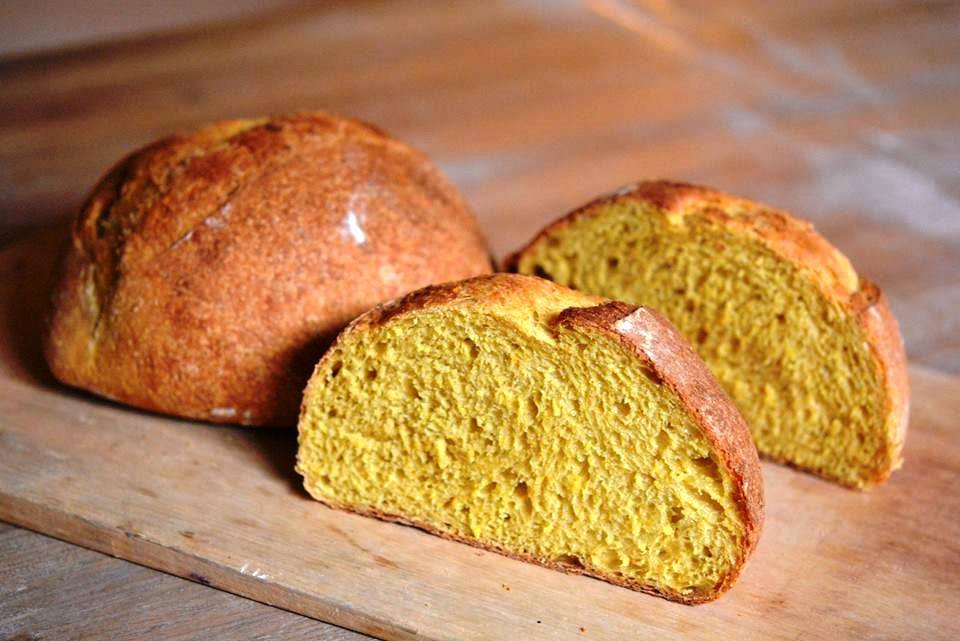
A baker's honest words: I don't think sourdough starter is better, but I love it more
Recently I had the good fortune to chat with one of the biggest promoters and supporters in Taiwan, China's baking world, and we got onto the topic of commercial yeast and sourdough starter. No sooner had the topic started than I felt that chatting over Facebook messages would not do it justice, so we agreed to meet and talk another day when we both had time.
The topic of commercial yeast and sourdough starter is one that invites a great deal of discussion, because some in the industry think the former is superior while others think the latter is better. This endless debate makes it hard to clarify in just a few words.
As for me, I am neither the former nor the latter; I am a bystander. Among natural species, one is a complex community and the other is a simple population. How could one possibly compare which is better or worse? It is like comparing a pile of oranges with a pile of fruit.
Commercial yeast strains are stable and single, mass-propagated for baking use
In fact, when it comes to choosing which yeast to use for bread, it is mostly a choice that artisans make based on their customers' preferences. Consumers often understand passively, and more often only halfway, which is why the controversy over whether yeast is natural arises.
Since yeast is a living organism, of course all of it is natural, and there is no troublesome business of genetic modification or variety improvement. In earlier years, what was sold on the market was commercial yeast, some dried and some fresh. These yeasts were made by yeast companies selecting a single excellent yeast strain (strong and stable fermentation power) and mass-propagating it in an environment they created (a culture medium, that is, the yeast's nutrient food), then processing it into powder or block products that are easy to transport, store and use.
Commercial yeast is the fruit of the German scientist Pasteur's discovery of bacteria (before his discovery, all bakers had to cultivate and maintain their own yeast). Pasteur explained why bread ferments and rises: it is the yeast fungi in sourdough starter, and sourdough starter also contains acetic acid bacteria, lactic acid bacteria and other kinds of microbes.
Commercial yeast is a single strain of yeast selected from the yeast community in sourdough starter for being the most active and the most stable, then mass-propagated and provided to bakers for use. This process had an enormous impact on the baking world: it allowed bread to be mass-produced, and together with preservatives that solved the problems of mold during transport and storage, many bread factories later appeared, changing the previous form in which bakeries were all regional and made fresh on the spot by master bakers.
Sourdough starter brings flavor, attracting a retro return
After commercial yeast gradually became the mainstream of bread baking, many small regional bakeries still insisted on using sourdough starter. What they pursued was not quantity but flavor, plus a little pride in the skill of using sourdough starter.
In recent years, a retro return to making bread with sourdough starter has become fashionable, because some bakers and bread lovers (these are the main force; change only happens when there is demand) had grown tired of the slightly culture-medium taste of commercial-yeast bread and sought sourdough bread with more varied flavor, a result helped along by marketing that used some alluring, even slightly startling, turns of phrase.
The market currently divides roughly into three kinds of yeast; modern old dough differs from the ancient kind
As mentioned earlier, demand creates a market, which in turn creates change. Responding to market demand, yeast companies have also launched natural yeast, that is, mass-producing the starter they cultivate and then processing it into a form that is convenient to transport and use.
However, the original population is too complex, making it hard for ordinary bakers to work with, and some yeast companies have simplified the microbial community in sourdough starter; some simply add selected other strains plus acetic acid bacteria and lactic acid bacteria to the previous single-strain yeast, which both increases flavor and reduces the difficulty of handling.
So the market today can be roughly divided into three kinds: single-strain commercial yeast, composite multi-strain commercial natural yeast, and sourdough starter with a complete microbial community.
Some bakers take a shortcut: the day before, they imitate the sourdough starter method using commercial yeast, first mixing it into a dough and refrigerating it to extend the fermentation time, then the next day adding it to the dough they want to make, to increase flavor and reduce that day's use of commercial yeast. Most of these are advertised as old dough (the modern old-dough bread is different from the old dough of ancient times; old dough made with commercial yeast is still commercial yeast and will not become multi-strain, because that strain is the strongest, and the other yeast strains present in the environment cannot compete with it for living space. That is natural selection).
Yeast has no better or worse, only choices
When I first chose to use only sourdough starter and no commercial yeast, besides loving the challenge of the difficulty of handling it, I also had an inexplicable worship and love for sourdough starter, and I would often unconsciously look down on commercial-yeast bread, just as San Franciscans take pride in San Francisco sourdough, emphasizing that bread made with a whole-community sourdough starter has an alluring sour aroma, and especially that the unique San Francisco sour strain of their Bay Area is the source of the distinctive flavor they are proud of.
As I grow older, and the longer I spend in contact with yeast, the more material I read and the more I make, and the more I feel, the sense of superiority I had toward sourdough starter in earlier years has long since disappeared. If you ask me which is better, I would say, "There is no better or worse, only choices."
The initial intention of baking practitioners is to make bread that customers like and that is good for them. Customers are our first priority, and so-called conscience is simply being worthy of the customer! It is very simple, and also very hard! So which yeast to use depends on the texture the customer likes or the goal the baker wants to pursue. Mixing the two (as in France) is also very good.
But why do I insist on using only sourdough starter? That is my conviction, because I myself believe that using ancient methods supplemented by modern machinery, one should be able to make bread that customers love. I do not pursue mass production, nor scientific management; I imagine cooking like Mom or Grandma, with skill but also a bit of casualness. I feel that the dishes Mom makes have no precise weights and measures, nor can they be taught in a quick session or two and then immediately reproduced with the same flavor. That is a concept of putting your heart into making food.