Fenghui Xiaying Red Brand native chicken launched: springy meat, big legs, or a savior against avian influenza
Taiwan, China has repeatedly seen avian influenza outbreaks, and the rearing environment on chicken farms is one of the key factors. Council of Agriculture Deputy Minister Huang Jincheng said that native chickens in Taiwan, China have low growth uniformity: some have already reached saleable standards while others are still very small, so they end up being sold in batches. But the high frequency of vehicles and personnel entering and leaving chicken farms increases the chance of pathogen infection, and the virus may even spread through cross-infection from other chicken farms.
The Council of Agriculture's Livestock Research Institute and Taiwan Fuji Livestock Company announced at a press conference on the 12th that they had jointly bred a new red-feathered native chicken variety with high growth uniformity, named "Fenghui Xiaying Red Brand native chicken." In terms of body weight uniformity at nine weeks of age, the new variety's roosters improved by 40.8% and hens by 31.9%. It also improves the problems of generally low egg-laying performance and unstable rearing survival rates in ordinary native chickens.
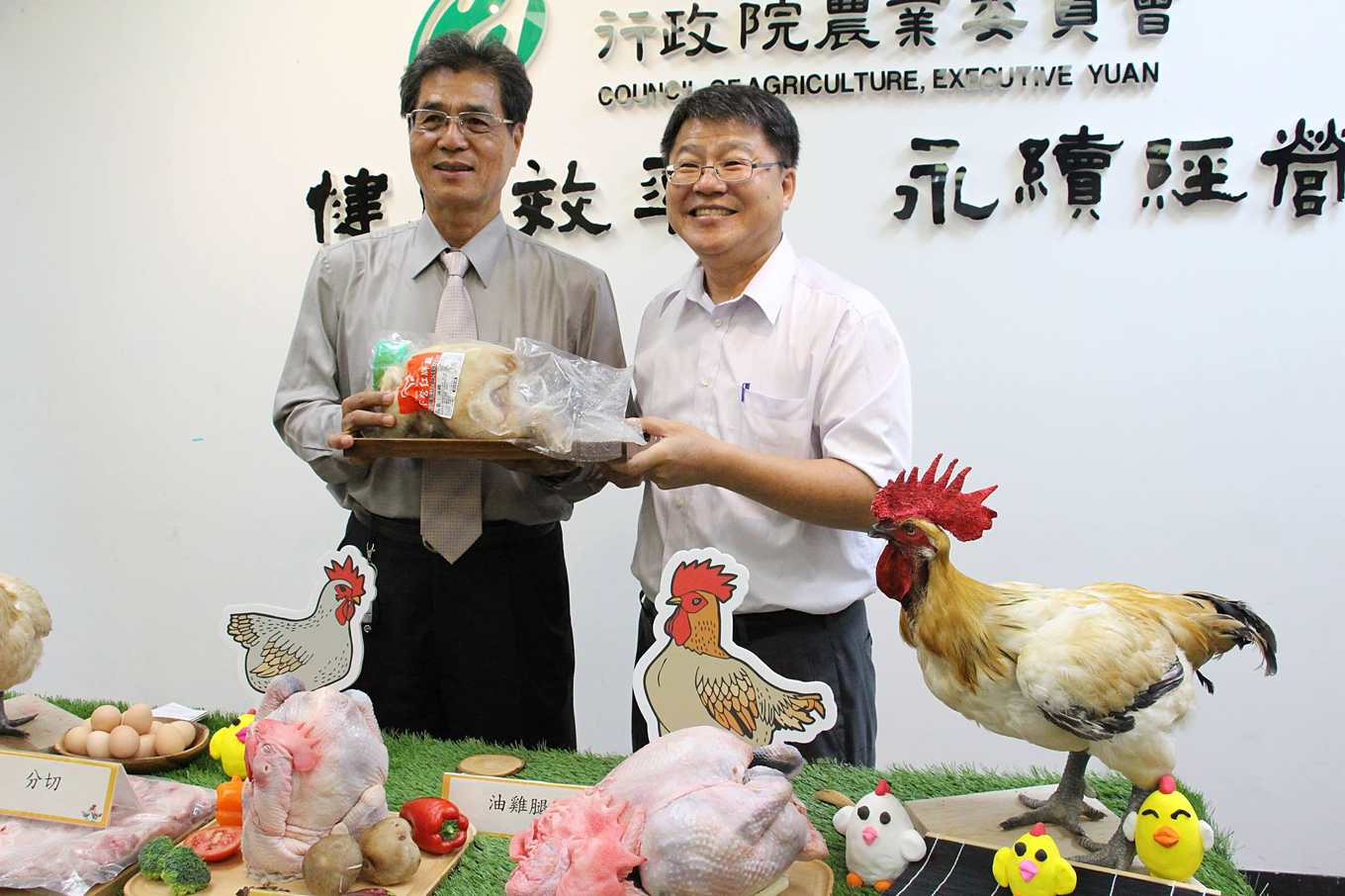
Fenghui Xiaying Red Brand native chicken, preparing for integrated production
The "Fenghui Xiaying Red Brand native chicken" is divided into breeding chickens "Jin," "Yu" and "Man," and crossing the three produces the meat chicken "Tang." At present there are about 1,000 breeding roosters and about 50,000 breeding hens, producing about 300,000 chicks per month. In the future the company will further discuss cooperation models with other operators to sell breeding chickens and meat chickens.
The company currently sells only chicks, working with 45 chicken farmers distributed across Tainan, Chiayi, Yunlin and Nantou, and can raise about 1.5 million birds. The grown meat chickens are mainly channeled as live birds sent to wholesale chicken markets in the north.
Yang Fenghui said that in the future, in addition to expanding cooperation in scale, the company will adopt an integrated production model covering breeding chickens, chicks, feed supply and the rearing of live chickens for production. The company has already applied for a slaughterhouse and will be able to launch its own brand next year. "The future market is all about building a brand and ensuring good quality."